
 20 Sep 2026









Georgia Accelerates Middle Corridor Development: Tbilisi Bets on Transit between Asia and Europe
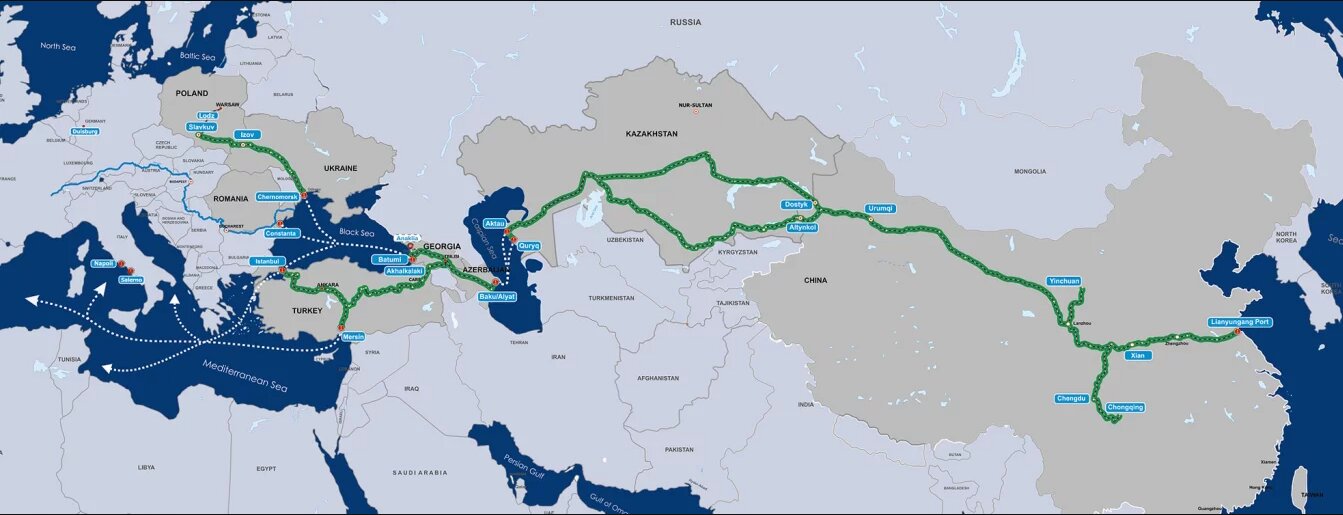
Georgia intends to significantly increase its role in international transport flows between Asia and Europe. Prime Minister Irakli Kobakhidze said Tbilisi aims to make the Middle Corridor faster, more reliable, and more predictable while simultaneously expanding the country’s transport infrastructure.
The authorities intend to capitalize on the country’s geographic position and its access to the Black Sea to increase transit flows between Central Asia, the South Caucasus, and European markets.
According to Kobakhidze, the development of the Middle Corridor is one of the key priorities of Georgia’s long-term economic strategy.
As part of its 10-year infrastructure development plan, Georgia intends to double the capacity of its railway network, halve cargo transit times, double port capacity, and triple the capacity of its international airports.

The government expects these projects not only to increase transit volumes but also to strengthen the competitiveness of Georgia’s transport route compared with alternative corridors.
The Middle Corridor, also known as the Trans-Caspian International Transport Route, connects China and Central Asia with the Caucasus and Europe via the Caspian Sea. Key components of the route include Kazakhstan, Azerbaijan, Georgia, and Turkiye. Access to the Black Sea is one of the main advantages of the Georgian segment.
However, Tbilisi also faces a significant challenge. The Middle Corridor competes with other land and maritime routes connecting Asia and Europe. To attract additional cargo flows, Georgia will need to ensure not only greater infrastructure capacity but also reliable and uninterrupted operations. The modernization of railways, expansion of port capacity, digitalization of logistics procedures, and improved coordination among the countries along the route will be particularly important.
According to CCBS, the development of port infrastructure should enable Georgia to increase cargo handling volumes and strengthen the connection between overland transport routes in the South Caucasus and European maritime infrastructure. Tbilisi views the development of transit infrastructure not only as a transport project but also as a means of attracting investment and strengthening Georgia’s role in the regional economy. The expansion of railways, ports, and airports is expected to create a more resilient infrastructure base for trade, logistics, and industrial development.
At the same time, increasing transit speed is one of the key factors determining competition between different routes linking Asia and Europe. For this reason, halving cargo transit times could become one of the most significant elements of Georgia’s strategy. Growing cargo flows could also stimulate the development of warehousing infrastructure, transport companies, port services, and industrial zones.
Overall, Tbilisi is seeking to transform Georgia from a transit territory into a fully-fledged logistics hub between Asia and Europe. Doubling railway and port capacity, reducing cargo delivery times, and expanding aviation infrastructure should increase the country’s attractiveness within the Middle Corridor.
Amid growing competition for trade flows between Asia and Europe, speed, reliability, and predictability could ultimately determine whether the Middle Corridor becomes one of the key Eurasian transport routes.


 Latest news
Latest news
Latest newsUS Sanctions Target Russias Main Pillar as Moscow Faces New Pressure on Oil Revenues
19.Sep.2026
Russia Begins State Duma Elections Amid War in Ukraine
18.Sep.2026
Bulgaria Strengthens Protection of Strategic Infrastructure Against Drones and Other Threats
18.Sep.2026
Georgia and Enka: How the Namakhvani Dispute Could Affect the Investment Climate
17.Sep.2026
Una Aleksandra Bērziņa-Čerenkova: After Russia’s Invasion, Latvia Began Banning Russian-Language Media
17.Sep.2026
Rainer Saks: Russia сould lose its influence in Armenia, just as it did in the Baltics
16.Sep.2026
Russian Drones Violated Moldovan Airspace Twice During Zelenskys Trips
16.Sep.2026
Operation Vivaldi: Ukraine Reports Advances Near Lyman as Fighting Intensifies
16.Sep.2026
Kazakhstan and South Korea Elevate Ties to Comprehensive Strategic Partnership
16.Sep.2026
Armenia Energy Diversification: Testing the Limits of Dependence on Russian Gas
15.Sep.2026
Tbilisi Distances Itself from Brussels as Kobakhidze Intensifies Criticism of European Policy
14.Sep.2026
Russia Fuel Crisis Gives the US a New Diplomatic Leverage Tool
14.Sep.2026
Trump Calls on Zelenskyy to Stop Strikes on Russian Oil Infrastructure
13.Sep.2026
Ukraine Expands Pressure on Russia’s Shadow Fleet: Moscow’s Oil Logistics Under Threat
13.Sep.2026
The Riga Conference: Europe Prepares for Long-Term Confrontation with Russia and Reshapes Its Security Architecture
12.Sep.2026