
 24 Aug 2026









EU: All channels to be used for more consistent, predictable Turkey-EU relations
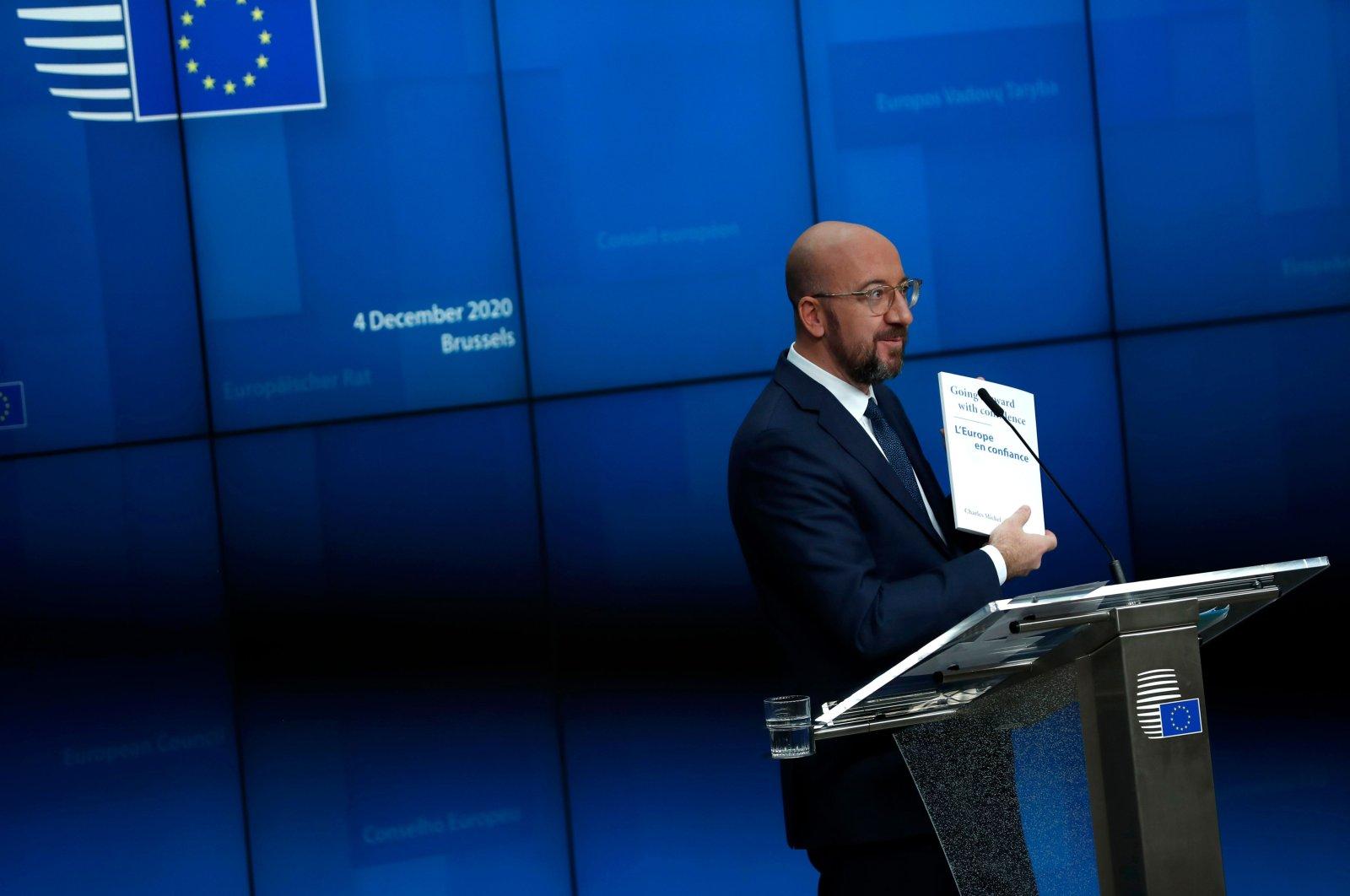
We want to work together with Turkey for more consistent and foreseeable relations, European Council chief Charles Michel stated Friday, adding that all channels will be used for this aim.
“As a European, I support dialogue. In order to solve and manage crisis which we have disagreements on, we have to establish dialogue. As the EU, we want to have a more consistent and foreseeable relation, however, for this, both sides are responsible,” Michel told reporters at a news conference to mark his first year in office.
"I think that the cat and mouse game needs to end," Michel said, referring to Turkey’s activities in the Eastern Mediterranean and added that EU member states could consider sanctions.
"We will have a debate at the European summit on Dec. 10, and we are ready to use the means at our disposal," he said.
Next week's EU summit will be held in Brussels, with the leaders meeting face-to-face after previous meetings were demoted to videoconferences as a coronavirus prevention measure.
Turkey and Greece are at odds over conflicting claims to hydrocarbon resources in the Eastern Mediterranean and overlapping views on the extent of their continental shelves.
Ankara accuses Athens of pursuing maximalist policies in the region and underlines that its maritime claims constitute a violation of Turkey's sovereign rights.
Both countries are NATO members, and the alliance has set up a "deconfliction mechanism" to help the rival militaries avoid accidental clashes; however, Greece has blocked the deconfliction mechanism talks by not attending the meetings in NATO’s headquarters in Brussels.
The technical talks on determining the details of the deconfliction mechanism between Turkey and Greece that were to take place on Nov. 30 at the NATO headquarters in Brussels could not be held due to the absence of the Greek delegation, Turkish security sources stated on Thursday, adding that talks planned on Oct. 23 and Oct. 30 similarly could not take place due to Greece's negative response.
The mechanism is designed to reduce the risk of incidents and accidents in the Eastern Mediterranean and includes the creation of a hotline between Athens and Ankara to facilitate resolving conflicts at sea or in the air.
"In October, after a very dense and strategic high-level exchange, we defined a very positive offer to Turkey, we extended our hands," Michel stated. He added that “things have not been very positive” since then.
On the other hand, EU foreign policy chief Josep Borrell stated Friday that the most difficult issue the EU faces at the moment is its relationship with Turkey.
Indicating that relations have been strained since October, Borrell said the bloc has to make a decision next week in light of the developments.
“I think that Turkey and the EU share joint interests, especially in good neighborly relations. Turkey is there and will stay there. We have to understand that Turkey hosts 3.5 million Syrians. We have to take care of them and help them,” Borrell said, speaking at the sixth edition of the Mediterranean Dialogues Forum organized by the Italian Foreign Ministry in cooperation with the Institute for International Political Studies (ISPI).
Turkish leaders have repeatedly stressed that Ankara is in favor of resolving all outstanding problems in the region through international law, good neighborly relations, dialogue and negotiation. Yet, Turkey has also criticized the EU’s stance on the Eastern Mediterranean conflict, calling on the bloc to adopt a fair attitude regarding the dispute and give up on favoring Greece under the pretext of EU solidarity.


 Latest news
Latest news
Latest newsThe United States Rapidly Expands Missile Production: Pentagon Accelerates Output of Tomahawks and Other Critical Weapons
24.Aug.2026
Record Supplies: Armenia Boosts Fish Exports to Georgia
23.Aug.2026
Political Battle During Wartime: Zelensky Opposes Elections
23.Aug.2026
Romania Approves Construction of One of the Largest Solar Power Plants in Europe
23.Aug.2026
Ex-Ukrainian Defence Minister Fails in Bid to Pressure Zelenskiy
22.Aug.2026
Upper Lars: Why Border Queues Have Become a Political Signal for Georgia and Russia
22.Aug.2026
Russia-Ukraine War: No Decisive Breakthrough on the Front and Intensifying Ukrainian Deep Strikes on Russia
21.Aug.2026
TRIPP, Peace, and a New Geopolitical Crossroads: How Armenia Has Changed One Year After Washington
20.Aug.2026
Tokayev Updates Kazakhstan Foreign Policy Concept: Astana Strengthens Its Strategic Multi Vector Approach
19.Aug.2026
Ukraine Turns Ground Robots into a New Tool in the Fight Against Russia
19.Aug.2026
Tehran Threatens a New Round of War After Talks With the US Collapse
18.Aug.2026
Drones Over Moldova: Accident or a New Threat to National Security?
17.Aug.2026
Spanish F-18 Fighter Jet Shoots Down Drone That Violated Romanian Airspace
17.Aug.2026
The Black Sea Becomes a Risk Zone: Can Turkiye Protect Key Trade Routes?
16.Aug.2026
Ukraine Intensifies Long-Range Strikes: Flamingo Missiles Hit a Rocket and Space Center and Airbase in Russia
15.Aug.2026