
 24 Aug 2026









Russian Foreign Ministry's spokesperson comments on Iran’s enrichment of uranium to 20%
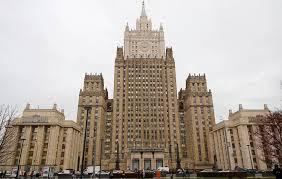
Iran’s resumption of uranium enrichment to 20% is a departure from the Comprehensive Joint Plan of Action for the Iranian nuclear program, Russian Foreign Ministry spokeswoman Maria Zakharova said.
"This question has nothing to do with Iran’s compliance with its obligations under the Comprehensive Safeguards Agreement or the Nuclear Weapons Non-Proliferation Treaty. From this standpoint there are no claims to make against the Iranian side. All material enriched to 20% remains under the IAEA control. The Agency has not exposed any attempts to use it for undeclared purposes that might contradict the NPT. At the same time the resumption of uranium enrichment to 20% is a departure from the agreements enshrined in the Joint Comprehensive Plan of Action for a settlement over the Iranian nuclear program," TASS cited her as saying.
Zakharova stressed that Iran’s decision to resume uranium enrichment at the Fordow Fuel Enrichment Plant was due to U.S. pressure.
"In recent years the international community developed the clear awareness that the root cause of such deviations should be seen in systematic crude violations of international obligations by the United States, which in defiance of article 25 of the UN Charter ignores the UN Security Council’s Resolution 2231 and deliberately poses obstructions to its implementation by other countries. We have to recall once again that the JCPOA project for converting the FFEP to the production of stable isotopes has long been the target of Washington’s sanctions, which is absolutely unacceptable," Zakharova said.
She stressed that Moscow appreciated the Iranian side’s repeated statements it was prepared to resume full compliance with the agreements under the JCPOA, provided the balance of interests was observed.
"However, the current realities as they are, extra efforts and costs will now be required to bring the Fordow facility in conformity with the JCPOA again," Zakharova said, noting that Iran’s actions were of "fundamental importance for further work to reconfigure this facility, which is an integral part of the nuclear deal."
"The task of creating conditions for the stable implementation of comprehensive agreements has grown far more difficult," Zakharova said.
The Russian Foreign Ministry spokeswoman said that at the December 21 ministerial level meeting Russia stressed more than once that "guidelines for normalization over JCPOA are found in the plan proper" and require systematic compliance with the agreements by all parties that developed and concluded them.
"In the unanimously approved Joint Statement the vector for further onward movement was charted very clearly. All JCPOA signatories, including Iran, came out in favor of the need for handling the remaining challenges to the implementation of the JCPOA and urged the United States to instantly give up its subversive policies and to comply with all obligations assumed under the UN Security Council’s Resolution 2231 without any preconditions," the spokesperson said.
She said that when this happened, Tehran must be prepared to reciprocate. "We proceed from the understanding that this should be precisely the focus of all available resources. There should be persistent collective work for the elimination of the accrued problems and against creating new ones," Zakharova concluded.


 Latest news
Latest news
Latest newsThe United States Rapidly Expands Missile Production: Pentagon Accelerates Output of Tomahawks and Other Critical Weapons
24.Aug.2026
Record Supplies: Armenia Boosts Fish Exports to Georgia
23.Aug.2026
Political Battle During Wartime: Zelensky Opposes Elections
23.Aug.2026
Romania Approves Construction of One of the Largest Solar Power Plants in Europe
23.Aug.2026
Ex-Ukrainian Defence Minister Fails in Bid to Pressure Zelenskiy
22.Aug.2026
Upper Lars: Why Border Queues Have Become a Political Signal for Georgia and Russia
22.Aug.2026
Russia-Ukraine War: No Decisive Breakthrough on the Front and Intensifying Ukrainian Deep Strikes on Russia
21.Aug.2026
TRIPP, Peace, and a New Geopolitical Crossroads: How Armenia Has Changed One Year After Washington
20.Aug.2026
Tokayev Updates Kazakhstan Foreign Policy Concept: Astana Strengthens Its Strategic Multi Vector Approach
19.Aug.2026
Ukraine Turns Ground Robots into a New Tool in the Fight Against Russia
19.Aug.2026
Tehran Threatens a New Round of War After Talks With the US Collapse
18.Aug.2026
Drones Over Moldova: Accident or a New Threat to National Security?
17.Aug.2026
Spanish F-18 Fighter Jet Shoots Down Drone That Violated Romanian Airspace
17.Aug.2026
The Black Sea Becomes a Risk Zone: Can Turkiye Protect Key Trade Routes?
16.Aug.2026
Ukraine Intensifies Long-Range Strikes: Flamingo Missiles Hit a Rocket and Space Center and Airbase in Russia
15.Aug.2026