
 24 Aug 2026









FM Çavuşoğlu to meet with EU ambassadors as part of Ankara's initiative to turn new page
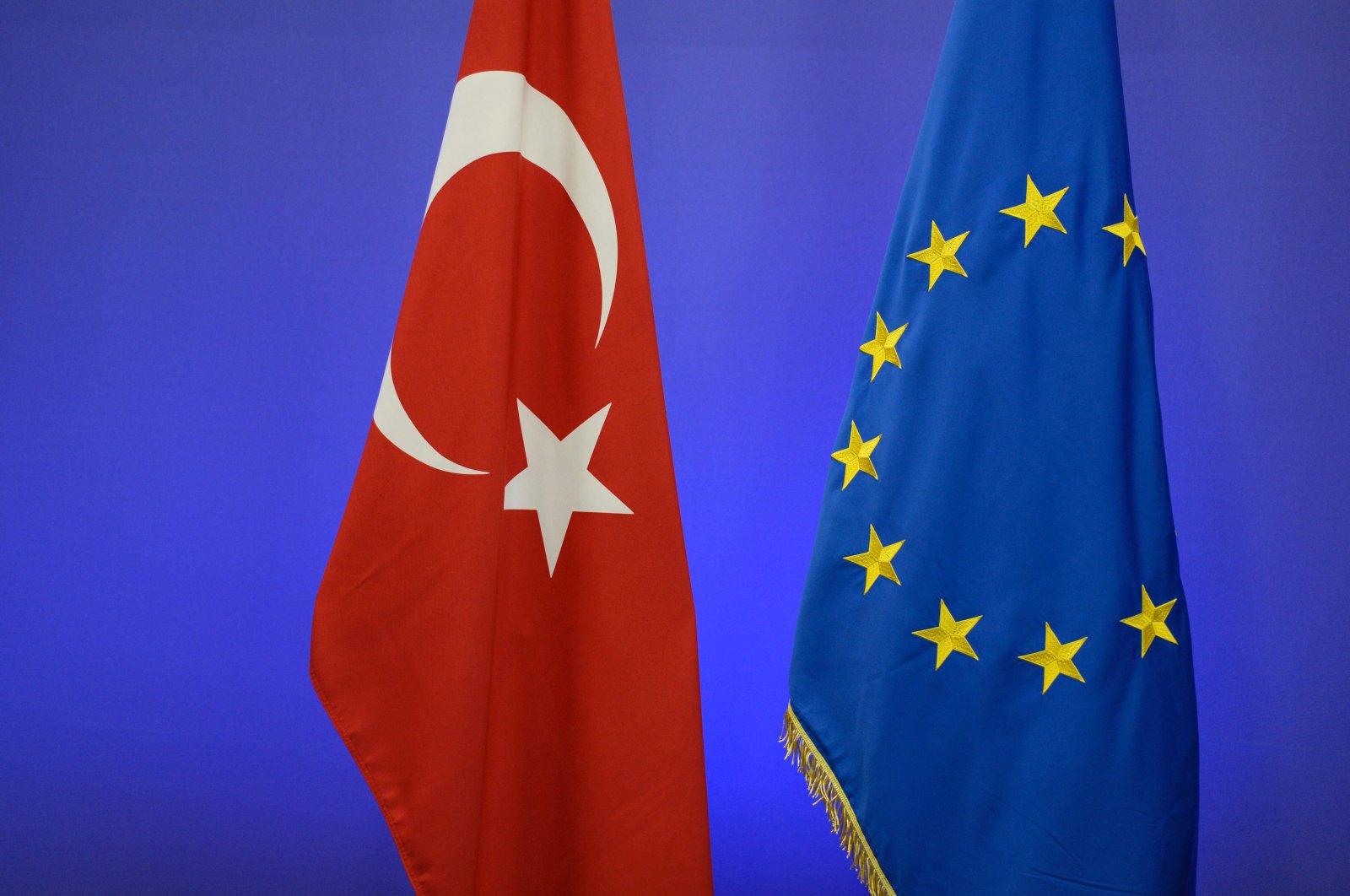
Turkey is preparing to ramp up diplomatic relations with European countries following Ankara's recent declaration that it intends to turn a new page with the European Union, ushering in a positive era. In line with the initiative, Foreign Minister Mevlüt Çavuşoğlu is scheduled to hold a meeting with EU ambassadors on Tuesday in the capital Ankara.
Most recently, President Recep Tayyip Erdoğan on Saturday reiterated that Turkey prioritizes the EU in its agenda and sees its future in Europe. Turkey hopes to start fresh with the bloc in the new year, Erdoğan said in a statement, adding that interactions with the EU in 2020 were unproductive due to the artificial problems created by certain EU members.
Other than the bilateral ties between Brussels and Ankara, four topics are expected to dominate the agenda: updating the migrant deal with the EU, visa liberalization for Turkish citizens, updating the customs union with the EU and Turkey's proposal for an Eastern Mediterranean conference.
Later in the day, President Erdoğan is expected to receive the EU ambassadors.
Hosting more than 3.5 million Syrians, Turkey signed a deal with Brussels in 2016 to reduce the influx of migrants taking the dangerous Aegean Sea route to Europe.
Under the deal, Turkey was promised 6 billion euros ($6.77 billion) in financial aid, which was initially designed to be given to the country in two stages and to be used by the Turkish government to finance projects for Syrian migrants. Visa freedom for Turkish citizens was also a perk of the agreement and the customs union was to be updated.
The customs union is a trade agreement between Turkey and the EU that came into effect on Dec. 31, 1995, following a March 6, 1995, decision by the European Community-Turkey Association Council to establish a customs union that allows goods to travel between the two entities without customs restrictions. The customs union does not cover essential parts of the economy such as agriculture, services or public procurement.
In exchange, Turkey agreed to discourage migrants from entering Europe via the Aegean Sea by cracking down on human traffickers and improving the living conditions of Syrian migrants living in Turkey. Despite Turkey significantly curbing migration traffic to Europe, the EU has not kept up its side of the deal.
When it comes to Ankara's disagreements with Athens over hydrocarbon resources in the Eastern Mediterranean, the EU has sided with its member, Greece. Last month, the EU was prepared to take punitive action against Turkey over its dispute with Greece and the Greek Cypriot administration over rights to offshore resources in the Eastern Mediterranean but decided to postpone the move until March, despite Paris encouraging sanctions against Ankara.


 Latest news
Latest news
Latest newsThe United States Rapidly Expands Missile Production: Pentagon Accelerates Output of Tomahawks and Other Critical Weapons
24.Aug.2026
Record Supplies: Armenia Boosts Fish Exports to Georgia
23.Aug.2026
Political Battle During Wartime: Zelensky Opposes Elections
23.Aug.2026
Romania Approves Construction of One of the Largest Solar Power Plants in Europe
23.Aug.2026
Ex-Ukrainian Defence Minister Fails in Bid to Pressure Zelenskiy
22.Aug.2026
Upper Lars: Why Border Queues Have Become a Political Signal for Georgia and Russia
22.Aug.2026
Russia-Ukraine War: No Decisive Breakthrough on the Front and Intensifying Ukrainian Deep Strikes on Russia
21.Aug.2026
TRIPP, Peace, and a New Geopolitical Crossroads: How Armenia Has Changed One Year After Washington
20.Aug.2026
Tokayev Updates Kazakhstan Foreign Policy Concept: Astana Strengthens Its Strategic Multi Vector Approach
19.Aug.2026
Ukraine Turns Ground Robots into a New Tool in the Fight Against Russia
19.Aug.2026
Tehran Threatens a New Round of War After Talks With the US Collapse
18.Aug.2026
Drones Over Moldova: Accident or a New Threat to National Security?
17.Aug.2026
Spanish F-18 Fighter Jet Shoots Down Drone That Violated Romanian Airspace
17.Aug.2026
The Black Sea Becomes a Risk Zone: Can Turkiye Protect Key Trade Routes?
16.Aug.2026
Ukraine Intensifies Long-Range Strikes: Flamingo Missiles Hit a Rocket and Space Center and Airbase in Russia
15.Aug.2026