
 24 Aug 2026









UK, EU welcome new round of talks between Turkey, Greece
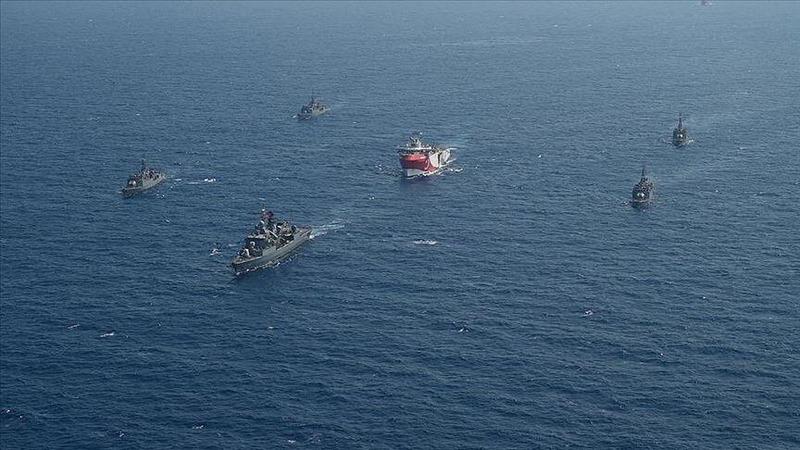
The U.K. and the European Union on Tuesday welcomed Turkey and Greece's decision to relaunch exploratory talks in Istanbul on Jan. 25.
"We welcome the positive decision by both countries to restart talks later this month to seek a resolution to tensions in the Aegean - this will help ensure stability & prosperity in the Eastern Mediterranean," Wendy Morton, the British parliamentary under-secretary for European neighborhood and the Americas, wrote on Twitter.
Turkey and Greece remain close friends of the U.K. and strong NATO allies, she said.
On Jan. 11, Foreign Minister Mevlüt Çavuşoğlu announced that Turkey would invite Greece to attend talks hosted on Turkish soil. On the same day, the Turkish Foreign Ministry announced in a statement that the 61st round of the exploratory talks would take place in Istanbul on Jan. 25.
The 60th round of talks, the latest of the exploratory talks initiated between the two countries in 2002, took place in Athens in March 2016. Since then, political consultations and bilateral negotiations have been held between the neighbors, but exploratory talks have not been revisited.
The issues of energy rights and maritime boundaries are expected to dominate the Turkish-Greek talks.
In another message, the EU said Tuesday that Turkey and Greece should focus on solving their bilateral issues at the negotiating table in this round of talks.
Hopefully, the discussions between the two sides translate into "concrete actions and negotiations," European Commission spokesperson Peter Stano told a daily press briefing in Brussels, the bloc's de facto capital.
"We were discussing already how important it is for Turkey to behave constructively towards the EU member states because the EU has on numerous occasions stressed its solidarity with Greece, with Cyprus (the Greek Cypriot administration), and stressed also the need to solve all the bilateral issues," Stano said.
Highlighting that the bloc stands with Athens on this issue, he stressed "the need to solve all the issues which are between Greece and Turkey, behind the negotiating table."
Turkish officials have criticized Greek efforts to turn bilateral issues into Turkish-EU issues and have repeatedly stressed that Ankara is in favor of resolving all outstanding problems in the region through international law, good neighborly relations, dialogue and negotiation.
Turkey, which has the longest continental coastline in the Eastern Mediterranean, has rejected the maritime boundary claims of Greece and the Greek Cypriot administration in the region, stressing that these excessive claims violate the sovereign rights of both Turkey and the Turkish Republic of Northern Cyprus (TRNC).
Ankara last year sent several drillships to explore for energy on its continental shelf, asserting its rights in the region as well as those of the TRNC.
Although Turkey and Greece had agreed on the general principles of NATO-led deconfliction talks in October, hailed by NATO Secretary-General Jens Stoltenberg as a “safety mechanism that can help to create the space for diplomatic efforts to address the underlying dispute,” further talks were obstructed by the Greek side.


 Latest news
Latest news
Latest newsThe United States Rapidly Expands Missile Production: Pentagon Accelerates Output of Tomahawks and Other Critical Weapons
24.Aug.2026
Record Supplies: Armenia Boosts Fish Exports to Georgia
23.Aug.2026
Political Battle During Wartime: Zelensky Opposes Elections
23.Aug.2026
Romania Approves Construction of One of the Largest Solar Power Plants in Europe
23.Aug.2026
Ex-Ukrainian Defence Minister Fails in Bid to Pressure Zelenskiy
22.Aug.2026
Upper Lars: Why Border Queues Have Become a Political Signal for Georgia and Russia
22.Aug.2026
Russia-Ukraine War: No Decisive Breakthrough on the Front and Intensifying Ukrainian Deep Strikes on Russia
21.Aug.2026
TRIPP, Peace, and a New Geopolitical Crossroads: How Armenia Has Changed One Year After Washington
20.Aug.2026
Tokayev Updates Kazakhstan Foreign Policy Concept: Astana Strengthens Its Strategic Multi Vector Approach
19.Aug.2026
Ukraine Turns Ground Robots into a New Tool in the Fight Against Russia
19.Aug.2026
Tehran Threatens a New Round of War After Talks With the US Collapse
18.Aug.2026
Drones Over Moldova: Accident or a New Threat to National Security?
17.Aug.2026
Spanish F-18 Fighter Jet Shoots Down Drone That Violated Romanian Airspace
17.Aug.2026
The Black Sea Becomes a Risk Zone: Can Turkiye Protect Key Trade Routes?
16.Aug.2026
Ukraine Intensifies Long-Range Strikes: Flamingo Missiles Hit a Rocket and Space Center and Airbase in Russia
15.Aug.2026