
 13 Oct 2026









Georgia praises ever expanding relations with Turkey
Georgia on Monday hailed its deepening relations with Turkey based on a strategic partnership and good neighborly relations.
In a statement marking the 100th anniversary of diplomatic relations between Turkey and Georgia, the Georgian Foreign Ministry underlined that on Feb. 8, 1921, Georgia's Simon Mdivani became the first foreign diplomat to give his letters of credentials to Mustafa Kemal Atatürk, the founder of the Turkish Republic and later its first president.
"The strategic partnership between Turkey and Georgia is growing deeper by a spirit of friendship and good neighborly relations. The Republic of Turkey is an ardent supporter of Georgian's territorial integrity, sovereignty, and Euro-Atlantic vision," the statement added.
The two countries have taken crucial steps to enhance bilateral ties in the past decade. They are a part of the trilateral mechanism with Azerbaijan, which was initiated by the Trabzon Declaration on June 8, 2012. The framework provides fertile ground for discussions on the consolidations of regional stability and security.
The bond between Turkey and Georgia has been strengthened through the establishment of the High-Level Strategic Cooperation Council.
Turkey is Georgia's top trading partner, reporting more than $1.7 billion (TL 12.03 billion) in trade volume in 2018. Both countries inked many significant bilateral agreements including the Free Trade Agreement and Joint Economic Trade Committee (JETCO), while also increasing the number of joint projects in the energy field.
One of these projects, the Baku-Tbilisi-Erzurum pipeline, started delivering gas to the Turkish network in July 2007. By last year, it had delivered 3.4 billion barrels of crude oil shipped from the marine terminal at Ceyhan in southern Turkey to global markets in 14 years. Similarly, the 1,076-kilometer (669-mile) Baku-Tbilisi-Ceyhan (BTC) pipeline started delivering Caspian oil to Turkey and global markets in 2006.
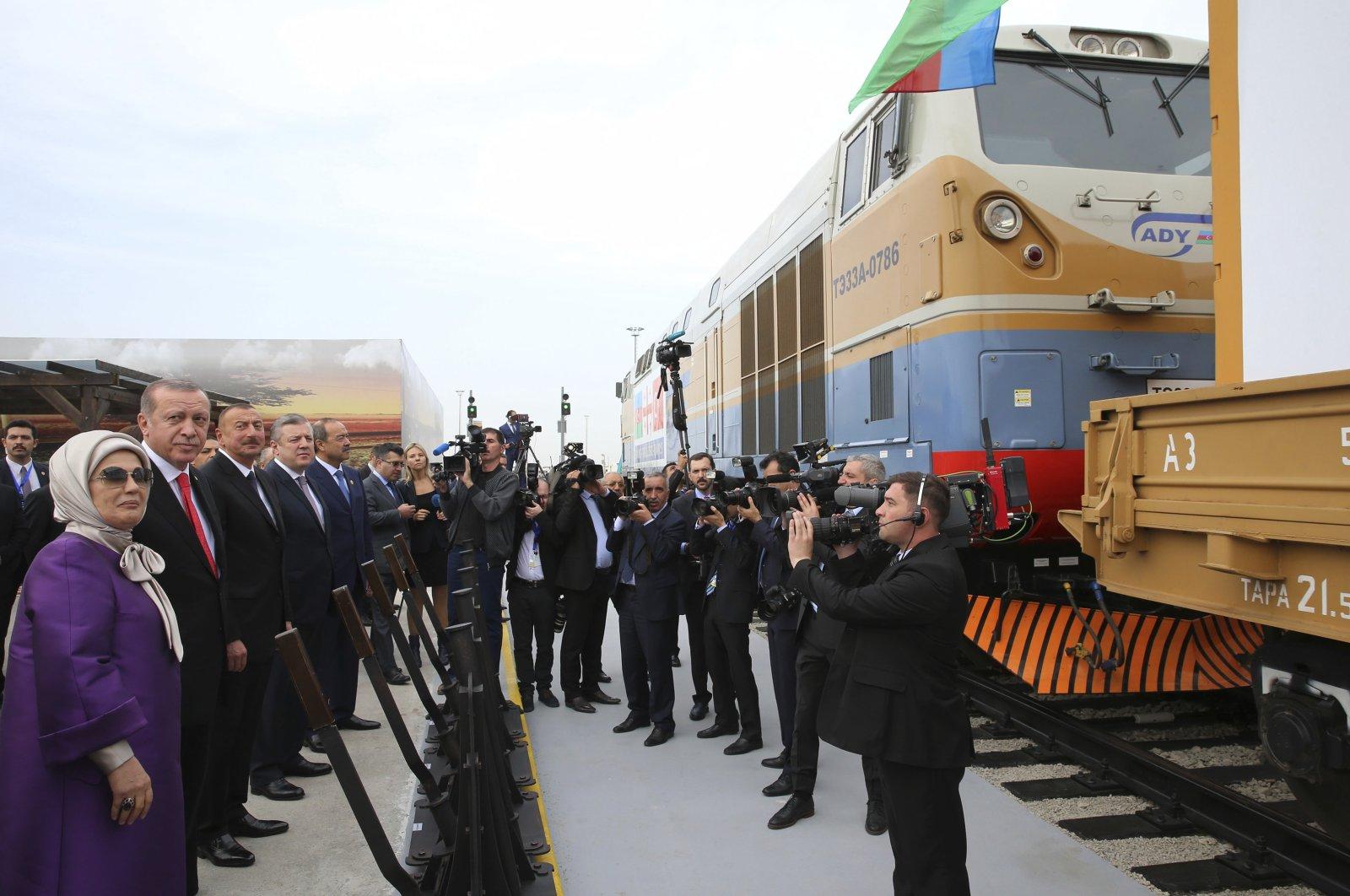
Another major project, the Baku-Tbilisi-Kars railroad, opened in 2017, connecting not just Turkey, Georgia and Azerbaijan, but also Europe to Central Asia and China. The 829-kilometer railway line, extending from Baku to Kars, complements a major part of the Middle Corridor with the Caspian Pass line.


 Latest news
Latest news
Latest newsGeorgia’s Constitutional Court Continues Case on Banning Opposition Parties: Political Pluralism at Stake
12.Oct.2026
Azerbaijan and Iran Step Up Security Contacts Amid Hijab Protests
12.Oct.2026
Personnel Shortages Complicate Ukrainian Forces’ Rotation: Ukraine Faces Long-Term Challenges on the Front Line
11.Oct.2026
Trump Eases Sanctions on Russian Fuel After Talks with Putin: Kyiv Fears Boost to Moscow’s War Revenues
10.Oct.2026
Putin Seeks to Strengthen Russia’s Influence in the Post-Soviet Space Through the CIS
10.Oct.2026
Russia and the South Caucasus: External Pressure, Political Competition and a Crisis of Trust
10.Oct.2026
Peaceful Settlement Between Armenia and Azerbaijan: Moving from Declarations to Implementation
10.Oct.2026
Moldova Ready to Accept as Many Ukrainians as Necessary if Situation Worsens This Winter
09.Oct.2026
Turkmenistan Turns Avaza into a Regional Diplomatic Hub as Caspian, Central Asian and CIS Agendas Converge
08.Oct.2026
Romania Scrambles Spanish F-18s After Aerial Targets Detected Near Ukrainian Border
07.Oct.2026
Berlin Deepens Defence Partnership with Kyiv: Germany to Provide Ukraine with €1 Billion in Military Aid
07.Oct.2026
European Parliament Against Georgian Dream: EU Prepares New Response to Tbilisi
06.Oct.2026
Bulgarian Foreign Minister to Discuss European Security and International Law in the Netherlands
05.Oct.2026
Rheinmetall in Bulgaria: Sofia Emerges as a New NATO Defence-Industrial Hub in the Balkans
05.Oct.2026
The Cost of a Long War: Moscow Expands Spending Plans Through 2029
05.Oct.2026