
 13 Oct 2026









Ukraine and Syria Restore Diplomatic Relations
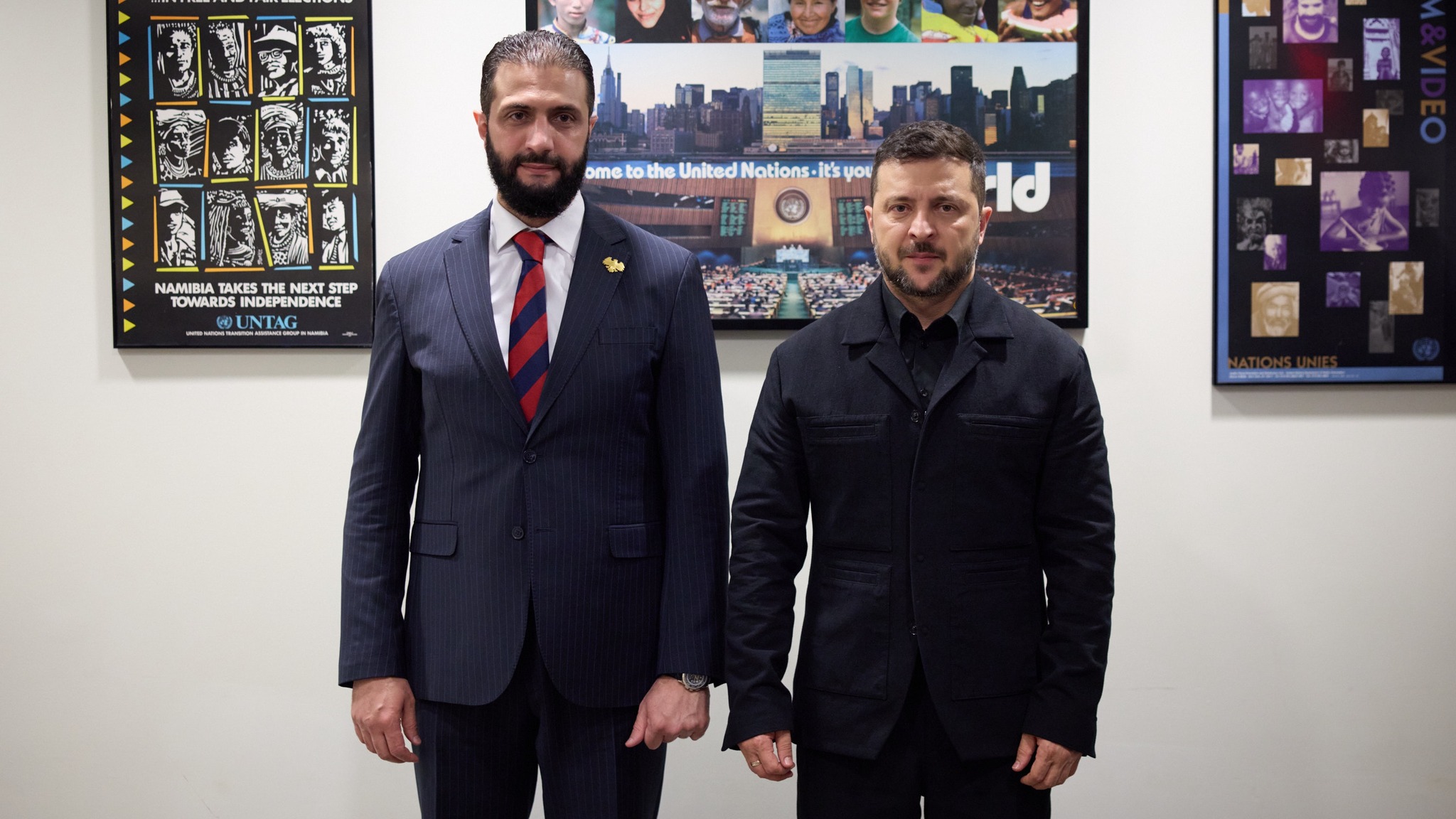
Ukraine
and Syria have signed a joint communiqué on the restoration of diplomatic
relations, President of Ukraine Volodymyr Zelensky announced.
The official signing took place on the sidelines of the 80th session of the UN
General Assembly in New York, with Zelensky and Syrian leader Ahmed al-Sharaa,
who is currently serving as head of state during the transitional period, in
attendance.
In his statement, Zelensky noted that talks with his Syrian
counterpart covered prospective areas of bilateral cooperation, security
issues, and the need for a joint response to emerging threats. He also
emphasized that both sides agreed to build relations based on “mutual respect
and trust”.
Diplomatic ties between Ukraine and Syria were severed in
June 2022, when Damascus recognized the so-called “independence” of the
temporarily occupied territories of Ukraine’s Donetsk and Luhansk regions.
After the fall of Bashar al-Assad’s regime in December 2024, Ukraine began
diplomatic contacts with Syria’s new leadership, expressing readiness to
restore cooperation.
The two sides are expected to discuss the following key
areas of cooperation:
- economic and trade interaction;
- humanitarian aid (particularly food supplies);
- joint efforts to counter security threats and terrorism.
The international community also views this step as part of
broader geopolitical shifts in the region.
For Ukraine, this move is not just about re-establishing
formal ties, but also an attempt to build relations within a new regional
context. The fall of the previous regime in Syria offers Kyiv an opportunity to
cooperate with those who may also be interested in reducing Russia’s influence
and ensuring greater independence.
On the other hand, restoring diplomatic relations with
Syria carries risks, since the country remains complex: political instability,
questions of the new leadership’s legitimacy, and the influence of external
actors persist.
Nevertheless, from a practical perspective, this step could open pathways for Ukraine to new markets, humanitarian channels, and more flexible diplomatic positioning in the Middle East.


 Latest news
Latest news
Latest newsGeorgia’s Constitutional Court Continues Case on Banning Opposition Parties: Political Pluralism at Stake
12.Oct.2026
Azerbaijan and Iran Step Up Security Contacts Amid Hijab Protests
12.Oct.2026
Personnel Shortages Complicate Ukrainian Forces’ Rotation: Ukraine Faces Long-Term Challenges on the Front Line
11.Oct.2026
Trump Eases Sanctions on Russian Fuel After Talks with Putin: Kyiv Fears Boost to Moscow’s War Revenues
10.Oct.2026
Putin Seeks to Strengthen Russia’s Influence in the Post-Soviet Space Through the CIS
10.Oct.2026
Russia and the South Caucasus: External Pressure, Political Competition and a Crisis of Trust
10.Oct.2026
Peaceful Settlement Between Armenia and Azerbaijan: Moving from Declarations to Implementation
10.Oct.2026
Moldova Ready to Accept as Many Ukrainians as Necessary if Situation Worsens This Winter
09.Oct.2026
Turkmenistan Turns Avaza into a Regional Diplomatic Hub as Caspian, Central Asian and CIS Agendas Converge
08.Oct.2026
Romania Scrambles Spanish F-18s After Aerial Targets Detected Near Ukrainian Border
07.Oct.2026
Berlin Deepens Defence Partnership with Kyiv: Germany to Provide Ukraine with €1 Billion in Military Aid
07.Oct.2026
European Parliament Against Georgian Dream: EU Prepares New Response to Tbilisi
06.Oct.2026
Bulgarian Foreign Minister to Discuss European Security and International Law in the Netherlands
05.Oct.2026
Rheinmetall in Bulgaria: Sofia Emerges as a New NATO Defence-Industrial Hub in the Balkans
05.Oct.2026
The Cost of a Long War: Moscow Expands Spending Plans Through 2029
05.Oct.2026