
 13 Oct 2026









Bulgarian government survives no-confidence vote, protests continue
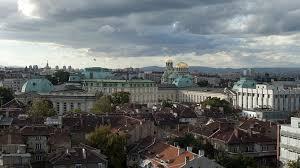
Bulgarian Prime Minister Boyko Borissov’s centre-right government survived a no-confidence vote in parliament on Tuesday that was called during a wave of anti-corruption protests, according to Reuters.
Thousands of Bulgarians have taken part in rallies in the past two weeks, saying the government has only been going through the motions in fighting corruption while state institutions get weaker to the benefit of private interests.
Some 124 lawmakers in the 240-seat parliament opposed the fifth no-confidence motion against the coalition government since it took office in 2017, and 102 lawmakers were in favour of the motion brought by the oppositions Socialists.
Borissov, 61, has said he will consider an overhaul of his cabinet but has ruled out a snap election, saying the government must remain to fight the coronavirus pandemic.
The coalition will meet in the next few days to discuss ways to address the protests in the European Union’s poorest member state.
“Every voice will be heard. Will there be changes? Yes.” Deputy Prime Minister Tomislav Donchev told reporters. “It is not enough to be better than the others. We need to be as good as the people want.”
Protesters blocked roads in front of parliament chanting “Resign” and “Jail” and vowing to continue rallies until Borissov and Bulgaria’s chief prosecutor quit.
“I want to live in a normal country that respects the rule of law, where the laws are the same for all and all can have equal opportunities,” said Veronika Florova, 28, holding a national flag.
Defending the government’s handling of the anti-corruption fight, Borissov said last week he had asked his finance, interior and economy ministers to step down to end speculation that they were under the influence of a media magnate and businessman from another political party. But he said he would not accept their resignations yet.
Borissov’s junior coalition partners have suggested one way out of the crisis would be to form a government not led by him.
22.07.2020 13:31


 Latest news
Latest news
Latest newsGeorgia’s Constitutional Court Continues Case on Banning Opposition Parties: Political Pluralism at Stake
12.Oct.2026
Azerbaijan and Iran Step Up Security Contacts Amid Hijab Protests
12.Oct.2026
Personnel Shortages Complicate Ukrainian Forces’ Rotation: Ukraine Faces Long-Term Challenges on the Front Line
11.Oct.2026
Trump Eases Sanctions on Russian Fuel After Talks with Putin: Kyiv Fears Boost to Moscow’s War Revenues
10.Oct.2026
Putin Seeks to Strengthen Russia’s Influence in the Post-Soviet Space Through the CIS
10.Oct.2026
Russia and the South Caucasus: External Pressure, Political Competition and a Crisis of Trust
10.Oct.2026
Peaceful Settlement Between Armenia and Azerbaijan: Moving from Declarations to Implementation
10.Oct.2026
Moldova Ready to Accept as Many Ukrainians as Necessary if Situation Worsens This Winter
09.Oct.2026
Turkmenistan Turns Avaza into a Regional Diplomatic Hub as Caspian, Central Asian and CIS Agendas Converge
08.Oct.2026
Romania Scrambles Spanish F-18s After Aerial Targets Detected Near Ukrainian Border
07.Oct.2026
Berlin Deepens Defence Partnership with Kyiv: Germany to Provide Ukraine with €1 Billion in Military Aid
07.Oct.2026
European Parliament Against Georgian Dream: EU Prepares New Response to Tbilisi
06.Oct.2026
Bulgarian Foreign Minister to Discuss European Security and International Law in the Netherlands
05.Oct.2026
Rheinmetall in Bulgaria: Sofia Emerges as a New NATO Defence-Industrial Hub in the Balkans
05.Oct.2026
The Cost of a Long War: Moscow Expands Spending Plans Through 2029
05.Oct.2026