
 13 Oct 2026









Armenia FM: Unilateral concessions are ruled out
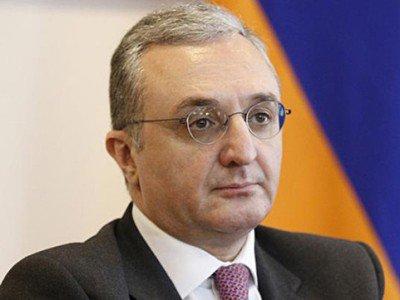
Armenia’s Minister of Foreign Affairs Zohrab Mnatsakanyan doesn’t agree with the view that ‘in essence, Armenia doesn’t really need to solve the Nagorno-Karabakh issue, the lands are taken, and the status-quo is favorable’.
“I can’t agree with this. Both Armenia and Nagorno-Karabakh are interested in the establishment of sustainable peace in the region, and sustainable peace can be established through a peaceful agreement based on mutual concessions. Unilateral concessions are ruled out since they can’t be prospective. Armenia and Nagorno-Karabakh can’t be interested in a situation where there are no sustainable and long-term foundations for peace and security in the region. In this sense, for us, the process of peaceful negotiations has been and remains a key priority for the settlement of this conflict,” the foreign minister told Interfax, News.am reports.
Assessing the role of the OSCE Minsk Group, the foreign minister stated that since the mid-1990s, the format of the OSCE Minsk Group Co-Chairs, including Russia, the US and France, has been and remains the only format of negotiations, and there are concrete results. It is a format recognized by the international community and includes the three permanent members of the United Nations Security Council. These are three countries that have a rather major political and diplomatic resource for mediation. These countries continue to be very involved in the process. “A mechanism, criteria and approaches have been developed throughout the years, and they ensure the scope in which it is possible to develop an option for tangible and real mutual concessions. In this sense, we continue and we will only continue to support this format of mediation. The Russian Federation is one of the OSCE Minsk Group Co-Chairs. The Russian side’s efforts were very effective, and they were seen during the events in July of this year and before the events. I am certain that Russia’s involvement at all levels emphasizes Russia’s serious attitude towards this process and the major contribution that Russia, along with the other Co-Chairs, is making to the peaceful settlement. There is no question here, and any attempt to question the work of the Co-Chairs which, by the way, is a major way of preventing escalation and pressure on the existing format, is unacceptable,” Mnatsakanyan said.


 Latest news
Latest news
Latest newsGeorgia’s Constitutional Court Continues Case on Banning Opposition Parties: Political Pluralism at Stake
12.Oct.2026
Azerbaijan and Iran Step Up Security Contacts Amid Hijab Protests
12.Oct.2026
Personnel Shortages Complicate Ukrainian Forces’ Rotation: Ukraine Faces Long-Term Challenges on the Front Line
11.Oct.2026
Trump Eases Sanctions on Russian Fuel After Talks with Putin: Kyiv Fears Boost to Moscow’s War Revenues
10.Oct.2026
Putin Seeks to Strengthen Russia’s Influence in the Post-Soviet Space Through the CIS
10.Oct.2026
Russia and the South Caucasus: External Pressure, Political Competition and a Crisis of Trust
10.Oct.2026
Peaceful Settlement Between Armenia and Azerbaijan: Moving from Declarations to Implementation
10.Oct.2026
Moldova Ready to Accept as Many Ukrainians as Necessary if Situation Worsens This Winter
09.Oct.2026
Turkmenistan Turns Avaza into a Regional Diplomatic Hub as Caspian, Central Asian and CIS Agendas Converge
08.Oct.2026
Romania Scrambles Spanish F-18s After Aerial Targets Detected Near Ukrainian Border
07.Oct.2026
Berlin Deepens Defence Partnership with Kyiv: Germany to Provide Ukraine with €1 Billion in Military Aid
07.Oct.2026
European Parliament Against Georgian Dream: EU Prepares New Response to Tbilisi
06.Oct.2026
Bulgarian Foreign Minister to Discuss European Security and International Law in the Netherlands
05.Oct.2026
Rheinmetall in Bulgaria: Sofia Emerges as a New NATO Defence-Industrial Hub in the Balkans
05.Oct.2026
The Cost of a Long War: Moscow Expands Spending Plans Through 2029
05.Oct.2026