
 24 Aug 2026









Why Turkey wants to see a revival of the Iran nuclear deal
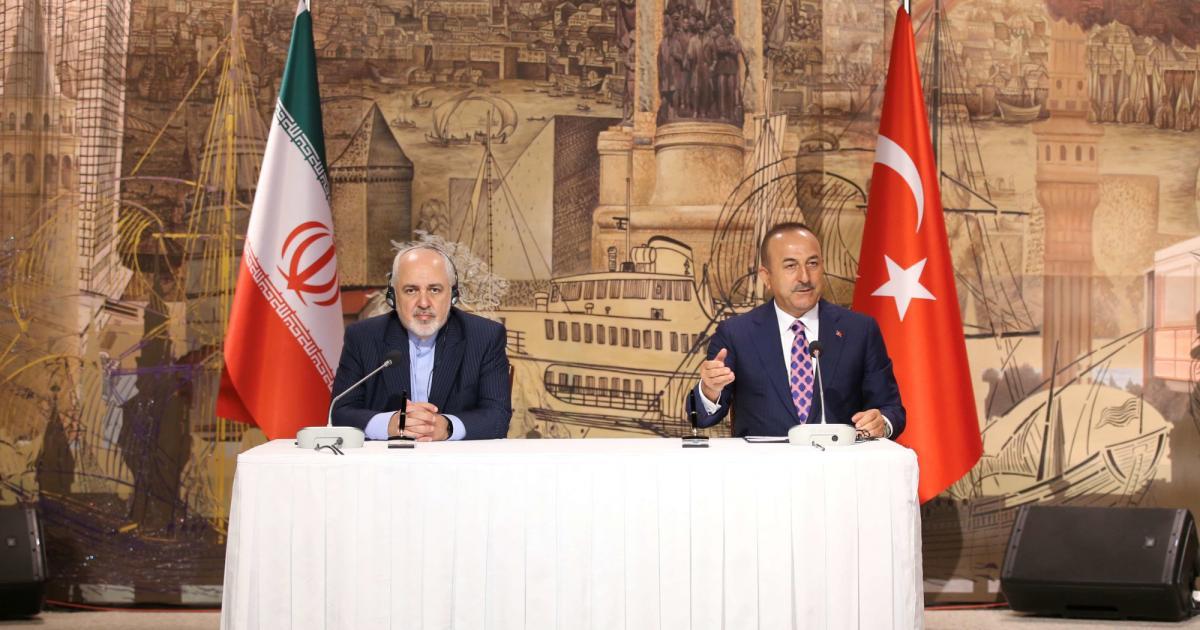
Turkey is eager to see a revival of the nuclear deal between Iran and the United States as the region adapts to President Joe Biden’s arrival in the White House. As Ahval News reports, on Jan. 29, Turkish Foreign Minister Mevlüt Çavuşoğlu spoke to this during a press conference alongside his Iranian counterpart Mohammad Javad Zarif. He said that Turkey hopes that “with the Biden administration, the United States will return to this agreement and cooperation on the (nuclear) issue is restored”.
He added that it was his hope that the “sanctions and embargoes imposed on brotherly Iran are lifted”.This sentiment sets Turkey apart from its neighbours in the Middle East, such as Israel or Saudi Arabia, said Dr Hamidreza Azizi, a Berlin-based research fellow at the German Institute for International and Security Affairs (SWP). “Unlike some other countries in the region, Turkey is really in favour of the revival of the nuclear agreement,” Azizi told Ahval in a podcast. For Ankara, a return to diplomacy would reduce its insecurity amid simmering tensions between its neighbour on one hand and most important NATO ally on the other. In the final year of Donald Trump’s term as U.S. president, acrimony between Washington and Tehran reached a fever pitch that unsettled Turkey. After the drone strike that eliminated Iran’s General Qassem Soleimani last year, Turkey called quickly for a de-escalation, something it repeated after Israel’s alleged assassination of Iran’s top nuclear scientist later that year.
Trump’s “maximum pressure” campaign squeezed Turkey into cutting the amount of energy imports from Iran, previously one of its largest suppliers. President Recep Tayyip Erdoğan railed against this at the time, but ended up having to comply. Azizi said that a reduction of tension would be welcome, especially if it headed off any instability that would inevitably become a problem for Turkey as Iran’s neighbour.
“For this reason, I think the revival of diplomacy between Iran and the United States would serve Turkey’s security interests,” he explained.
Under the shadow of the U.S. pressure campaign, Turkey’s position has been undermined indirectly by other moves to contain Tehran. The most notable of these may be the normalisation of relations among Iran’s Arab rivals and Israel. Observers saw the Abraham accords signed by the United Arab Emirates, Bahrain and Israel as a serious blow to Iran’s position in the Middle East.
However, others noted that Turkey had been marginalised by these developments too, given its poor relationship with the countries in question. Azizi told Ahval that this process had always been an important factor for Iran and Turkey.
Any improvement in Turkey’s relations with Arab countries and Israel has translated into more pressure for Iran, and vice versa, he said.In recent years, Israel, the UAE and Saudi Arabia have all identified Turkey as a threat comparable to Iran. Last year, the director of Israel’s Mossad intelligence service described Turkey as “the real threat”, while the Saudi Crown Prince Mohammed bin-Salman once cited the two together as part of a “triangle of evil”.
Iran and Turkey had found themselves on the same side when Gulf countries started a blockade on Qatar. They also worked together diplomatically in Syria with Russia under the so-called Astana process aimed at ending the decade-long civil war. Short of their geopolitical aims, Turkey and Iran are drawn together by more factors. Azizi noted that there had been a long period without open conflict between the two neighbours, which was “longer than the history of some countries”, and that could be attributed to “strong social, historical and cultural” links. That said, competing geopolitical ambitions do exist, which does keep some distance in this relationship.
“This is not realpolitik that holds this relationship together, but realpolitik prevents the two from becoming as close as they can be,” said Azizi. This was apparent in the recent conflict in Nagorno-Karabakh when Turkey’s ally Azerbaijan fought to regain the disputed territory from Armenia. Iran was caught in a bind over the war with some factions advocating it back fellow Shia Azerbaijan and to support it on ethnic grounds - more than 20 million Iranians have an Azeri background. The government in Tehran took a middle position: It disapproved of Ankara enabling Baku to engage in a military campaign it saw as strengthening Israel’s presence in the region given the latter’s closeness to Azerbaijan. “There is a strong belief in Iran that the war was Erdoğan’s initiative,” Azizi said, and not Azeri President Ilham Aliyev’s.
Iran endorsed the Russia-brokered truce that ended the fighting on Nov. 11, but it laid bare both its suspicion of Turkish ambitions and socio-cultural sensitivities involved. For instance, Erdoğan recited a poem in Baku that Tehran saw as advocating Azeri separatism, prompting anti-Turkey riots in the Iranian city of Tabriz.
Azizi described this episode as a “good example of how Iran sees its position” after the conflict, and said that the reaction to Erdoğan’s speech was indicative of its unease.“Maybe Iran overreacted to the issue, but when it comes to Nagorno-Karabakh Iran is concerned that Turkey’s growing influence will come at the cost of its own,” he said.


 Latest news
Latest news
Latest newsPutin Authorizes Temporary State Management of Critical Infrastructure Vulnerable to Drone Attacks
24.Aug.2026
The United States Rapidly Expands Missile Production: Pentagon Accelerates Output of Tomahawks and Other Critical Weapons
24.Aug.2026
Record Supplies: Armenia Boosts Fish Exports to Georgia
23.Aug.2026
Political Battle During Wartime: Zelensky Opposes Elections
23.Aug.2026
Romania Approves Construction of One of the Largest Solar Power Plants in Europe
23.Aug.2026
Ex-Ukrainian Defence Minister Fails in Bid to Pressure Zelenskiy
22.Aug.2026
Upper Lars: Why Border Queues Have Become a Political Signal for Georgia and Russia
22.Aug.2026
Russia-Ukraine War: No Decisive Breakthrough on the Front and Intensifying Ukrainian Deep Strikes on Russia
21.Aug.2026
TRIPP, Peace, and a New Geopolitical Crossroads: How Armenia Has Changed One Year After Washington
20.Aug.2026
Tokayev Updates Kazakhstan Foreign Policy Concept: Astana Strengthens Its Strategic Multi Vector Approach
19.Aug.2026
Ukraine Turns Ground Robots into a New Tool in the Fight Against Russia
19.Aug.2026
Tehran Threatens a New Round of War After Talks With the US Collapse
18.Aug.2026
Drones Over Moldova: Accident or a New Threat to National Security?
17.Aug.2026
Spanish F-18 Fighter Jet Shoots Down Drone That Violated Romanian Airspace
17.Aug.2026
The Black Sea Becomes a Risk Zone: Can Turkiye Protect Key Trade Routes?
16.Aug.2026