
 10 Oct 2026









Putin Authorizes Temporary State Management of Critical Infrastructure Vulnerable to Drone Attacks
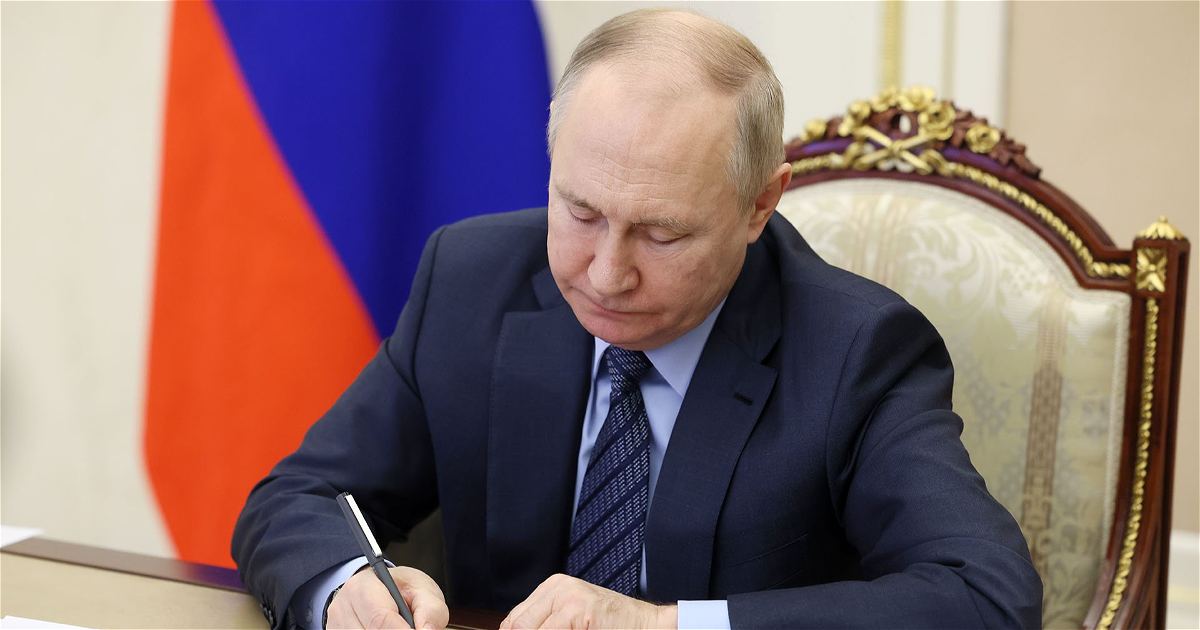
Russian President Vladimir Putin has signed a decree allowing the government to introduce temporary state management over critical infrastructure facilities whose owners fail to ensure adequate security, respond ineffectively to the threat of drone attacks, or fail to restore damaged facilities in a timely manner. Decree No. 604 was signed and published on August 24, 2026.
Under the decree, temporary management may be introduced by a decision of the Russian government based on an order from the president. The measure applies not only directly to infrastructure facilities, but also to the assets of the relevant business entity, its securities, stakes in Russian companies, and property rights.
The list of critical infrastructure covered by the decree includes facilities in the fuel and energy sector, industry, communications, utilities, transport and logistics, and the energy sector, including nuclear facilities. It also covers critical and potentially hazardous facilities, as well as infrastructure considered particularly important for national security and economic stability.
One of the grounds explicitly cited in the decree is the ineffectiveness of measures aimed at preventing attacks involving unmanned aerial vehicles. Another ground is the failure to restore, or the untimely restoration of, normal operations following damage to a facility.
Rosimushchestvo, Russia’s Federal Agency for State Property Management, will generally act as the temporary administrator, although the government may appoint another entity. The temporary administrator will exercise the powers of the owner in relation to the transferred assets but will not have the right to dispose of them. Its responsibilities will also include conducting an inventory and ensuring the preservation of the assets.
Russian First Deputy Prime Minister Denis Manturov said the new mechanism would be applied selectively and does not amount to the nationalization of enterprises. According to him, the measure is intended to provide temporary state involvement in management in order to address specific security concerns.
The introduction of such a mechanism indicates that Russian authorities increasingly view the threat of drone attacks as a factor capable of directly disrupting the operations of major industrial and logistics companies. In recent months, oil, industrial and warehouse infrastructure has been targeted, while damage to major logistics facilities has created consequences extending beyond individual companies to broader supply chains.
The new decree effectively expands the state’s ability to intervene in the management of privately owned assets when their security is deemed inadequate. At the same time, the measure is formally presented not as a transfer of ownership to the state, but as temporary management that must be terminated by a separate government decision, also issued on the basis of a presidential order.
Experts and business representatives will now closely monitor how the government defines the criteria for inadequate infrastructure protection and under what circumstances the new mechanism is put into practice. Its implementation will determine whether the decree remains primarily a tool for protecting strategic facilities or evolves into a broader mechanism for state intervention in the operations of private companies.


 Latest news
Latest news
Latest newsMoldova Ready to Accept as Many Ukrainians as Necessary if Situation Worsens This Winter
09.Oct.2026
Turkmenistan Turns Avaza into a Regional Diplomatic Hub as Caspian, Central Asian and CIS Agendas Converge
08.Oct.2026
Romania Scrambles Spanish F-18s After Aerial Targets Detected Near Ukrainian Border
07.Oct.2026
Berlin Deepens Defence Partnership with Kyiv: Germany to Provide Ukraine with €1 Billion in Military Aid
07.Oct.2026
European Parliament Against Georgian Dream: EU Prepares New Response to Tbilisi
06.Oct.2026
Bulgarian Foreign Minister to Discuss European Security and International Law in the Netherlands
05.Oct.2026
Rheinmetall in Bulgaria: Sofia Emerges as a New NATO Defence-Industrial Hub in the Balkans
05.Oct.2026
The Cost of a Long War: Moscow Expands Spending Plans Through 2029
05.Oct.2026
Trump Steps Up Pressure on Iran: Washington Puts Tehran Before a Choice Between a Deal and Further Escalation
04.Oct.2026
Russia Warns Diplomats Amid New Wave of Strikes on Ukraine
04.Oct.2026
Turkiye Expands Defense Capabilities: Ankara Aligns European Cooperation with the Development of Its Domestic Defense Industry
04.Oct.2026
Azerbaijan Expands Defense Industry as Growing Production Increases Military Burden on the Economy
03.Oct.2026
Germany Scales Back Political Presence in Georgia as Konrad Adenauer Foundation Closes Tbilisi Office
03.Oct.2026
Russia Prepares to Ease Fuel Restrictions as Moscow Seeks Balance Between Gasoline Shortages and Diesel Exports
03.Oct.2026
Bulgaria and NIS2: A New Stage in Integration into the European Cybersecurity System
02.Oct.2026