
 24 Aug 2026









Fadia M. Saadah: in Azerbaijan, human capital investments are the key to resilient growth in the era of COVID-19
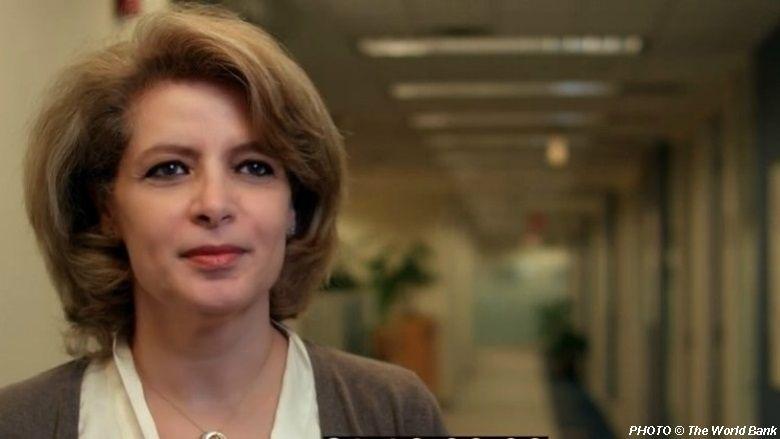
By limiting access to health, education, social protection, and jobs, the COVID-19 pandemic threatens to reverse human capital gains in Azerbaijan. In a recently published report, Survive, Learn, Thrive: Strategic Human Capital Investments to Accelerate Azerbaijan’s Growth, the government of Azerbaijan and the World Bank identify the main challenges to building and activating human capital and put a spotlight on high-impact interventions that respond to constraints, Modern Diplomacy writes. Fadia M. Saadah, World Bank Human Development Regional Director for Europe and Central Asia, reflects on the success and challenges of the past, and opportunities for the World Bank Group to partner with the government of Azerbaijan in ensuring resilient growth, powered by human capital investments.
-What do you see as the main challenges facing human capital formation and activation in Azerbaijan?
-The government of Azerbaijan has achieved a great deal in terms of human capital development. Over the last five years, enrollment in higher education rose 21 percent. The introduction of mandatory health insurance supported an increase in the use of essential primary care level and improvements in efficiency. Contributory pensions and poverty-targeted social transfers raised the incomes of the bottom 40 percent substantially, facilitating household-level investments in health and education.
Despite this progress, gaps in human capital investments persist. On standardized tests, students from wealthier families score the equivalent of three years of schooling above students from poor families, an indication of wide inequalities in learning outcomes. Out-of-pocket payments remain high, despite the launch of mandatory health insurance, reducing access to services needed to control the rise of noncommunicable diseases. Only one in five households in the poorest quintile benefits from the targeted social assistance program, and labor force participation remains low, especially among women.
Azerbaijan’s Human Capital Index is 0.58, meaning that a child born today in Azerbaijan would be 58 percent as productive as she could have been as an adult if she had enjoyed full health and had benefited from a complete education. The COVID-19 pandemic has reduced access to social services and is projected to lead to an economic contraction of 4.2 percent in 2020. The government has risen to the challenge of recovering the gains in health and learning outcomes and ensuring that human capital development remains central to the political agenda.
-Azerbaijan faces the dual challenge of recovering from the COVID-19 pandemic and strengthening health, education, learning, and employment services to facilitate growth. What strategic investments do you recommend for the human development sector in the short and medium term?
-The government aims to balance the medium-to-long term objective of reforming social systems with the ongoing COVID-19 pandemic response. Hence, in the health sector, we recommend the digitalization and interoperability of health information systems to support comprehensive surveillance and facilitate continuity of care in the treatment of noncommunicable diseases. Reforming health financing to increase public health spending and protect households from out-of-pocket costs will be important to increase health care access.
As schools reopen, Azerbaijan is investing in remediating learning losses. Doing so may involve ensuring that schools follow health protocols to reduce their risks of becoming the source of group infections, providing students with financial and nonfinancial incentives not to drop out of school, and equipping schools and training teachers to better manage in-person and distance learning. We also recommend establishing a fund to support innovation in higher education.
Social assistance will be essential to ensuring that the most vulnerable households are able to access social services.
Improving the coverage of the targeted social assistance program and increasing public financing for these transfers will further improve households’ resilience to consumption shocks. Including employers in the design and implementation of active labor market programs will help link people to jobs.
The potential for human capital investments to drive growth and resilience in Azerbaijan is significant. An analysis by the World Bank, The Changing Wealth of Nations 2018, reports that human capital comprises 64 percent of global wealth. If Azerbaijan ensured complete education and healthcare among children and adults, its long-run per capita gross domestic product could be 1.67 times higher than it is today.
-The World Bank has partnered with Azerbaijan on landmark reforms since independence. How do you see the engagement evolving over the next few years?
-The next phase of the human capital policy dialogue in Azerbaijan can benefit from a focus on putting this agenda into practice through investments in human capital. The World Bank Group remains committed to providing technical and financial support for operationalizing and implementing this ambitious strategy. We highlight important areas of engagement in education, health, social protection, and jobs below.
Education: The World Bank Group has long supported the government in the development of the education system, including reforms in general education and formulation of the country’s education sector development strategy. The government has introduced per capita financing in tertiary education and a remuneration and quality assurance system in secondary education.
The Second Education Sector Development Project, which closed in 2016, focused on improving the quality of teaching and learning in general education. Through ongoing policy dialogue, the World Bank Group will continue to support education reforms, especially to increase access to early childhood education and spur innovation in tertiary education.
Health: The World Bank Group has engaged in the health sector over the past few years through policy dialogue and provision of technical expertise to support health financing reforms. At the request of the government, it is facilitating knowledge exchanges that may inform the implementation of mandatory health insurance, drawing on the experiences of Kazakhstan, the Republic of Korea, and Costa Rica.
With funding from the Japan Policy and Human Resources Development Fund, the World Bank Group is supporting efforts to improve the governance of digital data and leverage claims data to strengthen provider payment mechanisms within the mandatory health insurance system. Over the next few years, the World Bank Group will continue to engage in policy dialogue on priority issues, including health insurance, e-health and telemedicine, and the development of an integrated claims management system.
Social Protection and Labor: In the past few years, the World Bank Group has supported efforts by the government to raise the most vulnerable people in Azerbaijan out of poverty, by investing in the implementation of the National Employment Strategy and critical social assistance and disability reforms.
A recently approved Employment Support Project aims to improve vulnerable people’s access to employment by enhancing the scope and effectiveness of the government’s Self-Employment Program, enhancing employment services and programs, and building public sector capacity. The Internally Displaced Person Living Standards and Livelihoods Project and Additional Financing, which closed in 2019, helped improve the living conditions and increase the economic self-reliance of internally displaced persons. The World Bank Group will continue to support Azerbaijan through ongoing policy dialogue to strengthen the social protection system as a platform to improve human capital outcomes and households’ resilience to shocks.


 Latest news
Latest news
Latest newsPutin Authorizes Temporary State Management of Critical Infrastructure Vulnerable to Drone Attacks
24.Aug.2026
The United States Rapidly Expands Missile Production: Pentagon Accelerates Output of Tomahawks and Other Critical Weapons
24.Aug.2026
Record Supplies: Armenia Boosts Fish Exports to Georgia
23.Aug.2026
Political Battle During Wartime: Zelensky Opposes Elections
23.Aug.2026
Romania Approves Construction of One of the Largest Solar Power Plants in Europe
23.Aug.2026
Ex-Ukrainian Defence Minister Fails in Bid to Pressure Zelenskiy
22.Aug.2026
Upper Lars: Why Border Queues Have Become a Political Signal for Georgia and Russia
22.Aug.2026
Russia-Ukraine War: No Decisive Breakthrough on the Front and Intensifying Ukrainian Deep Strikes on Russia
21.Aug.2026
TRIPP, Peace, and a New Geopolitical Crossroads: How Armenia Has Changed One Year After Washington
20.Aug.2026
Tokayev Updates Kazakhstan Foreign Policy Concept: Astana Strengthens Its Strategic Multi Vector Approach
19.Aug.2026
Ukraine Turns Ground Robots into a New Tool in the Fight Against Russia
19.Aug.2026
Tehran Threatens a New Round of War After Talks With the US Collapse
18.Aug.2026
Drones Over Moldova: Accident or a New Threat to National Security?
17.Aug.2026
Spanish F-18 Fighter Jet Shoots Down Drone That Violated Romanian Airspace
17.Aug.2026
The Black Sea Becomes a Risk Zone: Can Turkiye Protect Key Trade Routes?
16.Aug.2026