
 25 Aug 2026









U.S. envoy to Russia to leave for Washington
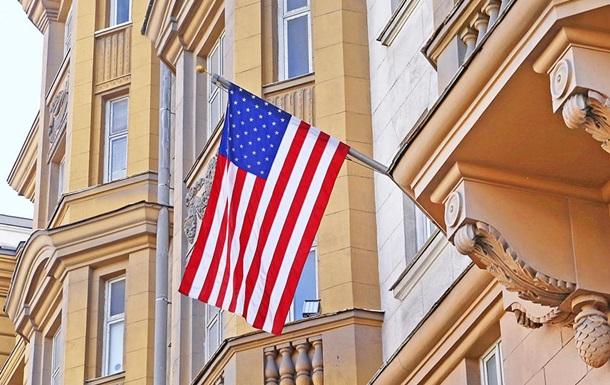
U.S. Ambassador to Russia John Sullivan will go to Washington this week for consultations with the Biden administration and will return to Moscow "in the coming weeks," the Axios portal reported citing a U.S. State Department spokesperson.
"Ambassador Sullivan will be returning to the U.S. this week to visit his family and meet with members of the new administration with whom he has not had a chance to consult since he agreed to continue serving in his post indefinitely," a State Department spokesperson told Axios.
"He will return to Moscow in the coming weeks," the spokesperson noted.
Earlier Axios reported that Sullivan was not planning to leave the country despite Moscow’s advice to go back to Washington for consultations. According to the report, Sullivan's view is that if Moscow wants him to leave, it has to "force" him.
Russian Foreign Minister Sergey Lavrov told a news conference on April 16 that Russian Presidential Aide Yuri Ushakov briefed Sullivan on Russia’s retaliatory measures at their meeting in Moscow. Ushakov advised Sullivan to go back to Washington for consultations. Lavrov noted that Russian Ambassador to the U.S. Anatoly Antonov was continuing his consultations in Moscow.
U.S. President Joe Biden on April 15 signed an executive order to impose sanctions on Russia. In part, the U.S. prohibits its companies from acquiring Russian debt liabilities issued by the Central Bank, the National Wealth Fund and the Ministry of Finance. Also, the Department of Commerce imposed sanctions on 16 organizations and 16 individuals, allegedly responsible for Russia’s rumored interference in U.S. elections. Besides, sanctions were introduced against eight individuals and legal entities related to Crimea. Also, the United States is expelling ten diplomats, who are deemed as "representatives of Russian intelligence services."
On April 16, Russia announced tit-for-tat measures. The U.S. ambassador was advised to head to Washington for consultations. Russia asked ten U.S. diplomats to leave Moscow and launched a procedure that stops the practice of hiring citizens of Russia and third countries by the U.S. diplomatic missions in Russia. Apart from that, Russia barred entry for eight incumbent and former U.S. high-ranking officials and figures, who have been involved in devising and pursuing the anti-Russian policy. Among them are the U.S. attorney general, the FBI director, the director of National Intelligence, the Secretary of Homeland Security and the director of the Federal Bureau of Prisons.


 Latest news
Latest news
Latest newsPutin Authorizes Temporary State Management of Critical Infrastructure Vulnerable to Drone Attacks
24.Aug.2026
The United States Rapidly Expands Missile Production: Pentagon Accelerates Output of Tomahawks and Other Critical Weapons
24.Aug.2026
Record Supplies: Armenia Boosts Fish Exports to Georgia
23.Aug.2026
Political Battle During Wartime: Zelensky Opposes Elections
23.Aug.2026
Romania Approves Construction of One of the Largest Solar Power Plants in Europe
23.Aug.2026
Ex-Ukrainian Defence Minister Fails in Bid to Pressure Zelenskiy
22.Aug.2026
Upper Lars: Why Border Queues Have Become a Political Signal for Georgia and Russia
22.Aug.2026
Russia-Ukraine War: No Decisive Breakthrough on the Front and Intensifying Ukrainian Deep Strikes on Russia
21.Aug.2026
TRIPP, Peace, and a New Geopolitical Crossroads: How Armenia Has Changed One Year After Washington
20.Aug.2026
Tokayev Updates Kazakhstan Foreign Policy Concept: Astana Strengthens Its Strategic Multi Vector Approach
19.Aug.2026
Ukraine Turns Ground Robots into a New Tool in the Fight Against Russia
19.Aug.2026
Tehran Threatens a New Round of War After Talks With the US Collapse
18.Aug.2026
Drones Over Moldova: Accident or a New Threat to National Security?
17.Aug.2026
Spanish F-18 Fighter Jet Shoots Down Drone That Violated Romanian Airspace
17.Aug.2026
The Black Sea Becomes a Risk Zone: Can Turkiye Protect Key Trade Routes?
16.Aug.2026