
 25 Aug 2026









Putin orders the export of hydrogen to the EU
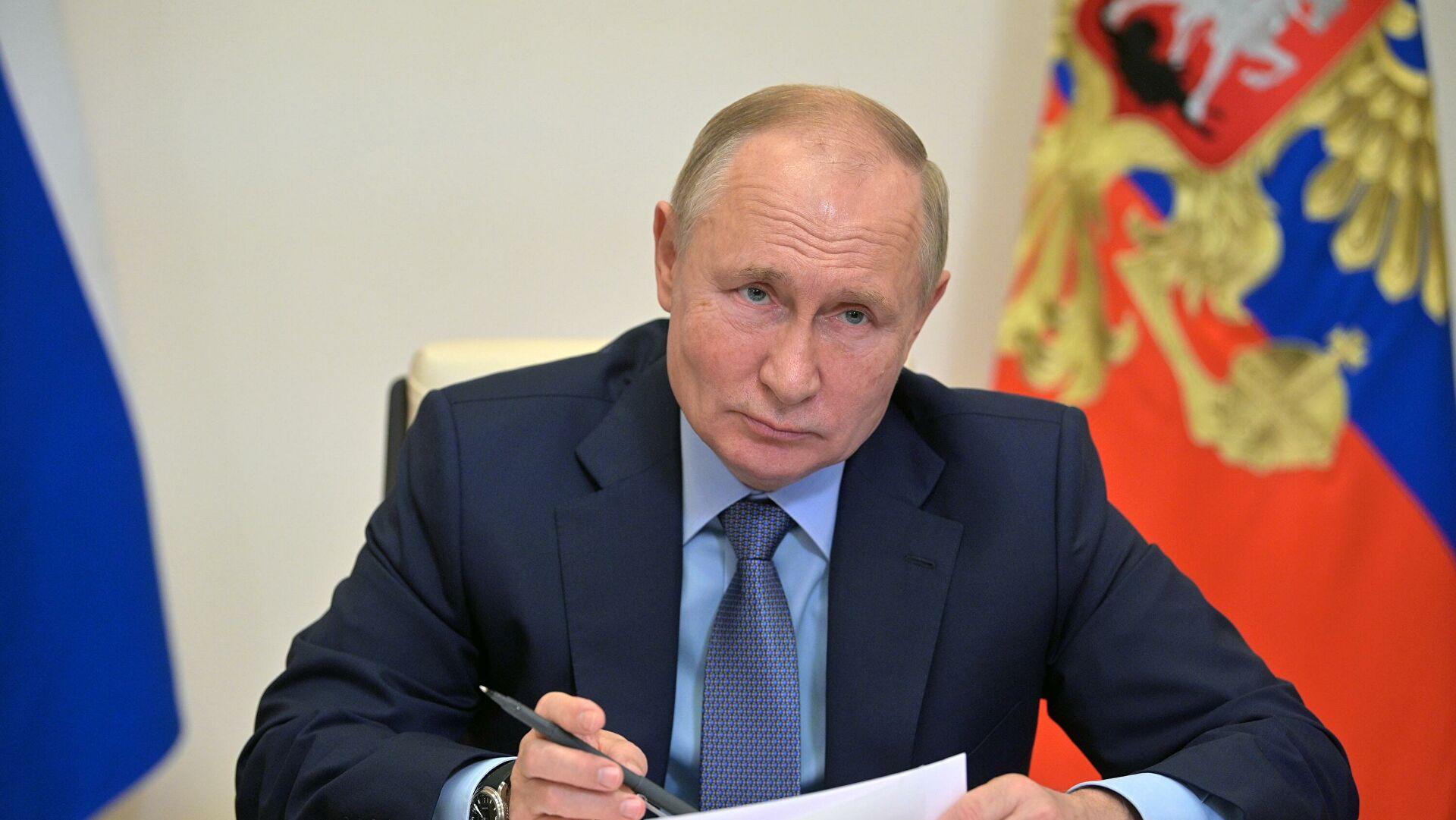
The Russian government and Gazprom will work out the possibility of exporting hydrogen to Europe in the form of a methane-hydrogen mixture through existing pipelines by June 1, 2021. The corresponding instruction was given by the President of the Russian Federation Vladimir Putin.
"The Government of the Russian Federation, together with the public joint-stock company "Gazprom"With the participation of the Ministry of Foreign Affairs of Russia, consider the possibility of exporting hydrogen to the EU countries in a methane-hydrogen mixture on the basis of existing pipeline systems and the recognition of such hydrogen in accordance with the requirements of the European Union taxonomy", it is stated in the list of orders resulting from the meeting on climate policy.
The report must be prepared by June 1, 2022. Russian Deputy Prime Minister Alexander Novak, Russian Foreign Minister Sergey Lavrov and Gazprom CEO Alexey Miller have been appointed responsible.
As Igor Yushkov, a leading analyst of the National Energy Security Fund and lecturer at the Financial University under the Government of the Russian Federation, noted in an interview with Vestnik Kavkaza, first of all, Gazprom will have to solve the problem of hydrogen production. " Hydrogen is produced in Russia and in the world, but it is not designed for mass consumption. It is needed, for example, in metallurgy and other sectors of the economy, but in a small amount. Therefore, first of all it is necessary to adapt the gas supply system for the demands of Europe", he said.
"It is desirable to produce hydrogen on an industrial scale where gas pipelines begin, so that it is convenient to create a methane-hydrogen mixture. For example, in order to pump such a mixture through Nord Stream 2, a hydrogen production plant must be built at the entrance to the pipeline. In the same place we should mix it with natural gas. Besides, if we are going to mix a small proportion of hydrogen, then there is no need to do anything with the gas pipeline, but if the proportion of hydrogen in the mixture reaches 10-20%, it will be necessary to recycle the gas pipeline in order to safely pump gas with a different chemical composition without damaging the pipes", - noted Igor Yushkov.
The expert pointed out the interest of Europe in the methane-hydrogen mixture. “On the one hand, they need hydrogen to store surplus energy obtained from renewable sources in it and extract it, if necessary, by environmentally friendly combustion of hydrogen. They assume that in the early stages of moving away from oil and coal, they will lack their own energy, so they will import hydrogen, and that is a methane-hydrogen mixture. Accordingly, Gazprom is trying to respond to this challenge and says that it is ready to pump to Europe not methane, but a methane-hydrogen mixture, if there is a demand for this in the EU during the transition period," the economist said.
Meanwhile, this is not a prospect of tomorrow. "Hydrogen as a source of energy is not consumed by any country in Europe. European turbines aren't powered by hydrogen gas mixtures yet, although Siemens is actively working in this direction and is developing appropriate equipment. So now it’s just some of the plans that Europeans make to switch to hydrogen and methane. Russia, for its part, responds to these plans by asking: how will we deliver this hydrogen-methane mixture to you? Therefore, it is said that first we need to work out the order of modernization of the gas transportation system, which may not be needed at the beginning, in order to be ready to implement new projects when there is a physical demand for a mixture of hydrogen and methane in Europe", Igor Yushkov concluded .


 Latest news
Latest news
Latest newsPutin Authorizes Temporary State Management of Critical Infrastructure Vulnerable to Drone Attacks
24.Aug.2026
The United States Rapidly Expands Missile Production: Pentagon Accelerates Output of Tomahawks and Other Critical Weapons
24.Aug.2026
Record Supplies: Armenia Boosts Fish Exports to Georgia
23.Aug.2026
Political Battle During Wartime: Zelensky Opposes Elections
23.Aug.2026
Romania Approves Construction of One of the Largest Solar Power Plants in Europe
23.Aug.2026
Ex-Ukrainian Defence Minister Fails in Bid to Pressure Zelenskiy
22.Aug.2026
Upper Lars: Why Border Queues Have Become a Political Signal for Georgia and Russia
22.Aug.2026
Russia-Ukraine War: No Decisive Breakthrough on the Front and Intensifying Ukrainian Deep Strikes on Russia
21.Aug.2026
TRIPP, Peace, and a New Geopolitical Crossroads: How Armenia Has Changed One Year After Washington
20.Aug.2026
Tokayev Updates Kazakhstan Foreign Policy Concept: Astana Strengthens Its Strategic Multi Vector Approach
19.Aug.2026
Ukraine Turns Ground Robots into a New Tool in the Fight Against Russia
19.Aug.2026
Tehran Threatens a New Round of War After Talks With the US Collapse
18.Aug.2026
Drones Over Moldova: Accident or a New Threat to National Security?
17.Aug.2026
Spanish F-18 Fighter Jet Shoots Down Drone That Violated Romanian Airspace
17.Aug.2026
The Black Sea Becomes a Risk Zone: Can Turkiye Protect Key Trade Routes?
16.Aug.2026