
 28 Aug 2026









Thousands Take to the Streets of Tbilisi in Support of Georgia’s European Course
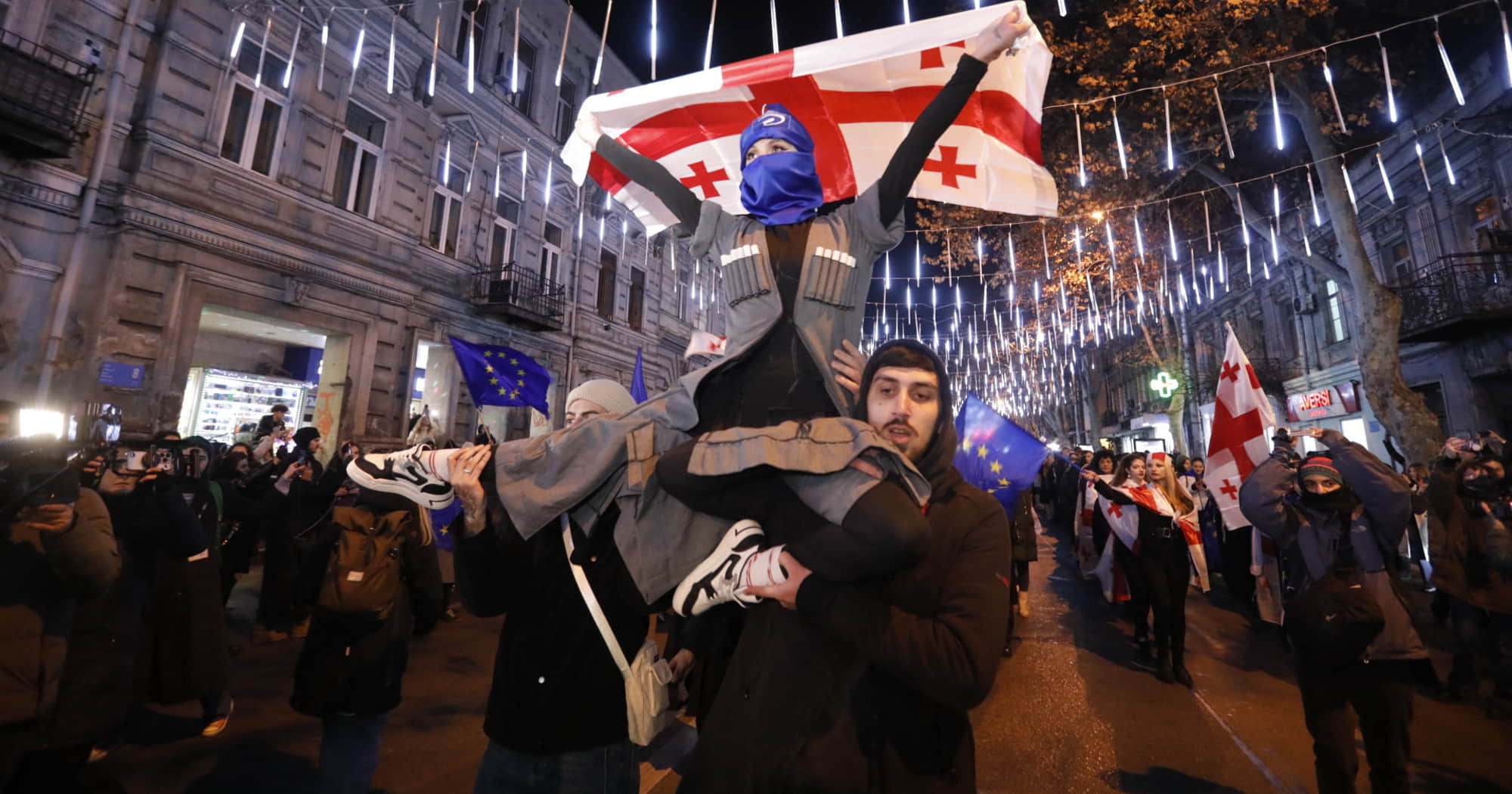
Large-scale
political demonstrations continue in Tbilisi following Georgia’s Independence
Day celebrations. Thousands of opposition supporters once again gathered on the
capital’s central avenues under slogans defending the country’s European
course, democratic institutions, and opposing any increase in Russian influence
over Georgia’s domestic politics. Protesters carried Georgian and European
Union flags while demanding that the authorities accelerate integration with
the EU and implement more transparent political reforms.
The
protests are taking place amid an ongoing political crisis between the ruling
Georgian Dream party and the pro-Western opposition. Opposition groups accuse
the government of drifting away from the country’s European integration path
and attempting to strengthen control over state institutions. The authorities,
in turn, insist that they remain committed to Georgia’s strategic goal of
joining the European Union, while opposing what they describe as “external
pressure” and attempts to destabilize the country through street protests.
The
symbolic connection between the demonstrations and Independence Day gives the
protests additional significance. For a large part of Georgian society,
European integration is viewed not only as a foreign policy choice, but also as
part of the country’s national identity and a guarantee of preserving its
sovereignty. For this reason, the opposition is presenting the rallies as a
struggle for Georgia’s future and its place within the European political
space.
The
situation has drawn increased attention from the European Union and the United
States. Western partners have repeatedly expressed concern in recent months
over growing political tensions inside Georgia, the confrontation between the
government and the opposition, and the slowdown of reforms necessary for
advancing the country’s EU membership aspirations. Officials in Brussels fear
that further polarization within society could complicate Tbilisi’s European
prospects.
Against the backdrop of regional
instability and the ongoing confrontation between Russia and the West, Georgia
once again finds itself at the center of geopolitical competition. For the
United States and the European Union, the country remains an important transit
and political partner in the South Caucasus, while the Georgian authorities are
trying to maintain a balance between European integration, domestic stability,
and pragmatic relations with neighboring states. Experts note that the current
protests demonstrate the continued strong public support in Georgia for the
European course despite the country’s growing internal political polarization.


 Latest news
Latest news
Latest newsRussia Intensifies Strikes on Ukraine’s Infrastructure, Targeting Warehouses and Logistics Hubs
28.Aug.2026
A New Economic Framework for Central Asia and the Caucasus: The Role of Azerbaijan and Uzbekistan
28.Aug.2026
Moscow Warns London: Russia Considers Strikes on British Military Targets
27.Aug.2026
Kazakhstan Launches a New Economic Strategy: GDP Growth, Investment and Pension Reform
27.Aug.2026
CIA Director Visits Moscow: Trump Hopes for Results
26.Aug.2026
Former Ukrainian Defense Minister Warns of Risk of Gradual Defeat in War with Russia
25.Aug.2026
Putin Authorizes Temporary State Management of Critical Infrastructure Vulnerable to Drone Attacks
24.Aug.2026
The United States Rapidly Expands Missile Production: Pentagon Accelerates Output of Tomahawks and Other Critical Weapons
24.Aug.2026
Record Supplies: Armenia Boosts Fish Exports to Georgia
23.Aug.2026
Political Battle During Wartime: Zelensky Opposes Elections
23.Aug.2026
Romania Approves Construction of One of the Largest Solar Power Plants in Europe
23.Aug.2026
Ex-Ukrainian Defence Minister Fails in Bid to Pressure Zelenskiy
22.Aug.2026
Upper Lars: Why Border Queues Have Become a Political Signal for Georgia and Russia
22.Aug.2026
Russia-Ukraine War: No Decisive Breakthrough on the Front and Intensifying Ukrainian Deep Strikes on Russia
21.Aug.2026
TRIPP, Peace, and a New Geopolitical Crossroads: How Armenia Has Changed One Year After Washington
20.Aug.2026