
 29 Aug 2026









Syria rebels launch major offensive in north-west and gain territory
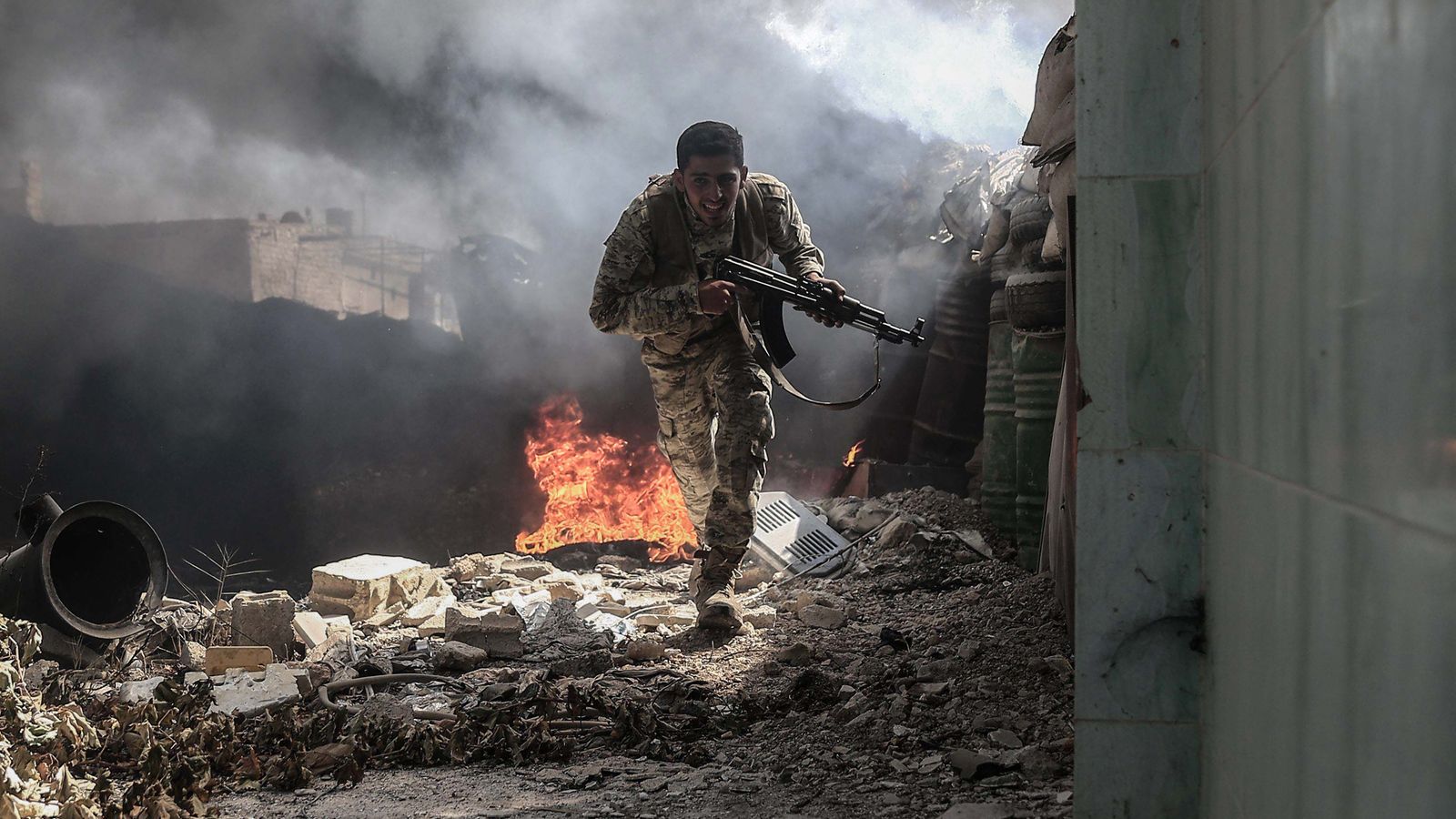
Rebel forces have launched a major offensive in north-western Syria, capturing territory from President Bashar al-Assad’s forces for the first time in years. The Islamist militant group Hayat Tahrir al-Sham (HTS) and allied factions said they had seized control of a number of towns and villages in Aleppo and Idlib provinces since Wednesday. The Syrian military said its forces were confronting a “large-scale” attack by “terrorists” and inflicting heavy losses on them. A UK-based monitoring group said more than 180 combatants on both sides had been killed in the fighting. At least 19 civilians had also been killed in Syrian and Russian air strikes on opposition-held areas, it added. More than half a million people have been killed in the civil war that erupted after the government cracked down violently on peaceful pro-democracy protests in 2011.
Idlib is the last remaining opposition stronghold and is home to more than 4 million people, many of whom have been displaced during the conflict and are living in dire conditions. The enclave is mostly controlled by HTS, but Turkish-backed rebel factions operating under the banner of the Syrian National Army (SNA) and Turkish forces are also based there. In 2020, Turkey and Russia - a staunch ally of Assad - brokered a ceasefire to halt a push by the government to retake Idlib. That led to an extended lull in violence, but sporadic clashes, air strikes and shelling continued. Last month, the UN special envoy for Syria warned that the wars in Gaza and Lebanon appeared to be “catalysing conflict in north-west Syria in a dangerous manner”. Geir Pedersen said HTS had carried out a significant raid into government-held areas, Russia had resumed air strikes for the first time in months, and pro-government forces had significantly accelerated drone strikes and shelling.
On Wednesday, HTS and its allies said they had launched their offensive to “deter aggression” and “thwart the enemy’s plans”, accusing the government and allied Iran-backed militias of escalation and aggression in north-west. But it came as the Syrian government and its allies were preoccupied with other conflicts. In neighbouring Lebanon, an Israeli military campaign has devastated the Iran-backed Hezbollah movement, whose fighters helped turned the tide of the Syrian civil war. Israel has also stepped up its air strikes inside Syria on targets linked to Iran, Hezbollah and other Iran-backed militia groups, while Russian forces are focused on the war in Ukraine. By the end of the first day of the offensive, the rebels had advanced into the western Aleppo countryside, taking them within 10km (6 miles) from the outskirts of Aleppo city, according to the UK-based Syrian Observatory for Human Rights (SOHR). It reported that they had seized the Syrian army 46th Regiment’s base and at least eight villages. On Thursday, the monitoring group said the rebels had cut the M5 highway between Aleppo and the capital Damascus near Zarbah, 15km south-west of Aleppo city, and taken control of the interchange between the M5 and the M4 highway further south, near Saraqeb.
The SOHR said 121 rebels, most of them members of HTS, and 40 government troops and 21 militiamen had been killed over the past two days. The rebels said in a Telegram statement that they had seized the town of Khan al-Assal, which is 5km west of Aleppo city, and had killed more than 200 members of pro-government forces. A Syrian military statement put out on Thursday said its forces had “confronted the terrorist attack that is still ongoing with various weapons and in co-operation with friendly forces, leaving heavy losses in equipment and causalities among terrorists”. It did not mention any losses among its forces, but Iranian news agencies said a senior commander in Iran’s Revolutionary Guards serving as a “military adviser” in Syria, Brig Gen Kioumars Pourhashemi, had been killed in Aleppo province.
Meanwhile, the Syria Civil Defence, whose first responders are known as the White Helmets, said on Thursday that Syrian and Russian warplanes had struck residential neighbourhoods and shops in the opposition-controlled town of Atareb, 20km west of Aleppo, killing 14 civilians, including three children and two women. It also reported that four civilians had been killed Darat Izza, north of Atareb. Another civilian was by a rocket attack on a camp for displaced people near the Bab al-Hawa crossing on the Turkish border on Wednesday, it said. The UN’s Deputy Regional Humanitarian Co-ordinator for Syria, David Carden, said he was deeply alarmed by the impact of the escalating hostilities on civilians. The International Rescue Committee said almost 7,000 families had been displaced and that some health facilities and schools had been forced to suspend services. It appealed for an "immediate de-escalation" and called on all parties to ensure the protection of civilians, civilian infrastructure and humanitarian operations.
Source: www.bbc.com


 Latest news
Russia Intensifies Strikes on Ukraine’s Infrastructure, Targeting Warehouses and Logistics Hubs
28.Aug.2026
A New Economic Framework for Central Asia and the Caucasus: The Role of Azerbaijan and Uzbekistan
28.Aug.2026
Moscow Warns London: Russia Considers Strikes on British Military Targets
27.Aug.2026
Kazakhstan Launches a New Economic Strategy: GDP Growth, Investment and Pension Reform
27.Aug.2026
CIA Director Visits Moscow: Trump Hopes for Results
26.Aug.2026
Former Ukrainian Defense Minister Warns of Risk of Gradual Defeat in War with Russia
25.Aug.2026
Putin Authorizes Temporary State Management of Critical Infrastructure Vulnerable to Drone Attacks
24.Aug.2026
The United States Rapidly Expands Missile Production: Pentagon Accelerates Output of Tomahawks and Other Critical Weapons
24.Aug.2026
Record Supplies: Armenia Boosts Fish Exports to Georgia
23.Aug.2026
Political Battle During Wartime: Zelensky Opposes Elections
23.Aug.2026
Romania Approves Construction of One of the Largest Solar Power Plants in Europe
23.Aug.2026
Ex-Ukrainian Defence Minister Fails in Bid to Pressure Zelenskiy
22.Aug.2026
Upper Lars: Why Border Queues Have Become a Political Signal for Georgia and Russia
22.Aug.2026
Russia-Ukraine War: No Decisive Breakthrough on the Front and Intensifying Ukrainian Deep Strikes on Russia
21.Aug.2026
TRIPP, Peace, and a New Geopolitical Crossroads: How Armenia Has Changed One Year After Washington
20.Aug.2026