
 28 Aug 2026









Europe Accelerates Rearmament: EU Countries Prioritize Missiles, Air Defense Systems, and Drones
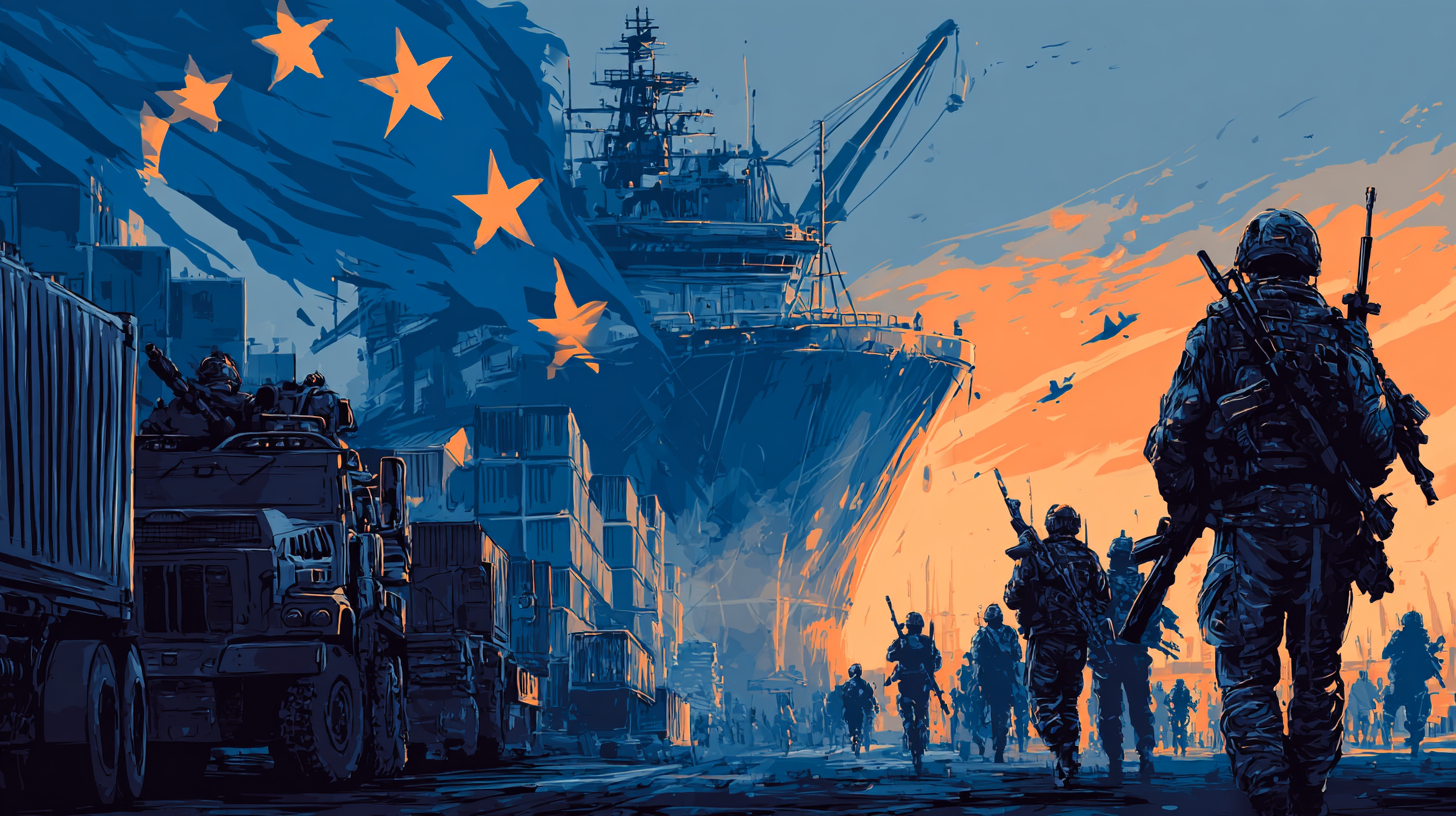
European countries have significantly accelerated the modernization of their armed forces, focusing on expanding the production of missile systems, air and missile defense capabilities, and unmanned technologies. Russia’s full-scale war against Ukraine and growing concerns over the long-term reliability of U.S. security guarantees have become the primary drivers behind a comprehensive reassessment of Europe's defense policy.
Over the past four years, most European countries have substantially increased their defense budgets, with the most notable progress concentrated in areas that have proven decisive in modern warfare. Priority is being given to the production of precision-guided missiles, surface-to-air defense systems, counter-drone technologies, ammunition, and the expansion of domestic defense industries capable of supporting national armed forces without excessive dependence on external suppliers.
One of the flagship initiatives is the European Sky Shield Initiative (ESSI), under which participating countries are developing a multi-layered air and missile defense network. Germany continues to invest in Israel’s Arrow missile defense system, the U.S.-made Patriot system, and the domestically produced IRIS-T, while simultaneously expanding the manufacturing capacity of European defense companies. At the same time, France, Italy, and the United Kingdom are advancing their own next-generation air defense and long-range missile programs, while the Nordic countries are increasing procurement of anti-ship and cruise missiles to strengthen deterrence in the Baltic region.
Particular emphasis is being placed on expanding the production of missile interceptors. During the NATO Summit in Ankara, the United States and its European allies agreed to establish infrastructure in Europe for the maintenance and, in the longer term, the joint production of PAC-3 interceptors for Patriot systems, as well as components for AIM-120 AMRAAM air-to-air missiles. These measures are intended to reduce delivery times, ease pressure on U.S. production lines, and ensure more resilient supply chains for European armed forces in the event of a prolonged crisis.

The unmanned systems sector is also expanding rapidly. Lessons learned from the war in Ukraine have demonstrated that relatively inexpensive drones can dramatically influence the battlefield, prompting European governments to invest not only in strike and reconnaissance UAVs but also in electronic warfare capabilities, low-altitude target detection systems, and counter-swarm technologies. At the same time, production capacity for artillery ammunition, precision-guided weapons, and air defense systems continues to increase across the continent.
Despite the sharp rise in defense spending, analysts note that Europe's defense industry remains insufficiently integrated. Many countries continue to rely on weapons purchases from the United States, Israel, and South Korea, while joint European defense projects often face political disagreements, differing national requirements, and lengthy procurement and approval procedures. These challenges continue to slow the pace of rearmament and complicate efforts to establish a unified European defense market.
Another major factor driving Europe's accelerated rearmament is uncertainty surrounding future U.S. weapons deliveries. Washington acknowledges that a significant share of its defense industrial capacity is already committed to replenishing domestic stockpiles and fulfilling obligations to allies, including Ukraine and partners in the Middle East. Against this backdrop, European governments increasingly view the localization of critical weapons production not merely as an industrial policy objective but as a matter of strategic security.
Experts believe these developments signal the emergence of a new European defense model. While many countries reduced their armed forces after the end of the Cold War and relied heavily on American military capabilities, Europe is now seeking to build a more resilient and self-sufficient defense industrial base. The transformation extends beyond higher military spending to a fundamental restructuring of defense production, enabling the long-term manufacture of advanced missiles, air defense systems, drones, and ammunition capable of sustaining Europe through potential large-scale conflicts.


 Latest news
Russia Intensifies Strikes on Ukraine’s Infrastructure, Targeting Warehouses and Logistics Hubs
28.Aug.2026
A New Economic Framework for Central Asia and the Caucasus: The Role of Azerbaijan and Uzbekistan
28.Aug.2026
Moscow Warns London: Russia Considers Strikes on British Military Targets
27.Aug.2026
Kazakhstan Launches a New Economic Strategy: GDP Growth, Investment and Pension Reform
27.Aug.2026
CIA Director Visits Moscow: Trump Hopes for Results
26.Aug.2026
Former Ukrainian Defense Minister Warns of Risk of Gradual Defeat in War with Russia
25.Aug.2026
Putin Authorizes Temporary State Management of Critical Infrastructure Vulnerable to Drone Attacks
24.Aug.2026
The United States Rapidly Expands Missile Production: Pentagon Accelerates Output of Tomahawks and Other Critical Weapons
24.Aug.2026
Record Supplies: Armenia Boosts Fish Exports to Georgia
23.Aug.2026
Political Battle During Wartime: Zelensky Opposes Elections
23.Aug.2026
Romania Approves Construction of One of the Largest Solar Power Plants in Europe
23.Aug.2026
Ex-Ukrainian Defence Minister Fails in Bid to Pressure Zelenskiy
22.Aug.2026
Upper Lars: Why Border Queues Have Become a Political Signal for Georgia and Russia
22.Aug.2026
Russia-Ukraine War: No Decisive Breakthrough on the Front and Intensifying Ukrainian Deep Strikes on Russia
21.Aug.2026
TRIPP, Peace, and a New Geopolitical Crossroads: How Armenia Has Changed One Year After Washington
20.Aug.2026