
 13 Oct 2026









The Debate on Romania–Moldova Unification in the Contemporary Political Context
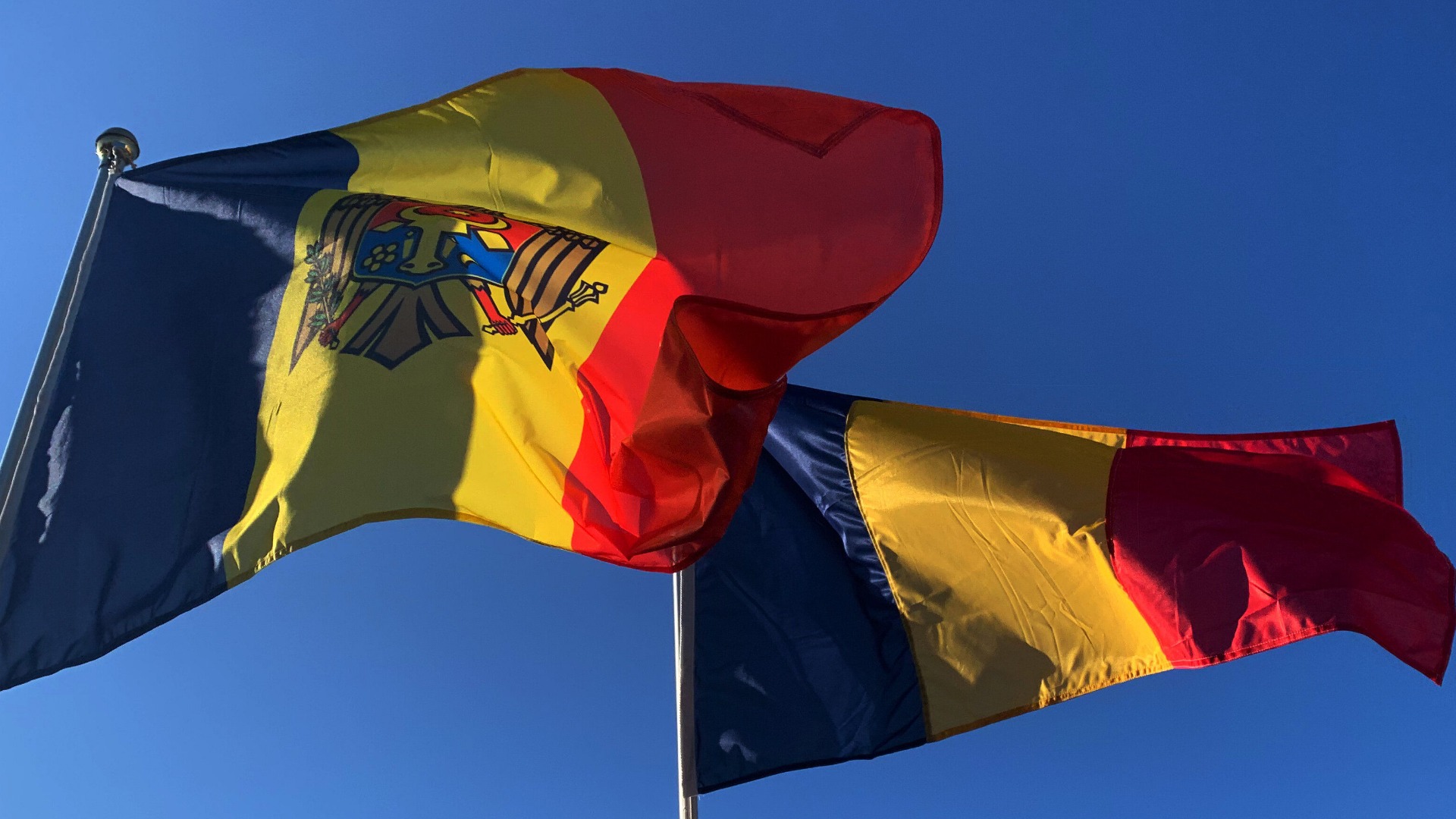
The idea of a possible
unification between Romania and Moldova at the beginning of 2026 has once again
moved from the realm of symbolic and historical-cultural discourse into the
sphere of practical political discussion. The catalyst was a statement made in
January by the Romanian President’s adviser on diaspora affairs, who said that
Bucharest is ready to begin serious negotiations on unification at any moment,
provided that such a decision is supported by the citizens of the Republic of
Moldova. At the same time, the Romanian side emphasized that the initiative must
come exclusively from Chișinău, and that the key mechanism for legitimization
can only be a democratic process – above all, a referendum.
This
position is consistent with Romania’s official policy, enshrined in the 2010
Treaty on Good-Neighborliness and Cooperation between Romania and Moldova,
which recognizes Moldova’s sovereignty and territorial integrity while
simultaneously emphasizing the “common language, history, and culture” shared
by the two states. Since the early 2000s, Romania has been one of Moldova’s
principal political and economic partners. Between 2021 and 2025 alone,
Bucharest provided Chișinău with hundreds of millions of euros in grants,
loans, and energy assistance, including supplies of gas and electricity during
periods of crisis.

Additional
momentum to the debate was given by a statement from Moldovan President Maia
Sandu, who publicly said that she would vote in favor of unification with
Romania if such a referendum were held. This marked the first time a sitting
Moldovan head of state had expressed such a position so directly. Previously,
officials in Chișinău generally limited themselves to references to “strategic
partnership” and “European integration”, deliberately avoiding explicit
assessments of a unification scenario.
Sociological
data, however, present an ambiguous picture. According to surveys conducted by
Moldovan research centers and international organizations between 2023 and
2025, public support for unification in Moldova has fluctuated between 30 and
40 percent, with pronounced regional differences. Support is significantly
higher in Chișinău and the central regions of the country, and markedly lower
in the south and in Gagauzia. In Romania, by contrast, support for unification
has traditionally been higher, exceeding 60 percent in various years, creating
an asymmetry of public expectations on opposite sides of the Prut River.

A
major constraining factor remains the Transnistrian issue. The unrecognized
region has been outside the de facto control of the Moldovan authorities since
1992, and Russian military forces are stationed on its territory. Any
unification scenario would automatically raise the question of Transnistria’s
status, transforming the issue from a bilateral matter into an international
one and directly affecting the interests of Russia, the European Union, and
NATO.
The
geopolitical context lends the issue particular sensitivity. In the event of
unification, the territory of present-day Moldova would effectively become part
of the European Union and NATO, of which Romania has been a member since 2007
and 2004, respectively. This would entail a fundamental shift in the regional
balance of power and a sharp reduction in Russia’s strategic space between
Ukraine and the Balkans. For this reason, the idea of unification has
traditionally been perceived in Moscow as a threat, while in Brussels it is
viewed as a scenario requiring extreme caution and long-term preparation.
Thus, at the current stage, discussions of a possible Romania–Moldova unification should be seen not as preparations for immediate action, but as a political probing of the boundaries of what is permissible. Bucharest is shaping the framework within which it is prepared to act, while Chișinău is expanding its range of strategic options. Even without practical implementation in the near term, the very legitimization of the topic at the level of presidents and governments is already altering the internal and external configuration of Moldovan politics, turning the European vector from a policy priority into a question of long-term civilizational choice.


 Latest news
Latest news
Latest newsGeorgia’s Constitutional Court Continues Case on Banning Opposition Parties: Political Pluralism at Stake
12.Oct.2026
Azerbaijan and Iran Step Up Security Contacts Amid Hijab Protests
12.Oct.2026
Personnel Shortages Complicate Ukrainian Forces’ Rotation: Ukraine Faces Long-Term Challenges on the Front Line
11.Oct.2026
Trump Eases Sanctions on Russian Fuel After Talks with Putin: Kyiv Fears Boost to Moscow’s War Revenues
10.Oct.2026
Putin Seeks to Strengthen Russia’s Influence in the Post-Soviet Space Through the CIS
10.Oct.2026
Russia and the South Caucasus: External Pressure, Political Competition and a Crisis of Trust
10.Oct.2026
Peaceful Settlement Between Armenia and Azerbaijan: Moving from Declarations to Implementation
10.Oct.2026
Moldova Ready to Accept as Many Ukrainians as Necessary if Situation Worsens This Winter
09.Oct.2026
Turkmenistan Turns Avaza into a Regional Diplomatic Hub as Caspian, Central Asian and CIS Agendas Converge
08.Oct.2026
Romania Scrambles Spanish F-18s After Aerial Targets Detected Near Ukrainian Border
07.Oct.2026
Berlin Deepens Defence Partnership with Kyiv: Germany to Provide Ukraine with €1 Billion in Military Aid
07.Oct.2026
European Parliament Against Georgian Dream: EU Prepares New Response to Tbilisi
06.Oct.2026
Bulgarian Foreign Minister to Discuss European Security and International Law in the Netherlands
05.Oct.2026
Rheinmetall in Bulgaria: Sofia Emerges as a New NATO Defence-Industrial Hub in the Balkans
05.Oct.2026
The Cost of a Long War: Moscow Expands Spending Plans Through 2029
05.Oct.2026