
 13 Oct 2026









South Caucasus: Risk Hotspot Amid Iran Escalation
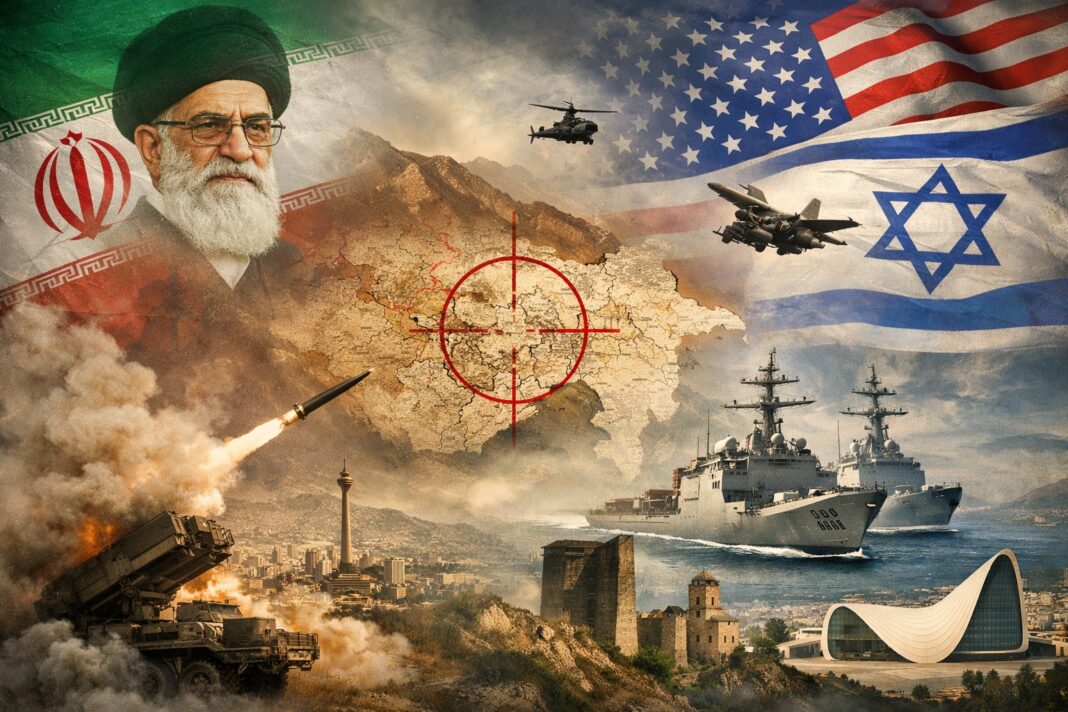
Amid the rapid escalation of the conflict surrounding Iran, the countries of the South Caucasus — Armenia, Azerbaijan, and Georgia — find themselves in an extremely delicate geopolitical situation. As the armed confrontation between Iran, Israel, and the United States quickly expanded, affecting more countries in the region, the governments of the three Caucasian states adopted a cautious and largely wait-and-see approach, striving neither to become directly involved in the conflict nor to damage relations with any party.
The South Caucasus region has historically been at the crossroads of major powers’ interests. Besides Russia and Turkiye, Iran remains one of the key players in the region, maintaining a complex web of economic, energy, and political ties with its neighbors. Therefore, the responses of Tbilisi, Baku, and Yerevan to the new conflict have been restrained: none of the countries issued sharp criticism or expressed overt support for any side. Essentially, the regional states are trying to balance between their international allies and their own national interests.
The situation is particularly complex for Armenia. On one hand, Yerevan has actively sought closer ties with Western countries in recent years, gradually distancing itself from its traditional ally — Russia. On the other hand, Iran remains a strategic partner and a vital economic lifeline for Armenia. This is largely due to geography: Armenia’s borders with Turkiye and Azerbaijan have been effectively closed for over three decades, making the Iranian route critical for trade, energy, and transit.
For Azerbaijan, the situation looks different but also demands caution. Baku maintains close relations with Israel and the West, including in security and technology sectors, but must also consider the factor of neighboring Iran, home to a large Azerbaijani population. Any sharp anti-Iranian stance could provoke additional tensions along its southern border. Therefore, Baku’s official statements remain extremely cautious and diplomatic.
Georgia, for its part, strives to adhere to a traditional policy of neutrality and pragmatism. Tbilisi aims to maintain its image as a regional transit and financial hub, thus avoiding moves that could complicate relations with both Western partners and Iran. At the same time, the country is already beginning to feel the consequences of the conflict — for example, an increase in the number of Iranian citizens seeking temporary refuge or transit through Georgian territory.

The humanitarian consequences of the war have already begun to manifest in the region. According to recent reports, Armenia and Azerbaijan have accepted about 1,500 people who fled Iran amid the escalation of hostilities. The flow of refugees remains relatively small; however, experts warn it could significantly increase if the conflict further escalates.
Additional tension is created by the overall instability in the South Caucasus. Although Armenia and Azerbaijan agreed on the text of a peace agreement in 2025, intended to end the nearly four-decade-long Nagorno-Karabakh conflict, the final ratification of the document remains uncertain. Disputes continue between the countries regarding borders, transport corridors, and political security guarantees.
Under these circumstances, the new war in the Middle East adds another layer of uncertainty. If the conflict around Iran expands, the South Caucasus could become not only a political but also a logistical corridor between warring blocs. The region already plays an important role in energy and transport routes between Europe and Asia, meaning any military or political escalation around Iran will inevitably affect the interests of the Caucasus countries. Therefore, the strategy of Tbilisi, Baku, and Yerevan today boils down to a cautious balance: to avoid involvement in someone else’s war, maintain economic ties, and simultaneously prepare for the possible consequences of regional destabilization.
CCBS Expert Group


 Latest news
Latest news
Latest newsGeorgia’s Constitutional Court Continues Case on Banning Opposition Parties: Political Pluralism at Stake
12.Oct.2026
Azerbaijan and Iran Step Up Security Contacts Amid Hijab Protests
12.Oct.2026
Personnel Shortages Complicate Ukrainian Forces’ Rotation: Ukraine Faces Long-Term Challenges on the Front Line
11.Oct.2026
Trump Eases Sanctions on Russian Fuel After Talks with Putin: Kyiv Fears Boost to Moscow’s War Revenues
10.Oct.2026
Putin Seeks to Strengthen Russia’s Influence in the Post-Soviet Space Through the CIS
10.Oct.2026
Russia and the South Caucasus: External Pressure, Political Competition and a Crisis of Trust
10.Oct.2026
Peaceful Settlement Between Armenia and Azerbaijan: Moving from Declarations to Implementation
10.Oct.2026
Moldova Ready to Accept as Many Ukrainians as Necessary if Situation Worsens This Winter
09.Oct.2026
Turkmenistan Turns Avaza into a Regional Diplomatic Hub as Caspian, Central Asian and CIS Agendas Converge
08.Oct.2026
Romania Scrambles Spanish F-18s After Aerial Targets Detected Near Ukrainian Border
07.Oct.2026
Berlin Deepens Defence Partnership with Kyiv: Germany to Provide Ukraine with €1 Billion in Military Aid
07.Oct.2026
European Parliament Against Georgian Dream: EU Prepares New Response to Tbilisi
06.Oct.2026
Bulgarian Foreign Minister to Discuss European Security and International Law in the Netherlands
05.Oct.2026
Rheinmetall in Bulgaria: Sofia Emerges as a New NATO Defence-Industrial Hub in the Balkans
05.Oct.2026
The Cost of a Long War: Moscow Expands Spending Plans Through 2029
05.Oct.2026