
 22 Oct 2026









Baku and Ankara: A Crack in the Strategic Alliance? — Elmira Talibzade
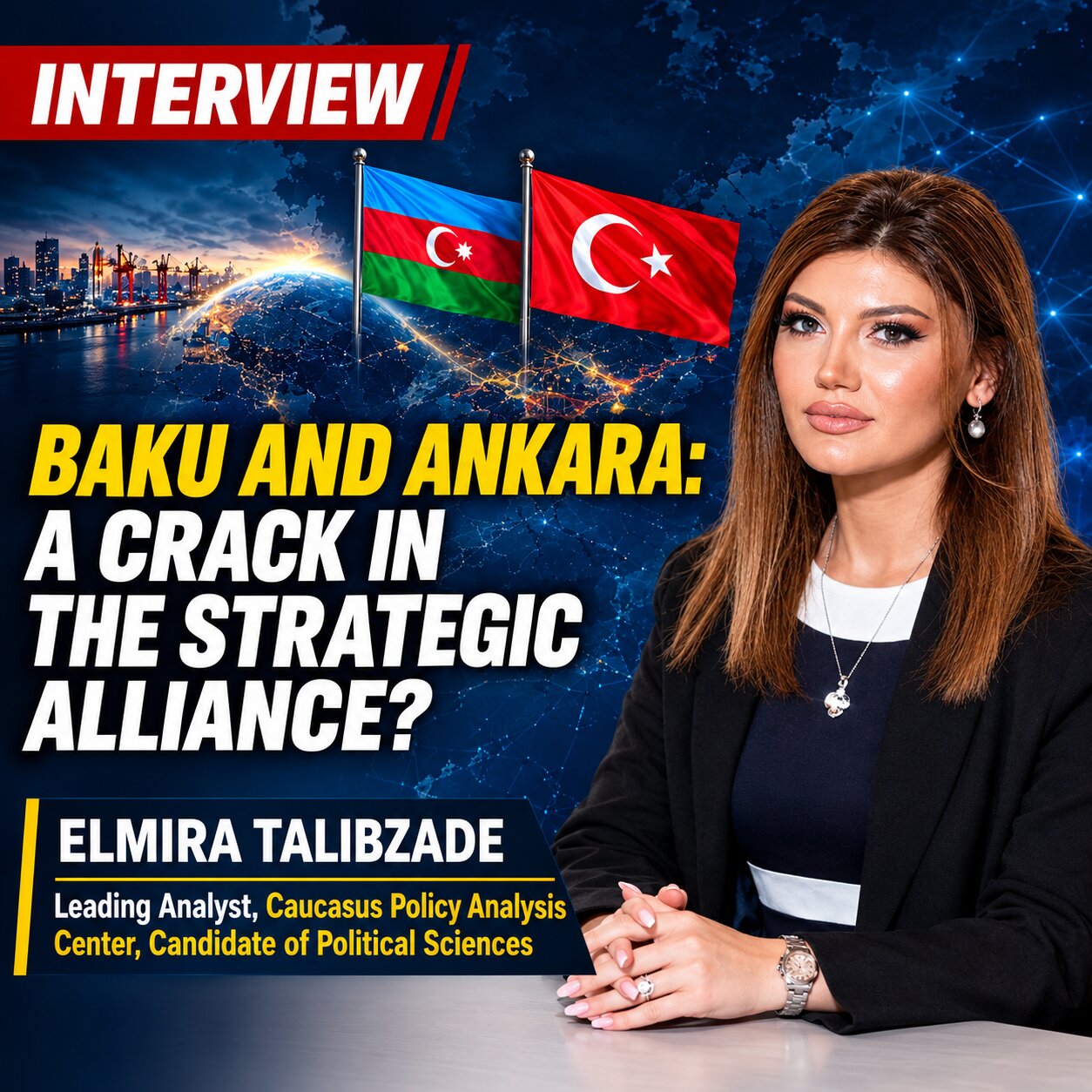
Despite their allied status, relations between Azerbaijan and Turkiye face disagreements over domestic politics, the normalisation of relations with Armenia, and the Middle East. According to Elmira Talibzade, Leading Analyst at the Caucasus Policy Analysis Center and a Candidate of Political Sciences, these differences do not yet threaten the foundations of bilateral cooperation, but they highlight diverging interests and foreign policy priorities.
The strategic partnership between Baku and Ankara, formalised by the 2021 Shusha Declaration, is based on cooperation in security, energy, and transport. However, shared strategic interests do not preclude disagreements on specific political issues.
One source of tension has been statements by Turkish politicians regarding restrictions on wearing hijabs in Azerbaijani schools. In Baku, such comments may be perceived as interference in the country's internal affairs.
Another sensitive issue is the normalisation of Turkish-Armenian relations. Azerbaijan is interested in ensuring that this process takes into account progress in the Armenian-Azerbaijani peace process. Ankara, however, may pursue its own regional and diplomatic priorities.
Differences are also evident in Middle East policy. Turkiye maintains a hard-line stance towards Israel, while Azerbaijan continues to maintain partnerships with Israel, including in the military-technical sphere. This limits the extent to which the two countries can fully align their foreign policy approaches.
According to Talibzade, the current disagreements are predominantly informational in nature and do not affect the fundamental interests of either side. Nevertheless, the situation demonstrates that an alliance does not eliminate differences, and its continued stability depends on Baku and Ankara's ability to coordinate their positions without compromising their respective national interests.


 Latest news
Baku and Ankara: A Crack in the Strategic Alliance? — Elmira Talibzade
22.Oct.2026
Georgia’s Constitutional Court Considers Ban on Five Opposition Parties: Political Pluralism Under Threat
21.Oct.2026
Kyiv Reports Delays in Patriot Missile Deliveries: European Aid to Ukraine Depends on US Approval
20.Oct.2026
Turkiye and France Strengthen Military Dialogue Amid European Security Challenges
20.Oct.2026
Romania Seeks Stronger Black Sea Security Amid Drone Incidents
19.Oct.2026
Promises are There, but Progress is Too Slow: What Leaders Said at the Leaders for Nature Summit in Yerevan
19.Oct.2026
Sanctions Strategy on Russia Faces Contradictions in Washington’s Policy
18.Oct.2026
Black Sea Security Threats Pose Risks to Bulgaria’s 2027 Tourist Season
17.Oct.2026
Bulgaria Asks NATO to Strengthen Its Defences Amid Black Sea Threats: Sofia Fears Growing Risks to Maritime Shipping
16.Oct.2026
Black Sea Shipping Risks Threaten Bulgaria’s 5 Million Tonnes of Wheat Exports
15.Oct.2026
Georgia’s Foreign Funding and Political Ban Laws Draw Criticism from the Venice Commission
15.Oct.2026
Kazakhstan Promotes a Caspian Green Energy Corridor: Astana Seeks New Routes to the European Market
14.Oct.2026
Inflation in Romania Accelerates to 6.61%: Rising Prices Increase Pressure on Households and the Economy
13.Oct.2026
Can Europe Protect the International Criminal Court from Trump’s Sanctions?
13.Oct.2026
Georgia’s Constitutional Court Continues Case on Banning Opposition Parties: Political Pluralism at Stake
12.Oct.2026