
 13 Oct 2026









Can Europe Protect the International Criminal Court from Trump’s Sanctions?
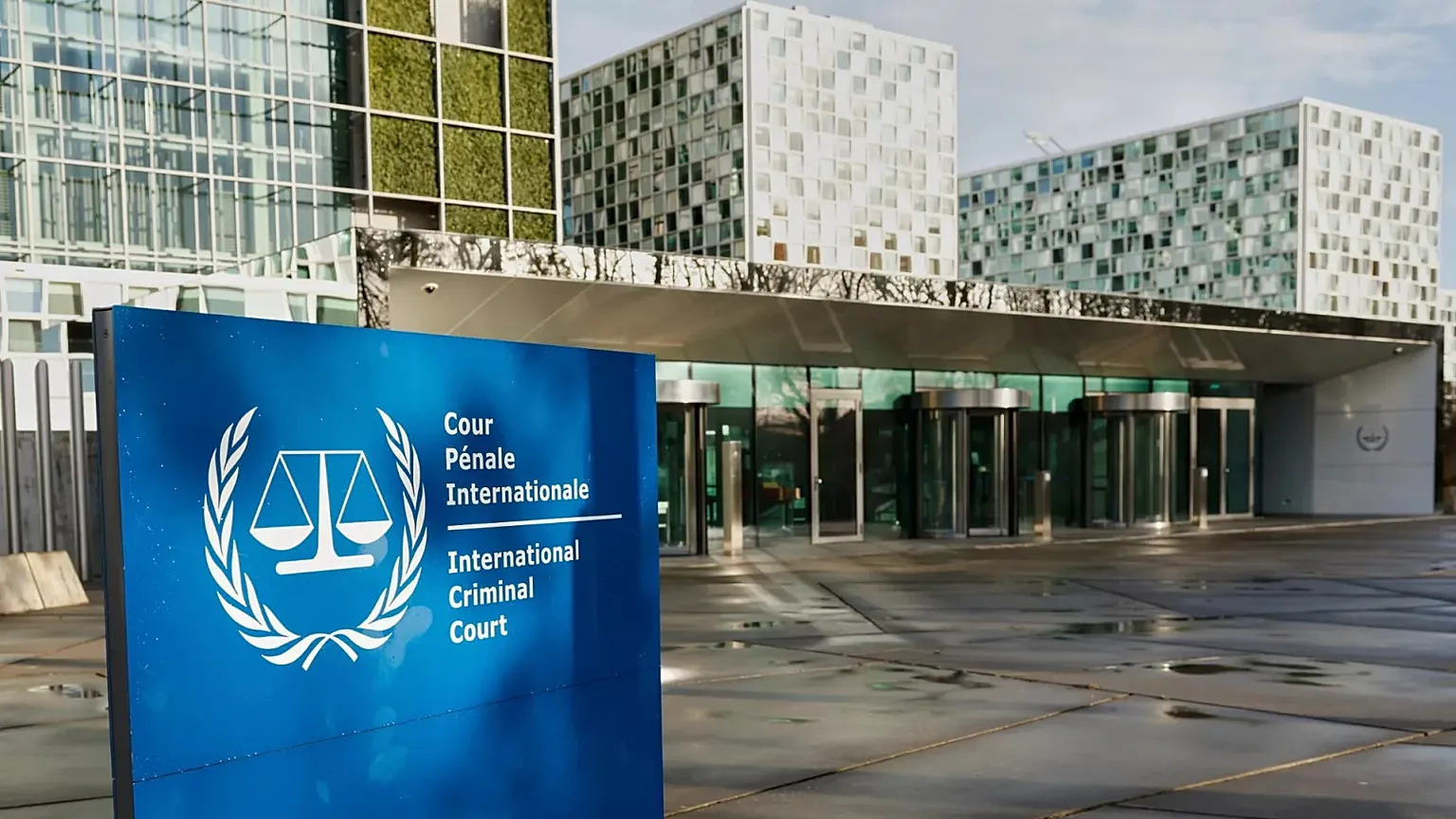
On October 9, 2026, the Donald Trump administration extended sanctions to the International Criminal Court (ICC) as an institution. The move marked a new stage in Washington’s confrontation with the Court, which had previously imposed restrictions on individual judges and prosecutors.
Europe is seeking ways to protect the ICC from US sanctions that threaten not only its staff but also the day-to-day operations of the institution as a whole. The Parliamentary Assembly of the Council of Europe has proposed concrete measures, but their effectiveness will depend on whether European states are willing to act in a coordinated manner.
Why Did Trump Impose Sanctions on the ICC?
To understand the reasons behind the confrontation, it is necessary to examine Trump’s executive order of February 6, 2025. In the order, the US president accused the ICC of taking actions that, in Washington’s assessment, unjustifiably infringe upon the sovereignty of the United States and its ally Israel. The US administration was particularly angered by the arrest warrants issued by the Court in November 2024 for Israeli Prime Minister Benjamin Netanyahu and former Defense Minister Yoav Gallant in connection with alleged crimes committed in the context of the war in Gaza.
Washington also opposes investigations involving US military personnel and officials, including those related to alleged crimes in Afghanistan. The official US position is that the country has not joined the Rome Statute, the treaty that established the ICC, and has not agreed to grant the Court jurisdiction over its nationals. The Trump administration argues that the Court’s actions threaten national security and could expose American military personnel and officials to prosecution.
On October 9, US Secretary of State Marco Rubio reiterated that Washington does not recognize the ICC’s authority to prosecute American citizens, military personnel, or political leaders. The new sanctions are intended to restrict the Court’s ability to access the US financial system and services provided by companies subject to US jurisdiction.
However, Washington’s position does not resolve the legal question. The fact that the United States is not a party to the Rome Statute does not, in itself, mean that the ICC lacks jurisdiction in every case involving American citizens or nationals of other non-member states. In particular, the Court may exercise jurisdiction over crimes allegedly committed on the territory of a state party to the Statute, subject to the applicable legal conditions. The scope of the ICC’s jurisdiction therefore remains a subject of significant international legal debate.
The official grounds for the sanctions are set out in the White House executive order of February 6, 2025. The ICC has described the latest US measures targeting the institution itself as an attempt to obstruct justice and exert pressure on the Court and those who cooperate with it.
What Is the Parliamentary Assembly of the Council of Europe Proposing?
On September 30, 2026, before the announcement of the new US sanctions against the Court itself, the Parliamentary Assembly of the Council of Europe (PACE) adopted Resolution 2676 and Recommendation 2314, addressing the protection of the ICC and its independence from external pressure.
In its resolution, the Assembly expressed support for the ICC and condemned threats and coercive measures directed against international judges and prosecutors by the United States and Russia. PACE called on states parties to the Rome Statute to fulfil their obligations to cooperate with the Court, including with regard to the enforcement of arrest warrants.
Particular attention was given to the practical implications of the situation. Sanctions could complicate the Court’s access to banking services, insurance, medical care, information technology, and other services essential to the normal functioning of an international institution.
In response, PACE called on European states and the European Union to ensure that the ICC retains access to essential services, adequate funding, and sufficient personnel. It also urged them to consider ways to protect current and former Court staff and their family members where necessary. The proposals include developing alternative financial and technological solutions, reducing dependence on US-based providers, and considering the use of European legal mechanisms to counter the extraterritorial effects of sanctions.
PACE Resolution 2676 sets out political recommendations for protecting the Court. Recommendation 2314, addressed to the Committee of Ministers of the Council of Europe, calls for further coordination of international efforts. Among other measures, it proposes developing instruments to counter unlawful unilateral sanctions, sharing best practices for protecting international organizations and their staff, and strengthening cooperation among states hosting international institutions.
It is important, however, to recognize the limits of the Assembly’s powers. PACE decisions carry political weight, but they do not automatically create a legally binding mechanism for the United States and cannot independently overturn American sanctions. Protecting the Court in practice requires decisions by national governments, EU institutions, and states participating in the Rome Statute.
Can the EU Become a Protective Shield for the Court?
One potential instrument is the EU Blocking Statute. It is designed to counter certain foreign laws and measures with extraterritorial effects and, where applicable, can limit the consequences of such measures for European operators.
However, this mechanism is not a universal solution to all US sanctions. Its application depends on its legal scope, decisions by European institutions, and the specific circumstances involved. Moreover, even with European safeguards in place, international organizations may face refusals by banks and technology companies to provide services because of concerns about potential consequences for their access to the US market.
Protecting the ICC will therefore require more than political declarations. It will demand practical measures, including alternative banking channels, reliable access to digital services, adequate funding, and coordinated legal support from participating states.
On October 10, the European Union expressed regret over the US sanctions and called on Washington to reconsider its decision. The EU reaffirmed its support for the ICC’s independence and stated that it was prepared to take the necessary measures to ensure the Court could continue operating. At the same time, the European side noted that the postponement of the new measures’ entry into force left room for diplomatic engagement. This, however, does not mean that the sanctions have been lifted.
Earlier, on October 9, Canada, Denmark, Germany, France, Italy, Japan, the Netherlands, and the United Kingdom also reaffirmed their support for the Court and warned that the sanctions could seriously affect its operations, staff, and their families.
Why Do the Consequences Extend Beyond a Single Court?
The ICC was established to investigate and prosecute individuals accused of genocide, crimes against humanity, war crimes, and the crime of aggression. Its role is particularly important in situations where national judicial systems are unwilling or unable genuinely to investigate such crimes, provided the Court’s jurisdictional requirements are met.
The confrontation over US sanctions raises a broader question: can an international judicial institution fulfil its mandate if a major power can restrict its access to financial infrastructure and commercial services?
The dispute is not limited to a confrontation between the United States and Europe. Russia has also been criticized by PACE for exerting pressure on international judges and prosecutors. The Assembly’s stated objective is therefore to protect the independence of international justice from state pressure, regardless of its origin.
At the same time, European countries face their own constraints. These include differing economic interests, the dependence of some companies on the US market, and the need to coordinate decisions among national governments and EU institutions. Consequently, even broad political support for the ICC does not guarantee that all proposed measures will be implemented quickly.
Will Europe Protect the ICC?
The documents adopted by PACE outline a possible path forward: moving from political support to financial, technological, and legal mechanisms that would allow the Court to continue operating despite external pressure. However, the resolution and recommendation alone cannot guarantee such protection.
The central question is now whether European states and the EU are prepared to make concrete commitments: providing alternative infrastructure, protecting Court personnel, and coordinating measures to mitigate the effects of US sanctions.
If these measures are implemented, Europe will be able to reduce the ICC’s vulnerability to unilateral restrictions. If support remains largely declaratory, the international Court will continue to depend on infrastructure and commercial services that the authorities of individual states can influence.
Ultimately, the dispute over Trump’s sanctions confronts Europe with more than the question of how to protect a single international institution. It raises a broader issue: how resilient can the system of international justice be when its operations come into conflict with the interests of major powers?
Journalist
Marine KHARATYAN


 Latest news
Latest news
Latest newsInflation in Romania Accelerates to 6.61%: Rising Prices Increase Pressure on Households and the Economy
13.Oct.2026
Can Europe Protect the International Criminal Court from Trump’s Sanctions?
13.Oct.2026
Georgia’s Constitutional Court Continues Case on Banning Opposition Parties: Political Pluralism at Stake
12.Oct.2026
Azerbaijan and Iran Step Up Security Contacts Amid Hijab Protests
12.Oct.2026
Personnel Shortages Complicate Ukrainian Forces’ Rotation: Ukraine Faces Long-Term Challenges on the Front Line
11.Oct.2026
Trump Eases Sanctions on Russian Fuel After Talks with Putin: Kyiv Fears Boost to Moscow’s War Revenues
10.Oct.2026
Putin Seeks to Strengthen Russia’s Influence in the Post-Soviet Space Through the CIS
10.Oct.2026
Russia and the South Caucasus: External Pressure, Political Competition and a Crisis of Trust
10.Oct.2026
Peaceful Settlement Between Armenia and Azerbaijan: Moving from Declarations to Implementation
10.Oct.2026
Moldova Ready to Accept as Many Ukrainians as Necessary if Situation Worsens This Winter
09.Oct.2026
Turkmenistan Turns Avaza into a Regional Diplomatic Hub as Caspian, Central Asian and CIS Agendas Converge
08.Oct.2026
Romania Scrambles Spanish F-18s After Aerial Targets Detected Near Ukrainian Border
07.Oct.2026
Berlin Deepens Defence Partnership with Kyiv: Germany to Provide Ukraine with €1 Billion in Military Aid
07.Oct.2026
European Parliament Against Georgian Dream: EU Prepares New Response to Tbilisi
06.Oct.2026
Bulgarian Foreign Minister to Discuss European Security and International Law in the Netherlands
05.Oct.2026