
 20 Sep 2026









Positions of Azerbaijan and Russia over the Zangezur corridor coincide - Ilham Aliyev
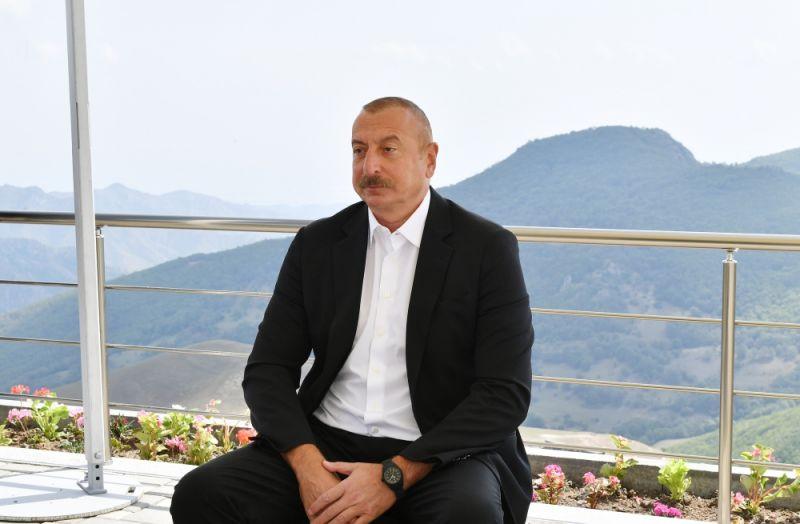
Positions of Baku and Moscow over Karabakh coincide, Azerbaijan and Russia consider the Karabakh conflict to be over. That was stated by President Ilham Aliyev on July 22 in an interview with AzTV state television.
It should be added that Aliyev discussed the situation in the region on July 20 during a visit to Moscow with Russian President Vladimir Putin.
"We discussed the post-war situation in the region, including the Zangezur corridor and the post-conflict period. There is no dispute between us on the issue," Aliyev stressed.
According to him, Russia and Azerbaijan are in agreement that "the war is over and the conflict is over."
Aliyev emphasized the inadmissibility of revanchism manifestations in Armenia and the need to minimize the risks of war.
"As for the Zangezur corridor, I informed Mr. Putin that Armenia is again insincere on the issue. At a press conference with Mr. Charles Michel (President of the EU Council), I stated that all communications in the region should be opened simultaneously and no selective approach should be applied in the matter. But we see that Armenia once again wants to play some kind of game here," the Azerbaijani president noted According to him, the Zangezur corridor should be opened as set forth in Paragraph 9 of the trilateral agreement of November 10, 2020.
At the same time, he stressed that since June, Armenia has actually suspended activities of the trilateral working group at the level of deputy Prime Ministers on opening communications in the region.
Touching upon the bilateral relations with the Russian Federation, Aliyev called Azerbaijan and Russia "strategic partners". "We are maintaining strong friendly ties and personally I have very close relations with Mr. Putin, we are politicians who trust each other," Aliyev said.


 Latest news
Latest news
Latest newsUS Sanctions Target Russias Main Pillar as Moscow Faces New Pressure on Oil Revenues
19.Sep.2026
Russia Begins State Duma Elections Amid War in Ukraine
18.Sep.2026
Bulgaria Strengthens Protection of Strategic Infrastructure Against Drones and Other Threats
18.Sep.2026
Georgia and Enka: How the Namakhvani Dispute Could Affect the Investment Climate
17.Sep.2026
Una Aleksandra Bērziņa-Čerenkova: After Russia’s Invasion, Latvia Began Banning Russian-Language Media
17.Sep.2026
Rainer Saks: Russia сould lose its influence in Armenia, just as it did in the Baltics
16.Sep.2026
Russian Drones Violated Moldovan Airspace Twice During Zelenskys Trips
16.Sep.2026
Operation Vivaldi: Ukraine Reports Advances Near Lyman as Fighting Intensifies
16.Sep.2026
Kazakhstan and South Korea Elevate Ties to Comprehensive Strategic Partnership
16.Sep.2026
Armenia Energy Diversification: Testing the Limits of Dependence on Russian Gas
15.Sep.2026
Tbilisi Distances Itself from Brussels as Kobakhidze Intensifies Criticism of European Policy
14.Sep.2026
Russia Fuel Crisis Gives the US a New Diplomatic Leverage Tool
14.Sep.2026
Trump Calls on Zelenskyy to Stop Strikes on Russian Oil Infrastructure
13.Sep.2026
Ukraine Expands Pressure on Russia’s Shadow Fleet: Moscow’s Oil Logistics Under Threat
13.Sep.2026
The Riga Conference: Europe Prepares for Long-Term Confrontation with Russia and Reshapes Its Security Architecture
12.Sep.2026