
 23 Aug 2026









Arthur Atanesyan: A Sociological Breakdown of Armenia’s Parliamentary Elections
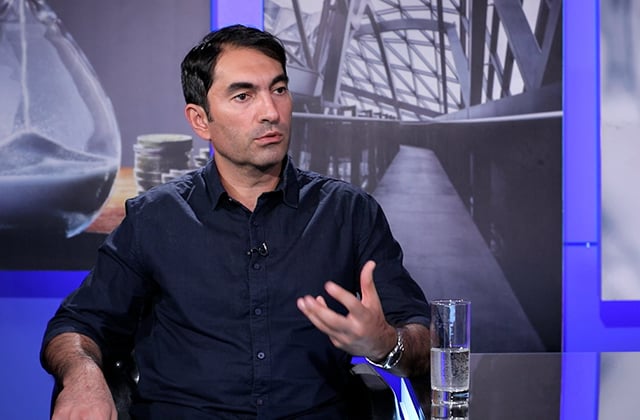
Arthur Atanesyan, Professor of Sociology at Yerevan State University, has offered a comprehensive assessment of Armenia’s recent parliamentary elections, arguing that the results largely matched pre-election polling and sociological forecasts. According to the academic, the ruling Civil Contract party succeeded in retaining its parliamentary majority, although its share of support declined compared to the 2021 elections, suggesting a gradual erosion of the government’s electoral base.
Atanesyan noted that the newly elected parliament reflects a more competitive political environment. The Strong Armenia party emerged as the second-largest political force, while the alliance associated with former President Robert Kocharyan secured third place. He highlighted the issue of opposition fragmentation and the phenomenon of the so-called “soft opposition”, whose representatives are often not viewed by voters as a credible alternative to the current government. The sociologist also pointed to the failure of Prosperous Armenia, led by Gagik Tsarukyan, to clear the electoral threshold by a narrow margin. In his view, the outcome illustrates the continuing fragmentation of Armenia’s political landscape and the declining influence of several traditional political actors.
Assessing the election campaign, Atanesyan argued that the authorities made extensive use of administrative resources. He specifically referred to public celebrations, concerts, and large-scale community events organized in the run-up to the vote. According to the professor, such initiatives served as voter-mobilization tools and could be interpreted as a modern version of the classic “bread and circuses” approach designed to strengthen public loyalty toward the ruling party.
Discussing voter behavior, Atanesyan emphasized that electoral preferences in Armenia are increasingly shaped not only by socio-economic considerations but also by ideological and value-based divisions. He argued that Prime Minister Nikol Pashinyan’s core support base largely consists of civil servants, public-sector employees, and citizens who embrace the concept of a “Real Armenia” — a pragmatic vision focused on adapting to new regional realities and pursuing compromise-based solutions. By contrast, opposition parties tend to attract more traditionalist voters as well as those who view the current political course as harmful to Armenia’s national interests.
The sociologist also examined political attitudes among younger voters. According to his observations, young people in Yerevan, particularly those working in the IT sector and other emerging urban industries, increasingly demonstrate political disengagement and limited interest in party politics. In contrast, rural youth often display higher levels of civic participation and involvement in political life. Atanesyan attributed this difference to varying lifestyles, levels of social integration, and perceptions of the state's role in society.
A significant portion of his analysis focused on the geopolitical dimension of the elections. Atanesyan argued that Armenian society remains deeply divided over the country’s foreign policy orientation. Debates surrounding relations with Russia, the European Union, Turkey, and Azerbaijan have become increasingly prominent, and attitudes toward these actors now play an important role in shaping political preferences. In his assessment, geopolitical orientation has become one of the principal fault lines within Armenian society and is increasingly influencing the country's political dynamics.
Concluding his analysis, Atanesyan stated that while the election results confirmed the ruling party’s ability to maintain its dominant position, they also revealed growing political polarization and significant disagreements over Armenia’s future direction. He argued that the long-term stability of the country’s political system will depend on the ability of both the government and the opposition to offer convincing responses to the key challenges facing the country, including national security, economic development, and Armenia’s strategic foreign policy course.


 Latest news
Latest news
Latest newsRecord Supplies: Armenia Boosts Fish Exports to Georgia
23.Aug.2026
Political Battle During Wartime: Zelensky Opposes Elections
23.Aug.2026
Romania Approves Construction of One of the Largest Solar Power Plants in Europe
23.Aug.2026
Ex-Ukrainian Defence Minister Fails in Bid to Pressure Zelenskiy
22.Aug.2026
Upper Lars: Why Border Queues Have Become a Political Signal for Georgia and Russia
22.Aug.2026
Russia-Ukraine War: No Decisive Breakthrough on the Front and Intensifying Ukrainian Deep Strikes on Russia
21.Aug.2026
TRIPP, Peace, and a New Geopolitical Crossroads: How Armenia Has Changed One Year After Washington
20.Aug.2026
Tokayev Updates Kazakhstan Foreign Policy Concept: Astana Strengthens Its Strategic Multi Vector Approach
19.Aug.2026
Ukraine Turns Ground Robots into a New Tool in the Fight Against Russia
19.Aug.2026
Tehran Threatens a New Round of War After Talks With the US Collapse
18.Aug.2026
Drones Over Moldova: Accident or a New Threat to National Security?
17.Aug.2026
Spanish F-18 Fighter Jet Shoots Down Drone That Violated Romanian Airspace
17.Aug.2026
The Black Sea Becomes a Risk Zone: Can Turkiye Protect Key Trade Routes?
16.Aug.2026
Ukraine Intensifies Long-Range Strikes: Flamingo Missiles Hit a Rocket and Space Center and Airbase in Russia
15.Aug.2026
Burgas Selected to Host the 71st Eurovision Song Contest in 2027
14.Aug.2026