
 20 Sep 2026









Artur Aghajanov: "Baku-Armenians can improve relations between Baku and Yerevan"
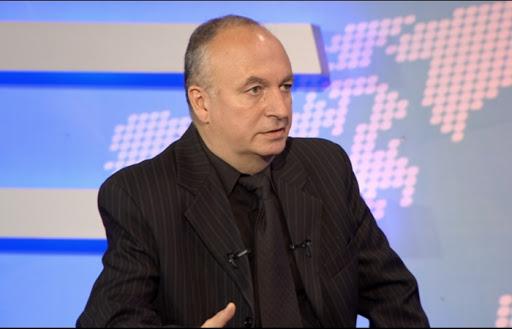
Historian, board member of the Armenian-Azerbaijani civil platform Artur Aghajanov, through his YouTube channel, addressed Armenian Prime Minister Nikol Pashinyan with an appeal to involve the Baku Armenians in the process of the final settlement of the Armenian-Azerbaijani conflict. "They lived together with Azerbaijanis, they understand Azerbaijanis, think to some extent like Azerbaijanis. Let's work together, we can advise a lot," Aghajanov said.
Commenting on the results of his working visit to Moscow on July 7 at that time, the then acting Prime Minister of Armenia Nikol Pashinyan, who discussed with Vladimir Putin the implementation of the trilateral agreements on Nagorno-Karabakh signed by the leaders of Russia, Armenia and Azerbaijan on November 9, 2020 and January 11, 2021 Aghajanov said that this visit should be considered in conjunction with the Moscow meeting of the Russian President with his Azerbaijani counterpart Ilham Aliyev, held on July 20. "If the President of Azerbaijan had a substantive conversation and a constructive dialogue, then Mr. Pashinyan goes to Moscow only to complain, to tell that he is not satisfied," said a board member of the Armenian-Azerbaijani Civil Platform.
Speaking about the recent proposals of Nikol Pashinyan to place the CSTO monitoring mission along the Armenian-Azerbaijani border and other earlier attempts by the Armenian leadership to involve the organization in the conflict over Nagorno-Karabakh, Aghajanov suggested that the Armenian Prime Minister better "learn what the CSTO is, what are the functions this organization ":" Before speaking on the podium, Nikol Pashinyan had to familiarize himself with the charter of the organization, that decisions on collective security are made by consensus and a vote of the CSTO members is necessary. But if there is no general agreement of the CSTO, how can this decision be made? the agreement on November 10 to start unblocking the roads, but the Lachin corridor is working, and the Zangezur corridor is not working. Instead of starting to fulfill the agreements, Mr. Pashinyan is looking for the causes of conflicts at the borders. But it is obvious that until there is demarcation, conflict situations will inevitably arise. Pashinyan needs to fulfill the achieved agreement and a little to understand something. "
Building versions on the subject of the destructive position of the Armenian Prime Minister, Aghajanov is perplexed: "Either his team is weak, or it has not yet been formed, or he does not control the situation." Turning to Pashinyan, he asks: "You are multi-vector - you run to America, then to France, then to Russia, but maybe you will decide somehow? Perhaps it would be better to establish relations and meet with Ilham Aliyev himself and to negotiate? Doesn't a politician have wisdom? "
Aghajanov believes that Baku-Armenians could best establish relations with Azerbaijan: “Then we will have a lasting peace. Because both the so-called Karabakh leadership and the Armenian leadership are engaged in populism. Now these territories have been returned. If they were peacefully returned, there would not have been so many casualties from both the Armenian and Azerbaijani sides. This is on the conscience of the current prime minister and everyone else. The leaders of Armenia do not have enough wisdom to start If we give the Baku Armenians an opportunity, we will quickly establish relations with the Azerbaijani side and the Azerbaijani people close to us. "
In conclusion, Artur Aghajanov again resorted to comparing Nikol Pashinyan and Ilham Aliyev, noting that the President of Azerbaijan is head and shoulders above the Prime Minister of Armenia as "an intelligent, competent politician who can improve relations," and called on Pashinyan to fulfill the agreements reached.


 Latest news
Latest news
Latest newsUS Sanctions Target Russias Main Pillar as Moscow Faces New Pressure on Oil Revenues
19.Sep.2026
Russia Begins State Duma Elections Amid War in Ukraine
18.Sep.2026
Bulgaria Strengthens Protection of Strategic Infrastructure Against Drones and Other Threats
18.Sep.2026
Georgia and Enka: How the Namakhvani Dispute Could Affect the Investment Climate
17.Sep.2026
Una Aleksandra Bērziņa-Čerenkova: After Russia’s Invasion, Latvia Began Banning Russian-Language Media
17.Sep.2026
Rainer Saks: Russia сould lose its influence in Armenia, just as it did in the Baltics
16.Sep.2026
Russian Drones Violated Moldovan Airspace Twice During Zelenskys Trips
16.Sep.2026
Operation Vivaldi: Ukraine Reports Advances Near Lyman as Fighting Intensifies
16.Sep.2026
Kazakhstan and South Korea Elevate Ties to Comprehensive Strategic Partnership
16.Sep.2026
Armenia Energy Diversification: Testing the Limits of Dependence on Russian Gas
15.Sep.2026
Tbilisi Distances Itself from Brussels as Kobakhidze Intensifies Criticism of European Policy
14.Sep.2026
Russia Fuel Crisis Gives the US a New Diplomatic Leverage Tool
14.Sep.2026
Trump Calls on Zelenskyy to Stop Strikes on Russian Oil Infrastructure
13.Sep.2026
Ukraine Expands Pressure on Russia’s Shadow Fleet: Moscow’s Oil Logistics Under Threat
13.Sep.2026
The Riga Conference: Europe Prepares for Long-Term Confrontation with Russia and Reshapes Its Security Architecture
12.Sep.2026