
 13 Oct 2026









Tigran Khzmalyan: Russia is no longer an ally of Armenia – neither formally nor practically
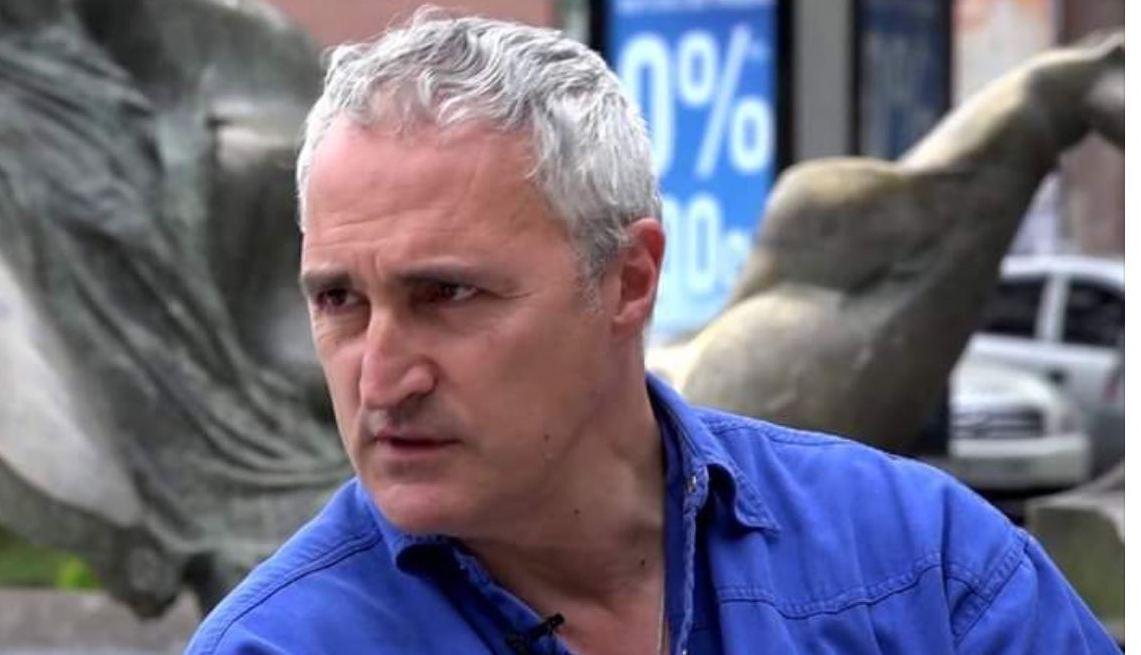
Tigran Khzmalyan, Chairman of the European Party of Armenia
- Armenia’s hopes for Russia’s active involvement in the conflict have not been realized. After the fighting in Nagorno-Karabakh began, Azerbaijan also shelled Armenian territory. What is the reason for Russia's inaction, given that Armenia and Russia are bound by a military agreement?
- The question of "Armenia's hopes for Russia's involvement in the conflict" is somewhat incorrect because it is Russia that has been striving for years to introduce its troops into the region under the guise of "peacekeepers." Interestingly, the only common approach between the Armenian and Azerbaijani sides in this situation is the mutual refusal of direct Russian involvement in the conflict. Clearly, both in Yerevan and Baku, they understand that such a "cure" is more dangerous than the disease itself. If anyone in Armenia had illusions about possible Russian support, they were shattered by Azerbaijani shelling, to which the "CSTO ally" responded through Russia's representative at the UN, Nebenzia: "Russia does not support Armenia in this conflict." This is one of the rare cases when Russian diplomats speak the truth, and we believe them.
- France, and President Macron in particular, has openly supported Armenia. It seems that Russia, as a member of the OSCE Minsk Group, is demonstrating neutrality, while France is showing a more principled stance. Can this influence Armenia's foreign policy priorities in the future?
- This is the main outcome of the still ongoing war – Russia is no longer an ally of Armenia, neither formally nor practically. In fact, this was officially stated for the first time by Armenia's previous president, Serzh Sargsyan, on April 5, 2016, right after the "Four-Day" April War: "Armenia no longer has a political patron," he said at an OSCE session in Berlin. Four years later, this became clear to everyone. Russia is definitively withdrawing from the region with its structures, such as the CSTO and the EEU. The process has begun, as Gorbachev would say. Naturally, Armenia is looking for new allies, and naturally, it is Europe, the European Union, and primarily France.
- How accurate are the rumors that Russia's neutrality is connected to the Armenian Prime Minister's principled stance on several aspects of Armenian-Russian cooperation?
- Your assumption is regularly voiced by high-ranking Russian officials and politicians—from Zatulin and Zhirinovsky to Pushkov and Margarita Simonyan. They accuse Pashinyan of disloyalty to the Kremlin and frame their position as follows: "Armenia is either doomed to join Russia, or it is doomed to perish." In Armenia, however, there is a completely different view of the situation and prospects.
- To what extent have Armenia's expectations for military-technical cooperation with Russia been justified? As the current war shows, Armenia uses exclusively Russian-made weapons.
- Armenia uses the same weapons as Azerbaijan does – 90 percent of the arms used by both sides are Russian-made, mostly Soviet-era weapons. Baku, thanks to oil revenues, can afford to buy Israeli drones, Belarusian "Polonez" systems, and it is supported by Turkish aviation. Syrian jihadists, Afghan mercenaries, and ISIS fighters are now fighting for them. We saw all this during the first Karabakh war, from 1991-1994. It didn't help them then, and it won't help now. Weapons don't win wars; people do – their motivation and fighting spirit. For Azerbaijan, this is a matter of politics; for Armenia, it's a matter of survival. We will not allow a second Armenian genocide. And there is plenty of weaponry in the world beyond Russia.


 Latest news
Latest news
Latest newsGeorgia’s Constitutional Court Continues Case on Banning Opposition Parties: Political Pluralism at Stake
12.Oct.2026
Azerbaijan and Iran Step Up Security Contacts Amid Hijab Protests
12.Oct.2026
Personnel Shortages Complicate Ukrainian Forces’ Rotation: Ukraine Faces Long-Term Challenges on the Front Line
11.Oct.2026
Trump Eases Sanctions on Russian Fuel After Talks with Putin: Kyiv Fears Boost to Moscow’s War Revenues
10.Oct.2026
Putin Seeks to Strengthen Russia’s Influence in the Post-Soviet Space Through the CIS
10.Oct.2026
Russia and the South Caucasus: External Pressure, Political Competition and a Crisis of Trust
10.Oct.2026
Peaceful Settlement Between Armenia and Azerbaijan: Moving from Declarations to Implementation
10.Oct.2026
Moldova Ready to Accept as Many Ukrainians as Necessary if Situation Worsens This Winter
09.Oct.2026
Turkmenistan Turns Avaza into a Regional Diplomatic Hub as Caspian, Central Asian and CIS Agendas Converge
08.Oct.2026
Romania Scrambles Spanish F-18s After Aerial Targets Detected Near Ukrainian Border
07.Oct.2026
Berlin Deepens Defence Partnership with Kyiv: Germany to Provide Ukraine with €1 Billion in Military Aid
07.Oct.2026
European Parliament Against Georgian Dream: EU Prepares New Response to Tbilisi
06.Oct.2026
Bulgarian Foreign Minister to Discuss European Security and International Law in the Netherlands
05.Oct.2026
Rheinmetall in Bulgaria: Sofia Emerges as a New NATO Defence-Industrial Hub in the Balkans
05.Oct.2026
The Cost of a Long War: Moscow Expands Spending Plans Through 2029
05.Oct.2026