
 13 Oct 2026









Peaceful Settlement Between Armenia and Azerbaijan: Moving from Declarations to Implementation
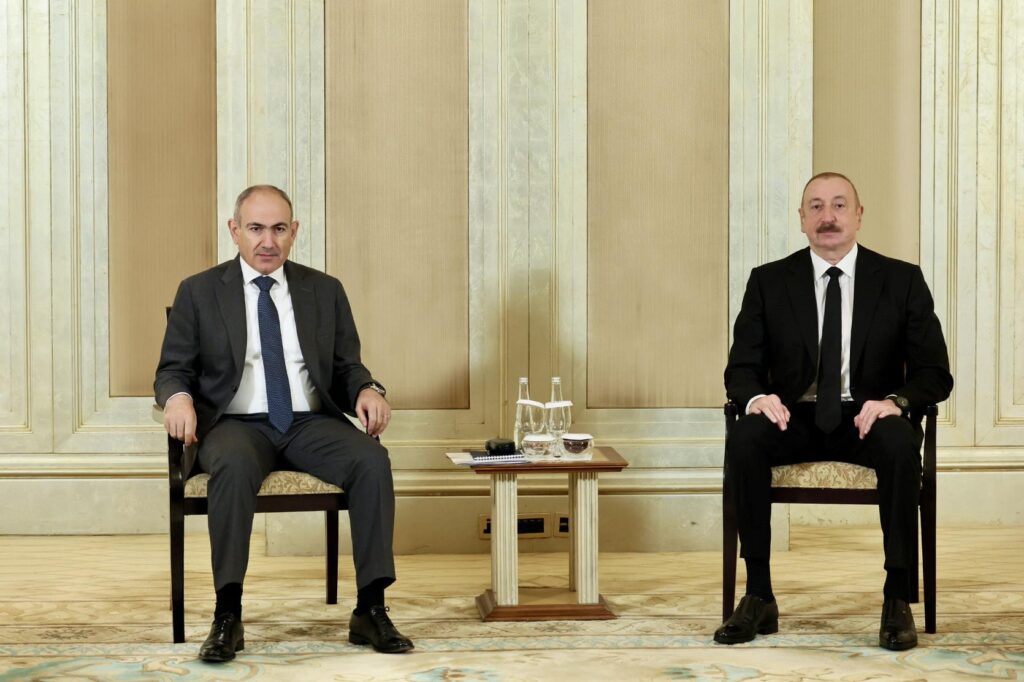
The peaceful settlement
between Armenia and Azerbaijan is gradually moving beyond the realm of
diplomatic statements. However, the stability of peace will depend on the
implementation of agreements, the resolution of humanitarian issues, the
development of economic ties, and the ability of both parties to ensure the
security and rights of their populations.
The Autumn Session of the Parliamentary Assembly of the Council
of Europe (PACE), held in Strasbourg from September 28 to October 2, 2026, did
not foresee a separate vote on the Armenian-Azerbaijani peace agreement.
Nevertheless, the topic of settlement was raised during discussions on the
parliamentary elections in Armenia and their broader political context.
This is telling: regional peace impacts not only relations
between Yerevan and Baku, but also internal politics, public sentiment, and the
stability of democratic institutions. At the same time, international
organizations can assist in strengthening legal guarantees, but they cannot
replace the parties themselves in fulfilling bilateral commitments.
The Peace Process as a
Factor in Domestic Politics
The PACE report on the parliamentary elections in Armenia on
June 7, 2026, notes that the election campaign took place against the backdrop
of discussions surrounding the peace agreement with Azerbaijan, its
implementation, security issues, the so-called corridor, and national identity.
These themes were intertwined with debates on European integration, economic
hardships, and anti-corruption policies.
Speaking at the PACE session on September 28, Kimmo Kiljunen,
former Assembly Rapporteur on Armenia, linked the pre-election atmosphere to
geopolitical tensions, the Armenian-Azerbaijani reconciliation process, and the
consequences of population displacement related to Nagorno-Karabakh.
This remark is essential for understanding why the peace process
cannot be evaluated solely based on statements made by the leaders of the two
countries. Its consequences touch upon security issues, the status of displaced
persons, public trust, and political expectations.
For Armenia, the peace agreement is also tied to discussions
regarding its foreign policy orientation and the prospects of European
integration. For Azerbaijan, post-war settlement priorities, transport routes,
and establishing the fate of missing persons remain key focus areas. These
priorities do not always align, which is why sustainable peace requires not
only political will, but also working mechanisms to balance interests.
From Initialing to
Implementation
On August 8, 2025, in Washington, the Foreign Ministers of
Armenia and Azerbaijan initialed the text of the Agreement on Peace and the
Establishment of Interstate Relations. Initialing confirmed the agreement on
the text, but it is not equivalent to final signing and entry into force.
In September 2026, Armenian Prime Minister Nikol Pashinyan again
spoke of the necessity to develop good-neighborly relations while respecting
the sovereignty and territorial integrity of both nations. Among practical
areas, he highlighted transport links, trade, and the resolution of
humanitarian issues.
On October 8, Pashinyan stated that the mission of his political
party is to sign and ratify the initialed peace agreement. The following day,
speaking at the summit of CIS Heads of State in Turkmenistan, he referred to
peace between Armenia and Azerbaijan as an established fact, while emphasizing
that it must be preserved and strengthened every day.
These statements reflect the position of the Armenian leadership.
However, a distinction remains between political assertions of accomplished
peace and its final legal formalization. Sustainable settlement requires
further agreements and their consistent execution.
Missing Persons: A
Humanitarian Issue and a Test of Trust
One of the most sensitive issues remains determining the fate of
persons who went missing as a result of the long-standing conflict.
On October 7, Azerbaijani President Ilham Aliyev, in an address
to participants of an international conference in Baku, stated the need for
information regarding the fate of missing Azerbaijanis, potential burial sites,
and relevant archival materials. He emphasized the importance of this work for
the families of the missing and for sustainable peace.
On October 8, Pashinyan reported that he had discussed
intensifying cooperation between the relevant commissions of both countries
with Aliyev. The sides continue to exchange information on this matter.
Nonetheless, this humanitarian issue remains complex and
politically sensitive. The families of missing persons expect reliable
information, while allegations regarding the withholding of information or non-fulfillment
of obligations require verification and documentary proof.
Establishing the fate of the missing could become one of the
most concrete indicators of the parties' willingness to cooperate. Success here
is measured not by statements, but by data exchange, identification of remains,
informing families, and access to archives.
Transport and Trade: The
Economic Dimension of Peace
In a speech on September 18, 2026, in Wiesbaden, Armenian Prime
Minister Nikol Pashinyan referred to TRIPP — Trump Route for International
Peace and Prosperity — as one of the key outcomes of the Washington
Summit of August 8, 2025. According to him, work on implementing the project is
already underway.
Pashinyan stated that TRIPP envisages the restoration of railway
infrastructure in Armenia, as well as the construction of highways, pipelines,
and power lines. He emphasized that the project should serve not only domestic
and regional needs, but also international and transit shipments, creating new
transit opportunities along the East–West and North–South axes.
Documents published in January and May 2026 by Armenia and the
United States outline a broader framework of potential infrastructure
components: railways, roads, oil and gas pipelines, power transmission lines,
and fiber-optic networks. However, specific projects and locations are to be
determined in subsequent phases. Therefore, this list should be viewed as a
framework of intended directions rather than evidence that construction on all
listed facilities has already begun.
Separately, Pashinyan noted that, according to him, rail
connections from Azerbaijan had been open to Armenia via Georgia since November
2025, and bilateral trade between the two countries had commenced. This
statement refers to an existing route through a third country and should not be
confused with future TRIPP infrastructure directly within Armenia.
According to the published framework documents, the project
involves developing multimodal transit through Armenian territory while
respecting its sovereignty, territorial integrity, and jurisdiction. The
Armenian side retains state authority over border and customs control,
security, and law enforcement, although specific service functions may be
carried out by private operators.
The economic rationale of TRIPP lies in expanding transport
capacities, trade, and access to international markets. However, the practical
effect will depend on the further development of specific projects, their
funding, and execution, as well as progress in institutionalizing peace between
Armenia and Azerbaijan.
The Role of the Council of
Europe
The Council of Europe is not the primary mediator in the peace
treaty negotiations between Armenia and Azerbaijan. Its competence centers
primarily on human rights, the rule of law, democratic institutions, and the
compliance of states with their international obligations.
Thus, the significance of PACE lies not in replacing bilateral
dialogue, but in supporting the principles necessary for sustainable peace:
legal guarantees, protection of fundamental rights, democratic accountability,
and the prevention of new violations.
A distinct aspect of European policy concerns the human rights
situation in Azerbaijan. In Resolution 2663 (2026), "The silencing of critical
voices in Azerbaijan", adopted on June 24, PACE expressed
serious concern over restrictions on independent media, political opposition,
and non-governmental organizations. The Assembly also called for the
fulfillment of human rights obligations.
This resolution was adopted during the June session rather than
the autumn session. It should be viewed as part of the broader context of
relations between Baku and the Council of Europe, rather than a specific
decision on the peace agreement.
Issues of civil liberties and interstate settlement are
interconnected, but not identical. A peace treaty does not void obligations
regarding human rights protection, just as criticism of human rights situations
does not substitute for the need to maintain dialogue on security and
humanitarian cooperation.
Peace Must Be Measured by
Results
The main challenge for Armenia and Azerbaijan is to transform
political agreements into sustainable mechanisms of peaceful coexistence. This
entails final legal formalization, consistent execution of reached agreements,
resolving missing persons cases, advancing the humanitarian agenda, and
expanding transport and trade links.
Statements made by both
sides in October show that dialogue continues, including on humanitarian
matters. However, public statements alone do not prove that all disputed issues
have been resolved or that agreements have yielded lasting results.
The Council of Europe can
assist in reinforcing legal standards and supporting discussions on human
rights and democratic governance. Ultimately, however, the outcome depends
primarily on decisions made in Yerevan and Baku, and their willingness to honor
mutual commitments.
For the South Caucasus,
peace is not merely the absence of active hostilities or the text of an
agreement. It is a system of practical arrangements that guarantee security,
address humanitarian challenges, and foster the gradual restoration of trust.
It is by these tangible results that we will know whether a diplomatic breakthrough
will turn into a lasting peace.
Journalist
Marine
KHARATYAN


 Latest news
Latest news
Latest newsGeorgia’s Constitutional Court Continues Case on Banning Opposition Parties: Political Pluralism at Stake
12.Oct.2026
Azerbaijan and Iran Step Up Security Contacts Amid Hijab Protests
12.Oct.2026
Personnel Shortages Complicate Ukrainian Forces’ Rotation: Ukraine Faces Long-Term Challenges on the Front Line
11.Oct.2026
Trump Eases Sanctions on Russian Fuel After Talks with Putin: Kyiv Fears Boost to Moscow’s War Revenues
10.Oct.2026
Putin Seeks to Strengthen Russia’s Influence in the Post-Soviet Space Through the CIS
10.Oct.2026
Russia and the South Caucasus: External Pressure, Political Competition and a Crisis of Trust
10.Oct.2026
Peaceful Settlement Between Armenia and Azerbaijan: Moving from Declarations to Implementation
10.Oct.2026
Moldova Ready to Accept as Many Ukrainians as Necessary if Situation Worsens This Winter
09.Oct.2026
Turkmenistan Turns Avaza into a Regional Diplomatic Hub as Caspian, Central Asian and CIS Agendas Converge
08.Oct.2026
Romania Scrambles Spanish F-18s After Aerial Targets Detected Near Ukrainian Border
07.Oct.2026
Berlin Deepens Defence Partnership with Kyiv: Germany to Provide Ukraine with €1 Billion in Military Aid
07.Oct.2026
European Parliament Against Georgian Dream: EU Prepares New Response to Tbilisi
06.Oct.2026
Bulgarian Foreign Minister to Discuss European Security and International Law in the Netherlands
05.Oct.2026
Rheinmetall in Bulgaria: Sofia Emerges as a New NATO Defence-Industrial Hub in the Balkans
05.Oct.2026
The Cost of a Long War: Moscow Expands Spending Plans Through 2029
05.Oct.2026