
 13 Oct 2026









Azerbaijan and Iran Step Up Security Contacts Amid Hijab Protests
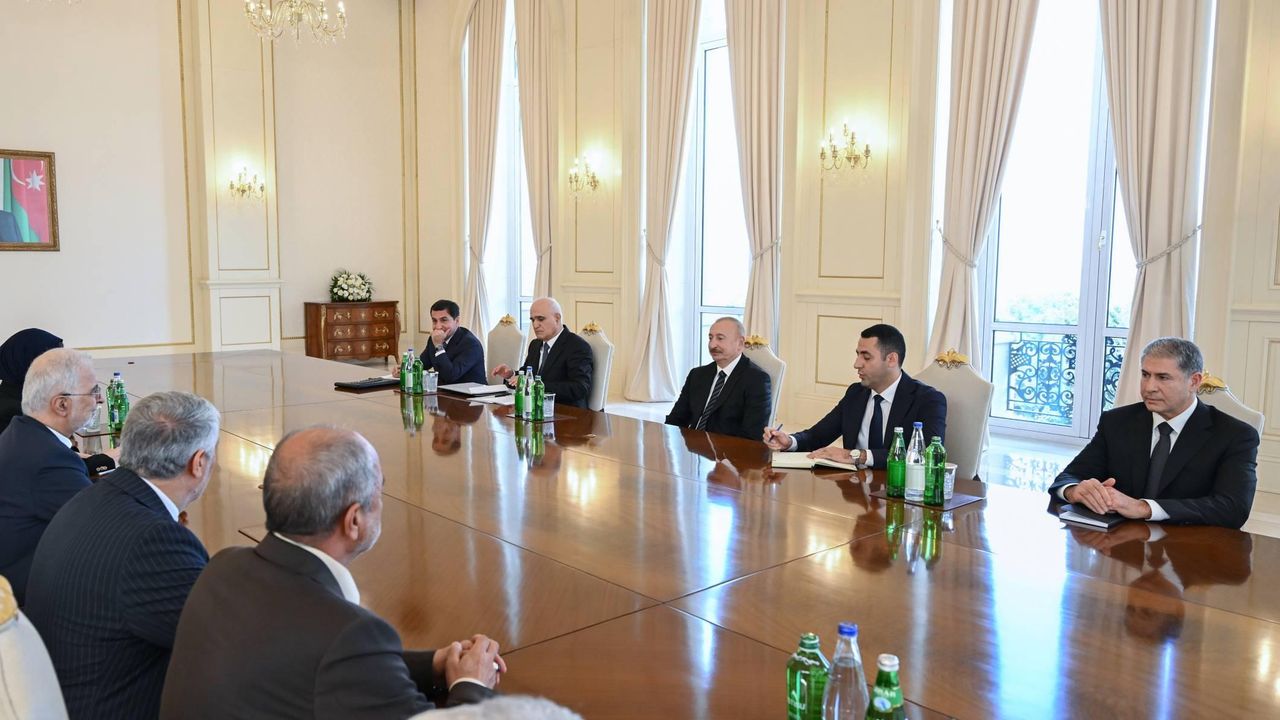
The October 12 meeting between Azerbaijani President Ilham Aliyev and Iranian Interior Minister Eskandar Momeni took place amid protests against restrictions on wearing the hijab in Azerbaijani schools. Although the official agenda included public order, combating transnational crime, and regional security, the timing of these events highlights the sensitivity of religious issues for Azerbaijan’s domestic stability and its relations with Tehran.
On October 12, Ilham Aliyev received Iranian Interior Minister Eskandar Momeni. According to official information, the sides discussed prospects for cooperation between their respective agencies and regional security issues. Particular attention was paid to law enforcement cooperation and maintaining public order.
The visit took place amid public discontent over new school uniform requirements. Although the Azerbaijani government’s September 21 resolution does not explicitly ban the hijab, its implementation has reportedly resulted in some female students being denied access to schools. Against the backdrop of protests in Baku and other parts of the country, Azerbaijan’s Interior Ministry reported the detention of 37 people and the initiation of criminal proceedings.
The situation presents Azerbaijani authorities with the challenge of upholding the secular character of education while preventing further escalation of public tensions. If the restrictions continue to be perceived by some segments of society as an infringement on religious freedom, the dispute over school uniforms could take on a broader political dimension.
Azerbaijan’s proximity to Iran, where religion plays a significant role in state ideology and regional policy, adds another dimension to the situation. For Baku, a potential risk lies in the possibility that the domestic dispute could become a subject of external political pressure or information confrontation. However, no publicly available evidence has been presented to establish Tehran’s involvement in organizing the protests.
Overall, the talks between Baku and Tehran should primarily be viewed as part of bilateral cooperation on security issues. Nevertheless, against the backdrop of the hijab protests, they also highlight the close interconnection between domestic stability, religious identity, and relations with neighboring states in regional politics.


 Latest news
Latest news
Latest newsGeorgia’s Constitutional Court Continues Case on Banning Opposition Parties: Political Pluralism at Stake
12.Oct.2026
Azerbaijan and Iran Step Up Security Contacts Amid Hijab Protests
12.Oct.2026
Personnel Shortages Complicate Ukrainian Forces’ Rotation: Ukraine Faces Long-Term Challenges on the Front Line
11.Oct.2026
Trump Eases Sanctions on Russian Fuel After Talks with Putin: Kyiv Fears Boost to Moscow’s War Revenues
10.Oct.2026
Putin Seeks to Strengthen Russia’s Influence in the Post-Soviet Space Through the CIS
10.Oct.2026
Russia and the South Caucasus: External Pressure, Political Competition and a Crisis of Trust
10.Oct.2026
Peaceful Settlement Between Armenia and Azerbaijan: Moving from Declarations to Implementation
10.Oct.2026
Moldova Ready to Accept as Many Ukrainians as Necessary if Situation Worsens This Winter
09.Oct.2026
Turkmenistan Turns Avaza into a Regional Diplomatic Hub as Caspian, Central Asian and CIS Agendas Converge
08.Oct.2026
Romania Scrambles Spanish F-18s After Aerial Targets Detected Near Ukrainian Border
07.Oct.2026
Berlin Deepens Defence Partnership with Kyiv: Germany to Provide Ukraine with €1 Billion in Military Aid
07.Oct.2026
European Parliament Against Georgian Dream: EU Prepares New Response to Tbilisi
06.Oct.2026
Bulgarian Foreign Minister to Discuss European Security and International Law in the Netherlands
05.Oct.2026
Rheinmetall in Bulgaria: Sofia Emerges as a New NATO Defence-Industrial Hub in the Balkans
05.Oct.2026
The Cost of a Long War: Moscow Expands Spending Plans Through 2029
05.Oct.2026