
 13 Oct 2026









Russia and the South Caucasus: External Pressure, Political Competition and a Crisis of Trust
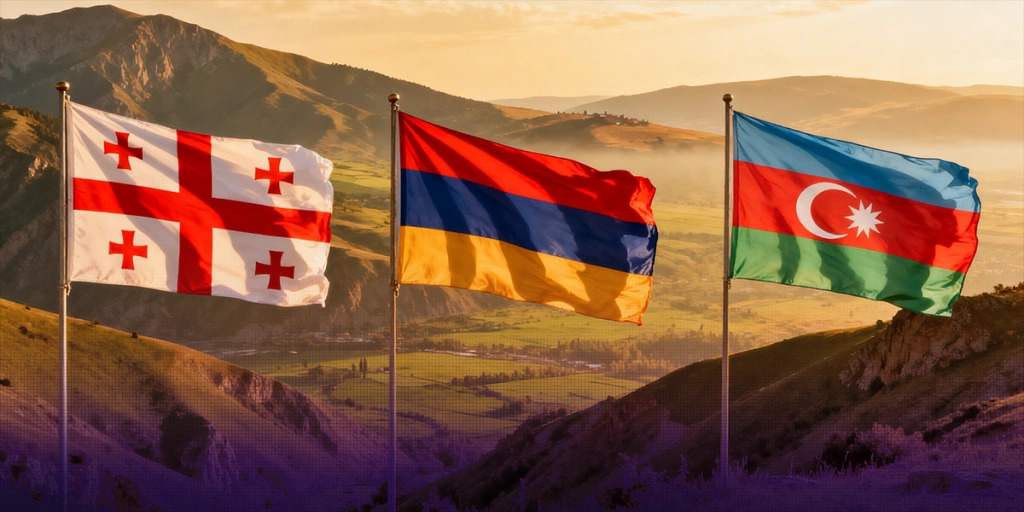
The autumn session of the
Parliamentary Assembly of the Council of Europe (PACE) once again brought
issues of foreign interference, the resilience of democratic institutions and
freedom of political competition to the forefront. These issues have different
dimensions across the South Caucasus: in Armenia, they are primarily linked to
the assessment of parliamentary elections and external pressure; in Georgia, to
the crisis of democratic institutions; and in Azerbaijan, to restrictions
affecting independent media, the opposition and civil society.
These situations cannot be
reduced to a single model. However, PACE documents provide an opportunity to
examine a common question: how resilient are state institutions when external
pressure coincides with domestic political polarisation and restrictions on
public scrutiny?
Armenia: Foreign Interference During
Elections
In its report on Armenia’s
parliamentary elections of 7 June 2026, the PACE election observation mission
stated that Russian interference and foreign information operations had reached
an “unprecedented scale” for a Council of Europe member state.
The document refers to direct
external pressure during the election campaign, including trade restrictions
and security-related threats. Observers also pointed to manipulative
information content and a polarised media environment.
During the debate on 28
September, Sona Ghazaryan, a member of the Armenian delegation, spoke about
disinformation, cyberattacks, the dissemination of false narratives and
attempts to undermine public trust in democratic procedures. She also linked
foreign influence to economic pressure.
Her remarks reflect the
position of a representative of the Armenian delegation. The conclusion
regarding the scale of foreign interference is also contained in the official
report of the observation mission. However, specific claims concerning the
motives and actions of individual actors should be considered in light of the
wording of the original source.
At the same time, the report
does not absolve Armenian institutions of responsibility for domestic
shortcomings in the electoral process. It identifies deficiencies in campaign
finance oversight, the use of administrative resources, cases of vote-buying
and the limited effectiveness of judicial appeals.
This distinction is important:
protecting elections against external pressure and ensuring a level playing
field for political forces must be pursued simultaneously.
Georgia: Systemic Concerns
Over Democratic Institutions
With regard to Georgia, PACE
has expressed broader criticism of the state of democratic institutions. In
Resolution 2664 (2026), adopted on 24 June, the Assembly stated that the
conditions for genuinely democratic elections were absent in the country at
that time.
The document links this assessment
to pressure on the political opposition, civil society and independent media,
as well as to deep political polarisation. PACE called on the Georgian
authorities to end unjustified restrictions on freedom of expression and
assembly and to initiate an open political process involving different
political forces and civil society.
This was a June resolution,
not a new decision adopted during the autumn session. Nevertheless, it remains
an important context for assessing Georgia’s relations with the Council of
Europe.
Unlike the Armenian report,
which focused on specific parliamentary elections, the resolution on Georgia
addresses the broader state of democratic institutions and the country’s
obligations to the Council of Europe.
Azerbaijan: Restrictions on
Independent Journalism
Another set of concerns
relates to the situation in Azerbaijan. In Resolution 2663 (2026), adopted on
24 June, PACE expressed serious concern over the systematic suppression of
independent voices and restrictions affecting the media, political opposition
and non-governmental organisations.
The document states that,
according to the Council of Europe Platform for the Protection of Journalism,
36 journalists were in detention in Azerbaijan at the time the resolution was
adopted. PACE also expressed regret that Azerbaijan had not submitted the
credentials of its delegation for 2025 and 2026 and had consequently not
participated in the Assembly’s work during that period.
These assessments relate to
the June 2026 resolution and should not be presented as the outcome of a new
vote during the autumn session.
From a regional analytical
perspective, the Azerbaijani case is particularly relevant in terms of media
freedom, public scrutiny and compliance with international obligations. At the same
time, it cannot automatically be equated with the situations in Armenia or
Georgia: the political circumstances differ, as do the conclusions formulated
by PACE.
The Common Challenge: Trust in
Institutions
A comparison of the three
countries shows that external influence is only one part of a more complex
picture. Political stability also depends on the extent to which citizens trust
elections, courts, the media and mechanisms of public scrutiny.
In Armenia, PACE
simultaneously acknowledged that voters had a genuine choice and called for
shortcomings in the electoral process to be addressed. In Georgia, the Assembly
pointed to systemic problems affecting the democratic environment. In
Azerbaijan, its criticism focuses on restrictions on independent journalism,
the political opposition and civil society.
These assessments differ in
scope and substance, but they raise a common question for all three states: how
can political autonomy be safeguarded without restricting citizens’ rights and
freedom of public debate?
For Armenia, it is
particularly important to ensure that measures to counter disinformation do not
become a pretext for arbitrary restrictions on the media or political
opponents. For Georgia, the key priorities remain restoring trust in democratic
institutions and creating conditions for free political competition. In
Azerbaijan’s case, PACE documents emphasise the need to protect independent
journalism and civic space.
External pressure does not
eliminate the need for domestic reforms. On the contrary, trust in state
institutions, judicial independence, transparency in the political process and
media freedom are essential conditions for strengthening society’s resilience
to foreign interference.
Journalist
Marine KHARATYAN


 Latest news
Latest news
Latest newsGeorgia’s Constitutional Court Continues Case on Banning Opposition Parties: Political Pluralism at Stake
12.Oct.2026
Azerbaijan and Iran Step Up Security Contacts Amid Hijab Protests
12.Oct.2026
Personnel Shortages Complicate Ukrainian Forces’ Rotation: Ukraine Faces Long-Term Challenges on the Front Line
11.Oct.2026
Trump Eases Sanctions on Russian Fuel After Talks with Putin: Kyiv Fears Boost to Moscow’s War Revenues
10.Oct.2026
Putin Seeks to Strengthen Russia’s Influence in the Post-Soviet Space Through the CIS
10.Oct.2026
Russia and the South Caucasus: External Pressure, Political Competition and a Crisis of Trust
10.Oct.2026
Peaceful Settlement Between Armenia and Azerbaijan: Moving from Declarations to Implementation
10.Oct.2026
Moldova Ready to Accept as Many Ukrainians as Necessary if Situation Worsens This Winter
09.Oct.2026
Turkmenistan Turns Avaza into a Regional Diplomatic Hub as Caspian, Central Asian and CIS Agendas Converge
08.Oct.2026
Romania Scrambles Spanish F-18s After Aerial Targets Detected Near Ukrainian Border
07.Oct.2026
Berlin Deepens Defence Partnership with Kyiv: Germany to Provide Ukraine with €1 Billion in Military Aid
07.Oct.2026
European Parliament Against Georgian Dream: EU Prepares New Response to Tbilisi
06.Oct.2026
Bulgarian Foreign Minister to Discuss European Security and International Law in the Netherlands
05.Oct.2026
Rheinmetall in Bulgaria: Sofia Emerges as a New NATO Defence-Industrial Hub in the Balkans
05.Oct.2026
The Cost of a Long War: Moscow Expands Spending Plans Through 2029
05.Oct.2026