
 13 Oct 2026









MP Sona Aliyeva: Azerbaijan's role in ensuring global energy security highly appreciated
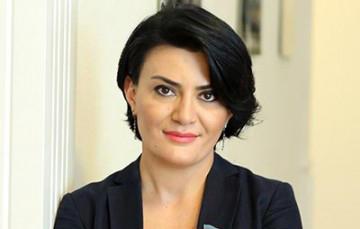
Issues related to the prospects for economic development, restoration of stability and environmental balance in the world are discussed at the World Economic Forum (WEF) in Davos every year, Azerbaijani MP Sona Aliyeva told Trend.
"The forum plays an important role in terms of informing a wide audience about the Azerbaijani economy. More than 300 plenary meetings, round tables, as well as mini-summits with the participation of statesmen are held annually within the forum. No official documents are accepted here. The forum only gives an opportunity to meet and discuss many key issues of the global economy and establish new business contacts in an informal atmosphere," the MP said.
Seventeen years of Azerbaijan’s participation in WEF and its growing activity from year to year are associated with the country's long success under the capable guidance of Azerbaijani President Ilham Aliyev.
“For the first time in January 2007, President Aliyev attended the forum “The Growing Influence of Oil Geopolitics” under the motto “Shift of the global balance of power”. As a result of the successful implementation of energy projects by Azerbaijan, the country's growing role in ensuring the energy security of the world is highly praised. This gives confidence that the Baku-Tbilisi-Ceyhan and Baku-Tbilisi-Erzurum oil and gas pipelines, stimulating the development of other projects, will continue to contribute to the growth of the country's influence," Sona Aliyeva added.
Azerbaijan’s participation along with other countries in the discussions entitled “The role of solar energy in the energy sector”, “Oil and gas geopolitics: new frontiers” and others within the forums allowed the country to widely demonstrate its capabilities in this field.
All this shows that in our modern multi-polar world, the solution of the arising geopolitical and geoeconomic issues as well as problems associated with the fourth industrial revolution, and the emergence of new challenges and opportunities create the need for the development of various business ties and discussions, the MP noted.
"Failure to take necessary measures in this direction may lead to a deepening geoeconomic and even geopolitical crisis. Such a danger to the world, living in new planetary boundaries, is very clear and in some aspects is already really felt. This factor creates the need to renew relations between people, states, governments and companies, as well as to enter a new stage in global cooperation," she said.
Sona Aliyeva noted that the high value of the policy pursued by President Ilham Aliyev is not only in the fact that the country has achieved great success and received high political, economic and social dividends, but also in the fact that the head of state managed to combine such conflicting concepts in the realities of rapid globalization as universality and uniqueness, which play an important role in the domestic and foreign policy of the country.
"President Ilham Aliyev considering uniqueness and universality to be equally important factors, has prevented the negative consequences of each of them, and thanks to his right political course, Azerbaijan has maintained its independent position in all spheres," Sona Aliyeva said.
"At the same time, observing the principle of optimal universality and optimal uniqueness in his management policy, instead of mandatory universality or mandatory uniqueness, the president turned Azerbaijan into an island of stability, a center of geopolitical integration and multiculturalism, a safe place for events and meetings of an international level. As a result of this successful policy, Azerbaijan implements many projects based on equal and mutually beneficial cooperation with other developed countries," Sona Aliyeva said.


 Latest news
Latest news
Latest newsGeorgia’s Constitutional Court Continues Case on Banning Opposition Parties: Political Pluralism at Stake
12.Oct.2026
Azerbaijan and Iran Step Up Security Contacts Amid Hijab Protests
12.Oct.2026
Personnel Shortages Complicate Ukrainian Forces’ Rotation: Ukraine Faces Long-Term Challenges on the Front Line
11.Oct.2026
Trump Eases Sanctions on Russian Fuel After Talks with Putin: Kyiv Fears Boost to Moscow’s War Revenues
10.Oct.2026
Putin Seeks to Strengthen Russia’s Influence in the Post-Soviet Space Through the CIS
10.Oct.2026
Russia and the South Caucasus: External Pressure, Political Competition and a Crisis of Trust
10.Oct.2026
Peaceful Settlement Between Armenia and Azerbaijan: Moving from Declarations to Implementation
10.Oct.2026
Moldova Ready to Accept as Many Ukrainians as Necessary if Situation Worsens This Winter
09.Oct.2026
Turkmenistan Turns Avaza into a Regional Diplomatic Hub as Caspian, Central Asian and CIS Agendas Converge
08.Oct.2026
Romania Scrambles Spanish F-18s After Aerial Targets Detected Near Ukrainian Border
07.Oct.2026
Berlin Deepens Defence Partnership with Kyiv: Germany to Provide Ukraine with €1 Billion in Military Aid
07.Oct.2026
European Parliament Against Georgian Dream: EU Prepares New Response to Tbilisi
06.Oct.2026
Bulgarian Foreign Minister to Discuss European Security and International Law in the Netherlands
05.Oct.2026
Rheinmetall in Bulgaria: Sofia Emerges as a New NATO Defence-Industrial Hub in the Balkans
05.Oct.2026
The Cost of a Long War: Moscow Expands Spending Plans Through 2029
05.Oct.2026