
 13 Oct 2026









Iran has the most transparent nuclear program in the world, says envoy
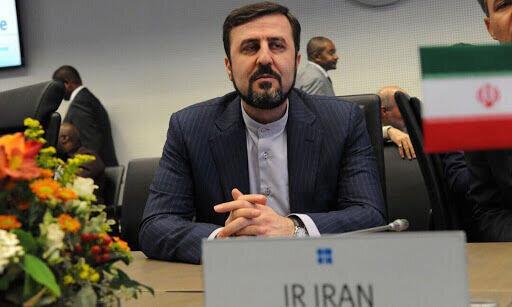
TEHRAN – Kazem Gharibabadi, Iran's ambassador and permanent representative to the Vienna-based international organizations, says Iran has the most transparent nuclear program in the world.
“Iran is the most transparent country in terms of its nuclear activities. We have had more than a fifth of the world’s total inspections by the [International Atomic Energy] Agency (IAEA),” Gharibabadi said in an interview with Khabar Online published on Sunday.
“It’s because of this level of cooperation and transparency that we do not consider the remarks of some countries as sincere,” he added.
He said Iran's latest nuclear move was the injection of uranium hexafluoride, or UF6, into the IR-2m centrifuges, which was dealt with at a quarterly meeting of the IAEA Board of Governors.
However, the envoy continued, after that the European troika (France, Britain and Germany) issued another statement against Iran and accused it of violating the nuclear agreement, officially called the Joint Comprehensive Plan of Action (JCPOA).
The Iranian ambassador criticized European parties to the deal for paying lip service to the illegal U.S. withdrawal from the JCPOA, while continuing to express concern about Iran for reducing its commitments in a tit-for-tat measure.
The JCPOA was reached in Vienna on 14 July 2015 between Iran and six world powers, including the U.S., Russia, China, France, Britain and Germany, and also the European Union. Trump’s unilateral withdrawal from the JCPOA was deplored by all other parties to the deal.
On May 8, 2019, exactly one year after Trump’s withdrawal, Iran began to gradually reduce its nuclear commitments according to the JCPOA, citing the other parties’ failure to secure its interests under the deal. However, Tehran has repeatedly said that it will return to its commitments if the other parties can protect its interests against the United States’ “toughest ever” sanctions.
In a joint statement on Thursday, the three European signatories to the JCPOA reiterated their commitment to the preservation and full implementation of the JCPOA.
“We E3 have worked hard to preserve the agreement. We have been consistently clear that we regret the U.S. withdrawal from the JCPOA and re-imposition of U.S. sanctions,” the three countries’ statement read.
They accused Iran of making “numerous, serious violations of its nuclear commitments” for a year and a half now and expressed concern about “Iran’s actions, which are hollowing out the core nonproliferation benefits of the deal.”
“It is now critical that Iran immediately reverses its steps and returns to full compliance with the JCPOA without further delay. We remain committed to working with all JCPOA participants to find a diplomatic way forward and we intend to pursue these discussions within the framework of the JCPOA,” the statement added.
Gharibabadi said on Thursday that the lack of full and effective implementation of the commitments by France, Britain and Germany as enshrined in the JCPOA to remedy the situation have brought about serious challenges to the historic deal.
“Unfortunately, the EU/E3 didn’t fulfill its sanctions-related commitments, and commitments related to the civil nuclear cooperation with Iran in this period either. Hence, calling on Iran to fully implement its commitments while knowing the fact that Iran’s legitimate benefits from the deal have not been realized, is neither reasonable nor a practical approach,” he stated.
“I would also like to reiterate the already pronounced position of the Islamic Republic of Iran that whenever the lost balance between the rights and commitments of the JCPOA participants as stipulated by the deal is restored through lifting sanctions and implementing commitments in this field, Iran is ready to reverse its remedial actions,” the Iranian ambassador added.


 Latest news
Latest news
Latest newsGeorgia’s Constitutional Court Continues Case on Banning Opposition Parties: Political Pluralism at Stake
12.Oct.2026
Azerbaijan and Iran Step Up Security Contacts Amid Hijab Protests
12.Oct.2026
Personnel Shortages Complicate Ukrainian Forces’ Rotation: Ukraine Faces Long-Term Challenges on the Front Line
11.Oct.2026
Trump Eases Sanctions on Russian Fuel After Talks with Putin: Kyiv Fears Boost to Moscow’s War Revenues
10.Oct.2026
Putin Seeks to Strengthen Russia’s Influence in the Post-Soviet Space Through the CIS
10.Oct.2026
Russia and the South Caucasus: External Pressure, Political Competition and a Crisis of Trust
10.Oct.2026
Peaceful Settlement Between Armenia and Azerbaijan: Moving from Declarations to Implementation
10.Oct.2026
Moldova Ready to Accept as Many Ukrainians as Necessary if Situation Worsens This Winter
09.Oct.2026
Turkmenistan Turns Avaza into a Regional Diplomatic Hub as Caspian, Central Asian and CIS Agendas Converge
08.Oct.2026
Romania Scrambles Spanish F-18s After Aerial Targets Detected Near Ukrainian Border
07.Oct.2026
Berlin Deepens Defence Partnership with Kyiv: Germany to Provide Ukraine with €1 Billion in Military Aid
07.Oct.2026
European Parliament Against Georgian Dream: EU Prepares New Response to Tbilisi
06.Oct.2026
Bulgarian Foreign Minister to Discuss European Security and International Law in the Netherlands
05.Oct.2026
Rheinmetall in Bulgaria: Sofia Emerges as a New NATO Defence-Industrial Hub in the Balkans
05.Oct.2026
The Cost of a Long War: Moscow Expands Spending Plans Through 2029
05.Oct.2026