
 13 Oct 2026









Iran says Joe Biden's nuclear deal window is closing as Tehran tests new rocket
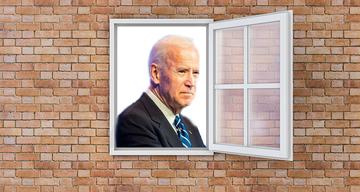
Iranian Foreign Minister Javad Zarif has once again warned President Joe Biden that the window to revive the Joint Comprehensive Plan of Action (JCPOA) nuclear deal is closing, adding that the new administration should prioritize the accord over political maneuvering, Newsweek reports.
"The time for the United States to come back to the nuclear agreement is not unlimited," Zarif told CNN. "The United States has a limited window of opportunity because President Biden does not want to portray himself as trying to take advantage of the failed policies of the former Trump administration."
Though both Tehran and the Biden administration have expressed willingness to return to JCPOA compliance, each side is demanding the other take the first step. Iran says that Trump's 2018 withdrawal from the deal and subsequent sanctions means the onus is on Washington to lift sanctions and recommit to the accord.
But the Biden administration said Iran must first scale back its nuclear activity in line with JCPOA limits before any detente.
Zarif told CNN Iran could revert its uranium enrichment program back to the limits in the 2015 JCPOA "in less than a day," stressing that if Tehran wanted a nuclear weapon "we could have done it some time ago." He added: "But we decided that nuclear weapons are not, would not augment our security and are in contradiction to our ideological views."
JCPOA critics warn that the deal does not limit Iran's ballistic missile program or its use of regional proxy forces to advance its interests. The Biden administration has said the JCPOA represents a foundation for a "longer and stronger" agreement that it hopes will include curbs on Iran's ballistic missile program and its use of proxies forces.
National Security Adviser Jake Sullivan said on Friday that Iran is now more of a threat than it was when the JCPOA was signed in 2015. Sullivan noted Iran's ballistic missile arsenal, which he said has "advanced dramatically."
But Zarif told CNN that missiles and other issues are not on the table. "The United States has to accept what we agreed upon," Zarif said. "We decided not to agree on certain things, not because we neglected them, but because the United States and its allies were not prepared to do what was necessary."
Iran's growing missile reach will loom over Biden's efforts to thaw ties with Tehran, and give ammunition to both domestic and foreign opponents of the JCPOA who wish to see the agreement die.
Iran's Defense Ministry announced Monday that the country had successfully launched a new satellite carrier powered by a solid-fuel engine, capable of sending satellites weighing 485 pounds into orbit 310 miles above the Earth.
Solid-fuel engines are a key component of intercontinental ballistic missiles (ICBMs), and offer more stability and operational flexibility than liquid-fueled engines.
Jeffrey Lewis, a professor at the Middlebury Institute's James Martin Center for Nonproliferation Studies, wrote on Twitter that the new space launched "is pretty large." He added: "If used as a missile, it probably falls short of being an ICBM—but it should be a warning."


 Latest news
Latest news
Latest newsGeorgia’s Constitutional Court Continues Case on Banning Opposition Parties: Political Pluralism at Stake
12.Oct.2026
Azerbaijan and Iran Step Up Security Contacts Amid Hijab Protests
12.Oct.2026
Personnel Shortages Complicate Ukrainian Forces’ Rotation: Ukraine Faces Long-Term Challenges on the Front Line
11.Oct.2026
Trump Eases Sanctions on Russian Fuel After Talks with Putin: Kyiv Fears Boost to Moscow’s War Revenues
10.Oct.2026
Putin Seeks to Strengthen Russia’s Influence in the Post-Soviet Space Through the CIS
10.Oct.2026
Russia and the South Caucasus: External Pressure, Political Competition and a Crisis of Trust
10.Oct.2026
Peaceful Settlement Between Armenia and Azerbaijan: Moving from Declarations to Implementation
10.Oct.2026
Moldova Ready to Accept as Many Ukrainians as Necessary if Situation Worsens This Winter
09.Oct.2026
Turkmenistan Turns Avaza into a Regional Diplomatic Hub as Caspian, Central Asian and CIS Agendas Converge
08.Oct.2026
Romania Scrambles Spanish F-18s After Aerial Targets Detected Near Ukrainian Border
07.Oct.2026
Berlin Deepens Defence Partnership with Kyiv: Germany to Provide Ukraine with €1 Billion in Military Aid
07.Oct.2026
European Parliament Against Georgian Dream: EU Prepares New Response to Tbilisi
06.Oct.2026
Bulgarian Foreign Minister to Discuss European Security and International Law in the Netherlands
05.Oct.2026
Rheinmetall in Bulgaria: Sofia Emerges as a New NATO Defence-Industrial Hub in the Balkans
05.Oct.2026
The Cost of a Long War: Moscow Expands Spending Plans Through 2029
05.Oct.2026