
 13 Oct 2026









Georgians' Contribution to Integrating Georgian Language into Microsoft Programs
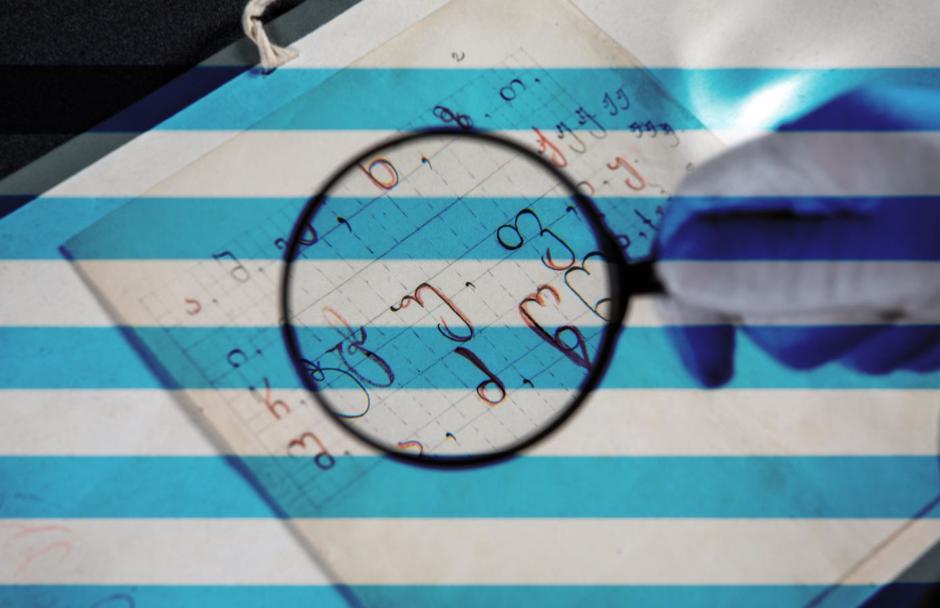
Before 2015, the majority of the Georgian population used the Latin alphabet while texting. Considering the fact that probably half of the world population uses the Latin alphabet when writing, this may not seem strange. But it really is, as Georgia has its own alphabet, created back in the 10th century, and is something the Georgian nation is proud of.
TBC, one of the leading brands in Georgia, wanted to challenge Georgians to use Georgian alphabet while texting and started a campaign named #writeingeorgian, which resulted in increased use of Georgian Unicode in digital world (by 68%, to be more precise), the hashtag #writeingeorgian (#წერექართულად) was used over 300,000 times, and that’s not all.
Contributors of the campaign digitalized up to 30 fonts and Georgian-English dictionaries. For the record, as of 2019, if you use the Latin alphabet for the Georgian text, boy, you’re in trouble.
The odds are that people will Latin-alphabet-shame you, and yes, TBC is the one to “blame”.
Following the #writeinGeorgian campaign, TBC has taken up a new challenge in 2018: to integrate the Georgian language into Windows OS.
While the process of integration seemed quite intimidating at the beginning, with the help of the Georgian population, as the completion of the first stage, 100K Georgian sentences translated to English have already been submitted to Microsoft. The process of translation itself was based on the project “Kartulad” (“In Georgian”). The project aims to integrate the Georgian language across Microsoft’s various software. To be able to do so, Microsoft’s AI system has to learn the language first using the above-mentioned 100K sentences that have already been provided to Microsoft.
TBC has created a dedicated platform to facilitate and speed up the translation process, www.kartulad.ge, and any citizen could participate voluntarily in the translation process. We are glad that citizens of Georgia, especially students and teachers, were so enthusiastic about the “Kartulad” project. Ivane Javakhishvili Tbilisi State University, the leading and the oldest university in Georgia, has donated 50K already-translated sentences. Microsoft’s office in Georgia, innovative technology laboratory “GEOLAB”, and the electronic book house “SABA” have actively participated in the project, as well.
Sentences translated to English will be loaded into the learning systems developed by Microsoft as the translation system is mostly data based. After the system analyzes the information, we get a program, that is almost fully aware of the Georgian language, and its explicit linguistic systems. The translation machine will be capable of translating from English to Georgian and vice versa.
Successful implementation of the project enables numerous Microsoft programs to use Georgian-English translation programs. Also, web developers and programmers who create programs for Windows system will be able to use an automated translation program, which is somewhat an output of the project “Kartulad”.
The first stage of the project is already completed, and now we’re looking forward to commencing the next steps, aka integrating the Georgian language into Windows OS.
TBC Bank, a leading bank in Georgia, has an outstanding role in the promotion of Georgian language and culture. “We are pleased that with Microsoft’s support, translation to and from the Georgian language will come handy for everyone using Microsoft programs. We wanted to involve Georgian citizens in this project as the outcome is first and foremost beneficial for them; every Georgian speaker will be able to participate in the adaptation of the Georgian language to computer programs.”
THE ORIGINAL ARTICLE WAS PUBLISHED ON MICROSOFT.COM ON JANUARY 3, 2020.
11.02.2020 19:16


 Latest news
Latest news
Latest newsGeorgia’s Constitutional Court Continues Case on Banning Opposition Parties: Political Pluralism at Stake
12.Oct.2026
Azerbaijan and Iran Step Up Security Contacts Amid Hijab Protests
12.Oct.2026
Personnel Shortages Complicate Ukrainian Forces’ Rotation: Ukraine Faces Long-Term Challenges on the Front Line
11.Oct.2026
Trump Eases Sanctions on Russian Fuel After Talks with Putin: Kyiv Fears Boost to Moscow’s War Revenues
10.Oct.2026
Putin Seeks to Strengthen Russia’s Influence in the Post-Soviet Space Through the CIS
10.Oct.2026
Russia and the South Caucasus: External Pressure, Political Competition and a Crisis of Trust
10.Oct.2026
Peaceful Settlement Between Armenia and Azerbaijan: Moving from Declarations to Implementation
10.Oct.2026
Moldova Ready to Accept as Many Ukrainians as Necessary if Situation Worsens This Winter
09.Oct.2026
Turkmenistan Turns Avaza into a Regional Diplomatic Hub as Caspian, Central Asian and CIS Agendas Converge
08.Oct.2026
Romania Scrambles Spanish F-18s After Aerial Targets Detected Near Ukrainian Border
07.Oct.2026
Berlin Deepens Defence Partnership with Kyiv: Germany to Provide Ukraine with €1 Billion in Military Aid
07.Oct.2026
European Parliament Against Georgian Dream: EU Prepares New Response to Tbilisi
06.Oct.2026
Bulgarian Foreign Minister to Discuss European Security and International Law in the Netherlands
05.Oct.2026
Rheinmetall in Bulgaria: Sofia Emerges as a New NATO Defence-Industrial Hub in the Balkans
05.Oct.2026
The Cost of a Long War: Moscow Expands Spending Plans Through 2029
05.Oct.2026