
 13 Oct 2026









Bulgarian foreign policy: Growing intensity in relations with USA, slowdown in relations with Russia
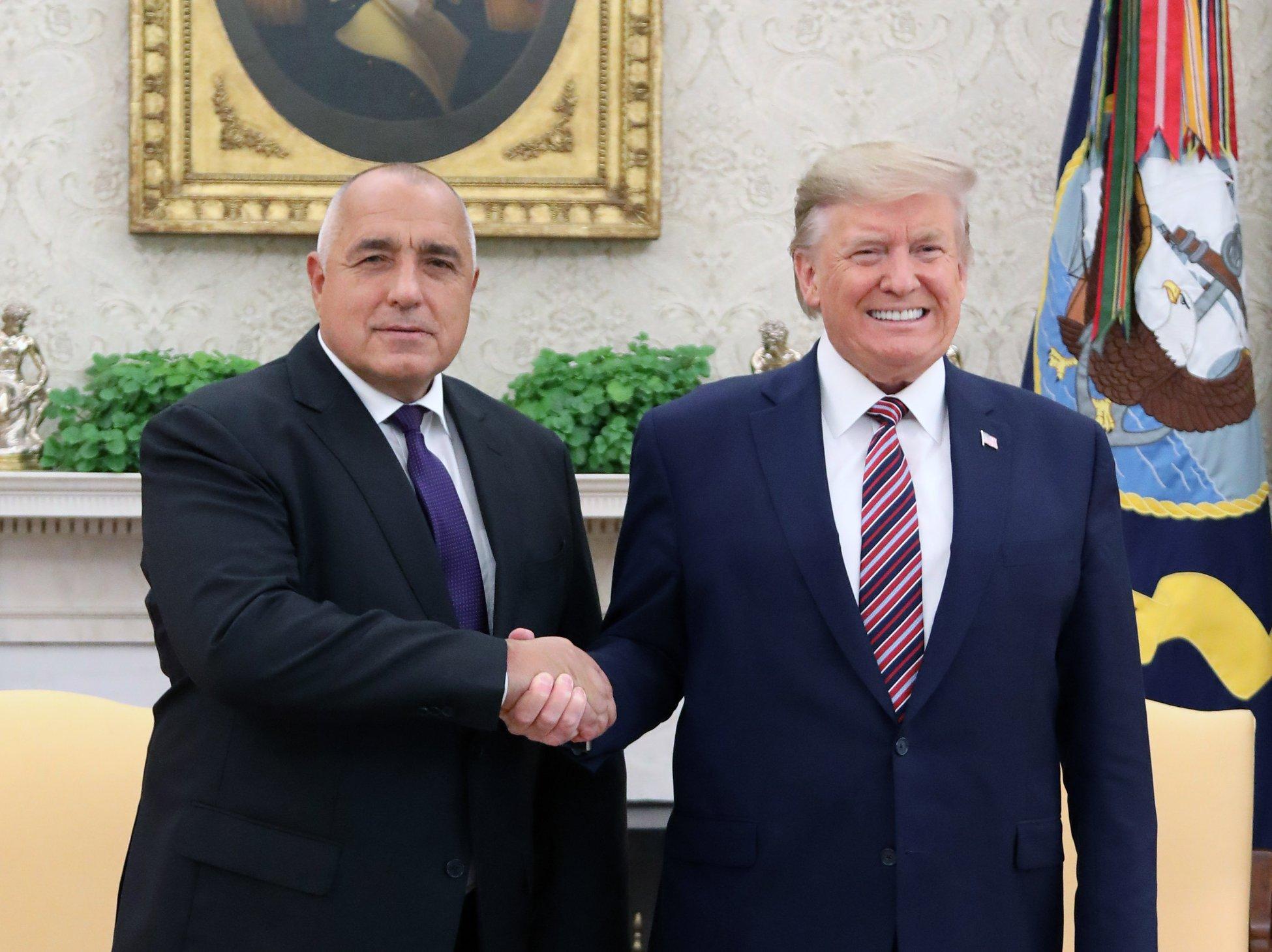
"After the meeting between Prime Minister Boyko Borissov and President Donald Trump in USA at the end of November, 2019, we have been seeing a growing intensity in the political exchange between the two countries," says in its beginning editorial article published on BNR website concerning strategic priorities in Bulgarian foreign policy at the moment.
The authors further analyze that in the period from 8 January until 11 February alone, i.e. over less than one month, three high-ranking officials from the American administration visited Sofia - Deputy-Assistant Secretary of State Matthew Boyce, Deputy Assistant Secretary in the Bureau of European and Eurasian Affairs Matthew Palmer, and the US Department of Treasury's Principal Deputy Assistant Secretary Paul Ahern. The first is in charge of Central Europe, the second – of European and Eurasian affairs, and the third – of cooperation in law enforcement in the effort to fight money laundering and terrorist financing. A hitherto nonexistent forum, called “High-Level US-Bulgaria Strategic Dialogue” was instituted, within the frameworks of which the administrations of the two governments can hold consultations on global, regional and bilateral issues.
Over the same period Bulgaria’s Еnergy Minister Temenuzhka Petkova paid a visit to the US. While there she announced that Bulgaria would be reducing consumption of Russian gas by 50 percent as early as this year. Bulgaria ventured to take such a step even though the gas supply contract with the Russian Gazprom Export does not expire before 2022, after repeated advice by the American side that Bulgaria should diversify its gas supplies. The reduction in Russian gas is to be compensated for by gas imports from Azerbaijan and liquefied gas through the gas interconnection with Greece which is to be completed this year.
Against the background of this growing intensity in bilateral exchange, one more extraordinary event occurred with repercussions in Bulgaria’s relations with Russia as well. Secretary of State Michael Popmeo designated Bulgarian Specialized Criminal Court Judge Andon Mitalov due to involvement in “significant corruption”. Judge Mitalov recently gave permission to Nikolai Malinov, chairman of the Bulgarian Russophiles movement who is charged with spying for Russia, to go to Moscow where he received an order from President Vladimir Putin.
Judging by the statements made by the Russian ambassador to Bulgaria Anatoly Makarov, Moscow is not indifferent to the latest developments in Bulgaria’s relations with the US. Talking to reporters, the Russian diplomat expressed surprise at the US’ decision to blacklist judge Mitalov and added that any accusation needs to be proved. Hours after making this statement, in an interview for Free Europe, Deputy Assistant Secretary Matthew Palmer stated the US was ready to give the authorities in Bulgaria information about Andon Mitalov when this is necessary. Evidently, it is not only Moscow that is closely monitoring the Andon Mitalov case, but the US as well.
Answering a journalist’s question whether Bulgaria isn’t a front-line state in the relations between Russia and the US, ambassador Makarov stated that, on Bulgarian territory, Russia is not warring with the Americans, or with anybody else. Asked whether a visit to Bulgaria by Vladimir Putin is to be expected, the Russian ambassador stated that a visit of this kind would make sense if it was connected with the signing of concrete agreements and projects that have to be prepared. Thus, indirectly, Makarov admitted that there have been no significant achievements in Bulgarian-Russian relations of late. Yet significant achievements may well be expected, because Anatoly Makarov added that a visit by Russia’s Foreign Minister Sergey Lavrov is being discussed. When problems accumulate in the relations between two countries and there are no positive developments it is only logical to seek such developments along diplomatic lines.


 Latest news
Latest news
Latest newsGeorgia’s Constitutional Court Continues Case on Banning Opposition Parties: Political Pluralism at Stake
12.Oct.2026
Azerbaijan and Iran Step Up Security Contacts Amid Hijab Protests
12.Oct.2026
Personnel Shortages Complicate Ukrainian Forces’ Rotation: Ukraine Faces Long-Term Challenges on the Front Line
11.Oct.2026
Trump Eases Sanctions on Russian Fuel After Talks with Putin: Kyiv Fears Boost to Moscow’s War Revenues
10.Oct.2026
Putin Seeks to Strengthen Russia’s Influence in the Post-Soviet Space Through the CIS
10.Oct.2026
Russia and the South Caucasus: External Pressure, Political Competition and a Crisis of Trust
10.Oct.2026
Peaceful Settlement Between Armenia and Azerbaijan: Moving from Declarations to Implementation
10.Oct.2026
Moldova Ready to Accept as Many Ukrainians as Necessary if Situation Worsens This Winter
09.Oct.2026
Turkmenistan Turns Avaza into a Regional Diplomatic Hub as Caspian, Central Asian and CIS Agendas Converge
08.Oct.2026
Romania Scrambles Spanish F-18s After Aerial Targets Detected Near Ukrainian Border
07.Oct.2026
Berlin Deepens Defence Partnership with Kyiv: Germany to Provide Ukraine with €1 Billion in Military Aid
07.Oct.2026
European Parliament Against Georgian Dream: EU Prepares New Response to Tbilisi
06.Oct.2026
Bulgarian Foreign Minister to Discuss European Security and International Law in the Netherlands
05.Oct.2026
Rheinmetall in Bulgaria: Sofia Emerges as a New NATO Defence-Industrial Hub in the Balkans
05.Oct.2026
The Cost of a Long War: Moscow Expands Spending Plans Through 2029
05.Oct.2026