
 13 Oct 2026









Iran candidates register for presidential election
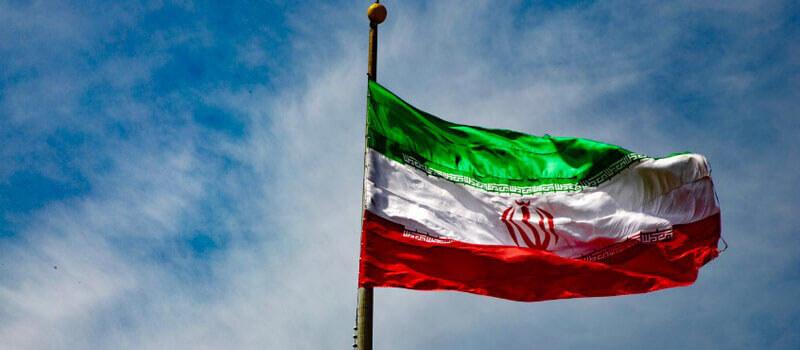
Iran on Tuesday opened registration for candidates hoping to succeed President Hassan Rouhani, who will step down following the June 18 elections after serving the maximum two consecutive terms allowed.
The five-day registration period at the interior ministry ends on Saturday, with the names of candidates then handed to the conservative-dominated Guardian Council for vetting.
More than 20 public figures have officially announced their intention to run, with the final list of those qualified due on May 26-27, the interior ministry said.
Former Revolutionary Guards Corps' official Saeed Mohammad, a general and an advisor to Guards commander Major General Hossein Salami, was one of the first to submit his name Tuesday.
Mohammad, 53, who headed the Guards' construction and engineering arm for over two years, resigned last in March to run.
Another was Mohammad Hassan Nami, an army general who was briefly telecoms minister under former ultra-conservative president Mahmoud Ahmadinejad, state news agency IRNA said.
According to the Hamshahri daily newspaper, Nami is a former military attache to North Korea, and also holds a doctorate in "public management" from Pyongyang's Kim Il-sung University.
Several top political figures are seen as possible presidential hopefuls, but are yet to declare whether they will run, Reuters reported.
They include former parliament speaker Ali Larijani, judiciary chief Ebrahim Raisi and Foreign Minister Mohammad Javad Zarif.
The country's supreme leader, Ayatollah Ali Khamenei, has in recent months urged for high turnout, expressing hope that this would encourage the emergence of new young leaders, as the generation who oversaw the country's 1979 revolution is ageing.
This year's election is also expected to feature a string of military figures, stirring unease over a possible militarisation of the Islamic republic's politics.
The registration process comes as Iran and world powers are engaged in talks to revive a 2015 nuclear accord, from which the US withdrew unilaterally in 2018, reimposing crippling sanctions.


 Latest news
Latest news
Latest newsGeorgia’s Constitutional Court Continues Case on Banning Opposition Parties: Political Pluralism at Stake
12.Oct.2026
Azerbaijan and Iran Step Up Security Contacts Amid Hijab Protests
12.Oct.2026
Personnel Shortages Complicate Ukrainian Forces’ Rotation: Ukraine Faces Long-Term Challenges on the Front Line
11.Oct.2026
Trump Eases Sanctions on Russian Fuel After Talks with Putin: Kyiv Fears Boost to Moscow’s War Revenues
10.Oct.2026
Putin Seeks to Strengthen Russia’s Influence in the Post-Soviet Space Through the CIS
10.Oct.2026
Russia and the South Caucasus: External Pressure, Political Competition and a Crisis of Trust
10.Oct.2026
Peaceful Settlement Between Armenia and Azerbaijan: Moving from Declarations to Implementation
10.Oct.2026
Moldova Ready to Accept as Many Ukrainians as Necessary if Situation Worsens This Winter
09.Oct.2026
Turkmenistan Turns Avaza into a Regional Diplomatic Hub as Caspian, Central Asian and CIS Agendas Converge
08.Oct.2026
Romania Scrambles Spanish F-18s After Aerial Targets Detected Near Ukrainian Border
07.Oct.2026
Berlin Deepens Defence Partnership with Kyiv: Germany to Provide Ukraine with €1 Billion in Military Aid
07.Oct.2026
European Parliament Against Georgian Dream: EU Prepares New Response to Tbilisi
06.Oct.2026
Bulgarian Foreign Minister to Discuss European Security and International Law in the Netherlands
05.Oct.2026
Rheinmetall in Bulgaria: Sofia Emerges as a New NATO Defence-Industrial Hub in the Balkans
05.Oct.2026
The Cost of a Long War: Moscow Expands Spending Plans Through 2029
05.Oct.2026