
 13 Oct 2026









U.S. urges Azerbaijan to remove burdensome registration requirements for faith groups, release prisoners
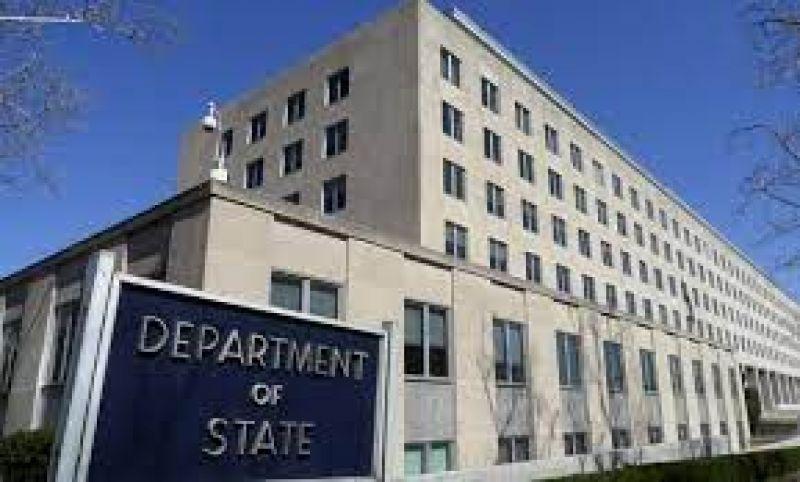
Washington on Wednesday urged the Azerbaijani authorities to "remove the burdensome registration requirements for faith groups, and to release all individuals who have been imprisoned for exercising their fundamental freedoms," Daniel Nadel, a senior official in the State Department's (DoS) Office of International Freedom, told TURAN's Washington correspondent during the Department's special briefing on the release of annual report on International Religious Freedom for 2020.
"... We continue to see reports that the [Azerbaijani] government has physically abused, arrested, and imprisoned religious activists over the course of the last year on account of their religious beliefs. Reports estimate that Azerbaijani prisons held about 40 to 50 people who activists considered to be political prisoners detained on account of their religious beliefs," - Nadel said.
The DoS report, which is the 23rd of its kind, paints a grim picture of intolerance and other negative trends in countries that are known for repressing religious minorities, TURAN's U.S. correspondent reports.
Secretary of State Antony Blinken introduced the report at a press conference on Wednesday. "[O]ur promise to the world is that the Biden-Harris administration will protect and defend religious freedom around the world. We will maintain America’s longstanding leadership on this issue,” he told reporters.
"Religious freedom is a key element of an open and stable society. Without it, people aren’t able to make their fullest contribution to their country’s success. And whenever human rights are denied, it ignites tension, it breeds division," the Secretary added.
The report, which documents religious freedom conditions in every nation globally, is "a valuable tool to hold countries accountable for persecution and violence, as well as to support needed change," according to the U.S. religious freedom body USCIRF, which recently pitched adding Azerbaijan to the DoS' Special Watch List.
Now that the Department's Report is released, the Secretary will "begin a review of the situation for religious freedom in all countries to determine whether any of them or which ones meet the legal criteria to be designated as Countries of Particular Concern or Special Watch List countries," according to DoS officials.
"[W]e’ll begin in short order, and over the next few months we’ll be assessing those situations, and the Secretary will be making the determinations... We anticipate those announcements to be going out some time later this year," State Department's Daniel Nadel said in response to TURAN's questions.
According to the Report, throughout last year, Azerbainani courts, continued reviewing appeals and sentencing individuals detained after a July 2018 attack on the then-head of the Ganja City Executive Committee and the subsequent killing of two police officers. Authorities alleged those sentenced were part of a Shia “extremist conspiracy” that sought to undermine the constitutional order. "Civil society activists and human rights groups considered the vast majority of the verdicts to be politically motivated and estimated 43 individuals remained in prison at year’s end in connection with the events in Ganja."
Authorities continued legal action against individuals associated with the unregistered Muslim Unity Movement (MUM), which the government characterized as an extremist group. Civil society activists and human rights advocates considered the incarceration of MUM members to be politically motivated.
The U.S. Ambassador to Baku and other U.S. embassy officers "engaged government officials to advocate for the release of individuals NGOs stated were imprisoned for their religious beliefs," reads the report.
"The Ambassador and embassy officers urged [Azerbaijani] government officials to address longstanding issues with the registration process for smaller religious communities and to implement an alternative to military service for conscientious objectors, as stipulated in the constitution. The Ambassador advocated at the highest levels of government for the protection of religious and cultural sites in the newly returned territories. The Ambassador and embassy officers met regularly with representatives of registered and unregistered religious groups and civil society to discuss religious freedom in the country. Embassy officers also had consultations with theologians."
Pursuant to the International Religious Freedom Act, the State Department is required to prepare this annual report on religious freedom conditions.
Per Department officials, studies have shown that governments that safeguard religious freedom are more stable, economically vibrant and peaceful than those that don’t, "and they’re also better partners of the United States."
"Conversely, those that don’t protect religious freedom can foster radicalization and violent extremism, undermine economic development and threaten social cohesion and political stability. And as such, we promote respect for religious freedom not just because it is a cherished American value but also because it’s a national security imperative,"- Nadel told reporters.
Alex Raufoglu


 Latest news
Latest news
Latest newsGeorgia’s Constitutional Court Continues Case on Banning Opposition Parties: Political Pluralism at Stake
12.Oct.2026
Azerbaijan and Iran Step Up Security Contacts Amid Hijab Protests
12.Oct.2026
Personnel Shortages Complicate Ukrainian Forces’ Rotation: Ukraine Faces Long-Term Challenges on the Front Line
11.Oct.2026
Trump Eases Sanctions on Russian Fuel After Talks with Putin: Kyiv Fears Boost to Moscow’s War Revenues
10.Oct.2026
Putin Seeks to Strengthen Russia’s Influence in the Post-Soviet Space Through the CIS
10.Oct.2026
Russia and the South Caucasus: External Pressure, Political Competition and a Crisis of Trust
10.Oct.2026
Peaceful Settlement Between Armenia and Azerbaijan: Moving from Declarations to Implementation
10.Oct.2026
Moldova Ready to Accept as Many Ukrainians as Necessary if Situation Worsens This Winter
09.Oct.2026
Turkmenistan Turns Avaza into a Regional Diplomatic Hub as Caspian, Central Asian and CIS Agendas Converge
08.Oct.2026
Romania Scrambles Spanish F-18s After Aerial Targets Detected Near Ukrainian Border
07.Oct.2026
Berlin Deepens Defence Partnership with Kyiv: Germany to Provide Ukraine with €1 Billion in Military Aid
07.Oct.2026
European Parliament Against Georgian Dream: EU Prepares New Response to Tbilisi
06.Oct.2026
Bulgarian Foreign Minister to Discuss European Security and International Law in the Netherlands
05.Oct.2026
Rheinmetall in Bulgaria: Sofia Emerges as a New NATO Defence-Industrial Hub in the Balkans
05.Oct.2026
The Cost of a Long War: Moscow Expands Spending Plans Through 2029
05.Oct.2026