
 13 Oct 2026









Greece, Bulgaria pledge to accelerate IGB’s construction in tandem with TAP
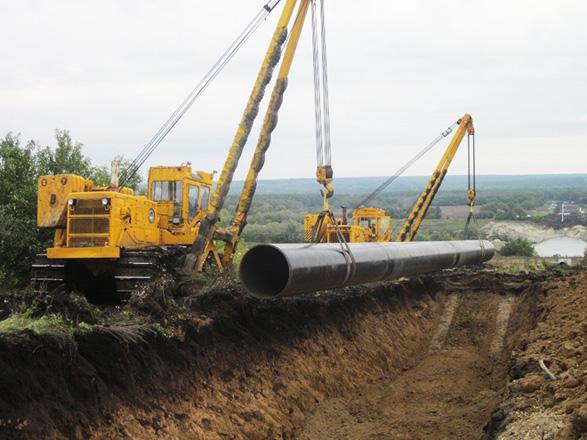
Greece and Bulgaria pledged to accelerate the construction of the Interconnector Greece-Bulgaria (IGB) in tandem with the Trans Adriatic Pipeline (TAP), Trend reports with reference to the Joint Declaration of the 4th High Level Cooperation Council between the Government of the Hellenic Republic and the Government of Bulgaria.
“We welcome the substantial progress that has been achieved, as a result of our joint efforts, in the realization of the gas interconnection pipeline project between Greece and Bulgaria, namely the IGB pipeline.
Having in mind that the Intergovernmental Agreement regarding this project was signed on October 10th 2019 in Sofia and the construction phase of the project is already underway, the sides reiterated that the IGB pipeline contributes to the establishment of a vertical gas corridor aiming to ensure access to diversified supplies for the region.
“The two governments will implement all efforts to accelerate the construction of IGB in tandem with TAP. Consolidating our operational infrastructure constitutes a prerequisite for an efficiently operating integrated energy market and the enhancement of our region’s security of supply, via the diversification of sources and routes,” reads the statement.
The Interconnector Greece-Bulgaria project envisages a two-stage development.
In the first stage, the pipeline capacity will be 3 billion cubic meters of gas, of which 2.7 billion cubic meters will be offered for the long-term market, the remaining share of 0.3 billion cubic meters in the short term.
In a second phase, also depending on the evolution of the market, the capacity of the pipeline can be increased to 5.3 billion cubic meters of gas thanks to the addition of a compression station: 4.5 billion cubic meters of gas 0.5 billion cubic meters of short-term gas will be offered for long-term products.
27.02.2020 13:09


 Latest news
Latest news
Latest newsGeorgia’s Constitutional Court Continues Case on Banning Opposition Parties: Political Pluralism at Stake
12.Oct.2026
Azerbaijan and Iran Step Up Security Contacts Amid Hijab Protests
12.Oct.2026
Personnel Shortages Complicate Ukrainian Forces’ Rotation: Ukraine Faces Long-Term Challenges on the Front Line
11.Oct.2026
Trump Eases Sanctions on Russian Fuel After Talks with Putin: Kyiv Fears Boost to Moscow’s War Revenues
10.Oct.2026
Putin Seeks to Strengthen Russia’s Influence in the Post-Soviet Space Through the CIS
10.Oct.2026
Russia and the South Caucasus: External Pressure, Political Competition and a Crisis of Trust
10.Oct.2026
Peaceful Settlement Between Armenia and Azerbaijan: Moving from Declarations to Implementation
10.Oct.2026
Moldova Ready to Accept as Many Ukrainians as Necessary if Situation Worsens This Winter
09.Oct.2026
Turkmenistan Turns Avaza into a Regional Diplomatic Hub as Caspian, Central Asian and CIS Agendas Converge
08.Oct.2026
Romania Scrambles Spanish F-18s After Aerial Targets Detected Near Ukrainian Border
07.Oct.2026
Berlin Deepens Defence Partnership with Kyiv: Germany to Provide Ukraine with €1 Billion in Military Aid
07.Oct.2026
European Parliament Against Georgian Dream: EU Prepares New Response to Tbilisi
06.Oct.2026
Bulgarian Foreign Minister to Discuss European Security and International Law in the Netherlands
05.Oct.2026
Rheinmetall in Bulgaria: Sofia Emerges as a New NATO Defence-Industrial Hub in the Balkans
05.Oct.2026
The Cost of a Long War: Moscow Expands Spending Plans Through 2029
05.Oct.2026