
 13 Oct 2026









China: U.S. and Russia must reduce stockpiles after nuclear statement
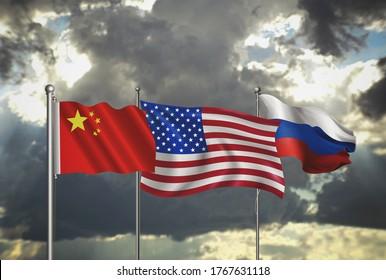
China said on Tuesday it will continue to "modernise" its nuclear arsenal and called on the United States and Russia to reduce their own stockpiles a day after global powers pledged to prevent such weapons from spreading.
Director general of the department of arms control at the Chinese foreign ministry Fu Cong defended its nuclear weapons policy and said Russia and the United States - by far the world's largest nuclear powers - should make the first move on disarmament.
"The US and Russia still possess 90% of the nuclear warheads on Earth," Fu Cong told reporters.
"They must reduce their nuclear arsenal in an irreversible and legally binding manner," AFP cited him as saying.
Fu dismissed US claims that China was vastly increasing its nuclear capabilities. "China has always adopted the no first use policy and we maintain our nuclear capabilities at the minimal level required for our national security," he said, adding that Beijing would "continue to modernise its nuclear arsenal for reliability and safety issues".
In a rare joint statement setting aside rising West-East tensions, the United States, China, Russia, Britain and France reaffirmed their goal of creating a world free of atomic weapons and avoiding a nuclear conflict.
The five nuclear powers also committed to full future disarmament from atomic weapons, which have only been used in conflict in the US bombings of Japan at the end of World War II. But squaring that rhetoric with reality will not be easy at a time of spiralling tensions between those same global powers not seen since the Cold War.
There are growing global concerns about China's rapid military modernisation especially after its armed forces last year announced they had developed a hypersonic missile that can fly at five times the spread of sound.
The United States has also said China is expanding its nuclear arsenal with as many as 700 warheads by 2027 and possibly 1,000 by 2030.


 Latest news
Latest news
Latest newsGeorgia’s Constitutional Court Continues Case on Banning Opposition Parties: Political Pluralism at Stake
12.Oct.2026
Azerbaijan and Iran Step Up Security Contacts Amid Hijab Protests
12.Oct.2026
Personnel Shortages Complicate Ukrainian Forces’ Rotation: Ukraine Faces Long-Term Challenges on the Front Line
11.Oct.2026
Trump Eases Sanctions on Russian Fuel After Talks with Putin: Kyiv Fears Boost to Moscow’s War Revenues
10.Oct.2026
Putin Seeks to Strengthen Russia’s Influence in the Post-Soviet Space Through the CIS
10.Oct.2026
Russia and the South Caucasus: External Pressure, Political Competition and a Crisis of Trust
10.Oct.2026
Peaceful Settlement Between Armenia and Azerbaijan: Moving from Declarations to Implementation
10.Oct.2026
Moldova Ready to Accept as Many Ukrainians as Necessary if Situation Worsens This Winter
09.Oct.2026
Turkmenistan Turns Avaza into a Regional Diplomatic Hub as Caspian, Central Asian and CIS Agendas Converge
08.Oct.2026
Romania Scrambles Spanish F-18s After Aerial Targets Detected Near Ukrainian Border
07.Oct.2026
Berlin Deepens Defence Partnership with Kyiv: Germany to Provide Ukraine with €1 Billion in Military Aid
07.Oct.2026
European Parliament Against Georgian Dream: EU Prepares New Response to Tbilisi
06.Oct.2026
Bulgarian Foreign Minister to Discuss European Security and International Law in the Netherlands
05.Oct.2026
Rheinmetall in Bulgaria: Sofia Emerges as a New NATO Defence-Industrial Hub in the Balkans
05.Oct.2026
The Cost of a Long War: Moscow Expands Spending Plans Through 2029
05.Oct.2026