
 13 Oct 2026









Tural Ganjaliyev: The so called “elections in Nagorno-Karabakh” cause danger to public safety and health
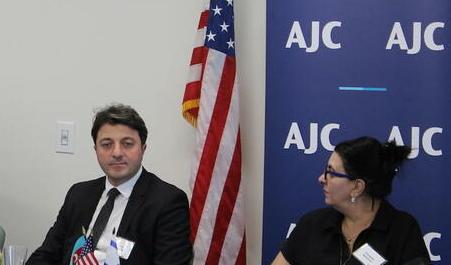
Our editor Plamen Petrov conducted an interview with Tural Ganjaliyev, head of the Azerbaijani community of Nagorno-Karabakh, which we are pleased to deliver to our readers.
Mr. Ganjaliyev, what is the attitude of the Azerbaijani community of Nagorno-Karabakh concerning the election in this republic, unrecognized by the world community?
On March 31, 2020 a show, called “presidential elections” was organized in occupied Nagorno-Karabakh region of Azerbaijan. This is illegal and there is no any legal base for that, in fact a big spot on democracy and elections. The world has face the COVID-19 danger, but the occupation regime, staying loyal to its nature, continue its illegal activities, by conducting these “elections” even in this situation. This is another sign of the “values” Armenia stands for, as well as the fictive structure on the occupied territories, sign of their attitude towards the members of the Armenian community of Nagorno-Karabakh, who are hostages of this regime. Their lives and welfare mean nothing to them. I think Armenians who live in Nagorno-Karabakh will finally understand that they are just an instrument for Armenia and the occupation regime.
These elections are a serious violation of the fundamental human rights of the Azerbaijanis, who had been victims of ethnic cleansing and displaced from their homeland. The United Nations, OSCE, other international institutions had already given statements on these quasi-elections on the occupied territories, condemned them, and confirmed the territorial integrity of Azerbaijan. This is another blow to the peaceful resolution process, serving the escalation.
COVID-19 has already spread to Nagorno-Karabakh. If the pandemic takes even more dangerous character – is Azerbaijan ready to help the Armenians of Nagorno-Karabakh?
Azerbaijan is taking all necessary measure to protect health and safety of its citizens, as well as to minimize social-economic effects of the pandemic. 22 hospitals are engaged in the process of patients’ care. More than 70 000 tests have been made in order to diagnose the infection.
Using the Armenian community of Nagorno-Karabakh as a hostage, Armenia doesn’t allow these people to benefit from social, economic, medical and other programs of our government. For example, several weeks ago our community warned about danger of COVID-19 spread on the occupied territories. But the puppet regime of occupied Nagorno-Karabakh concealed the facts of people already being infected there, and conducted the elections on March 31, 2020. Afterwards, On April 14, 2020 the second round was conducted, and again, lives, health and safety of people were put to danger. All this shows that ordinary Armenians, living in Nagorno-Karabakh are just an instrument for nasty political machinations of Armenia.
What is your vision concerning the future of Nagorno-Karabakh?
The Azerbaijani community of Nagorno-Karabakh declares once again that after the occupation forces of Armenia leave the territory of Nagorno-Karabakh, the Armenian and Azerbaijani community can live together side by side and enjoy all the rights and privileges of the citizens of Azerbaijan. I am sure that then the Armenians of Nagorno-Karabakh, as well as the Azerbaijanis, will conduct elections in accord with the Constitution of Azerbaijan and other appropriate laws.
15.04.2020 14:48


 Latest news
Latest news
Latest newsGeorgia’s Constitutional Court Continues Case on Banning Opposition Parties: Political Pluralism at Stake
12.Oct.2026
Azerbaijan and Iran Step Up Security Contacts Amid Hijab Protests
12.Oct.2026
Personnel Shortages Complicate Ukrainian Forces’ Rotation: Ukraine Faces Long-Term Challenges on the Front Line
11.Oct.2026
Trump Eases Sanctions on Russian Fuel After Talks with Putin: Kyiv Fears Boost to Moscow’s War Revenues
10.Oct.2026
Putin Seeks to Strengthen Russia’s Influence in the Post-Soviet Space Through the CIS
10.Oct.2026
Russia and the South Caucasus: External Pressure, Political Competition and a Crisis of Trust
10.Oct.2026
Peaceful Settlement Between Armenia and Azerbaijan: Moving from Declarations to Implementation
10.Oct.2026
Moldova Ready to Accept as Many Ukrainians as Necessary if Situation Worsens This Winter
09.Oct.2026
Turkmenistan Turns Avaza into a Regional Diplomatic Hub as Caspian, Central Asian and CIS Agendas Converge
08.Oct.2026
Romania Scrambles Spanish F-18s After Aerial Targets Detected Near Ukrainian Border
07.Oct.2026
Berlin Deepens Defence Partnership with Kyiv: Germany to Provide Ukraine with €1 Billion in Military Aid
07.Oct.2026
European Parliament Against Georgian Dream: EU Prepares New Response to Tbilisi
06.Oct.2026
Bulgarian Foreign Minister to Discuss European Security and International Law in the Netherlands
05.Oct.2026
Rheinmetall in Bulgaria: Sofia Emerges as a New NATO Defence-Industrial Hub in the Balkans
05.Oct.2026
The Cost of a Long War: Moscow Expands Spending Plans Through 2029
05.Oct.2026