
 13 Oct 2026









Human Rights Watch: Baku uses the pandemic for opposition crackdown
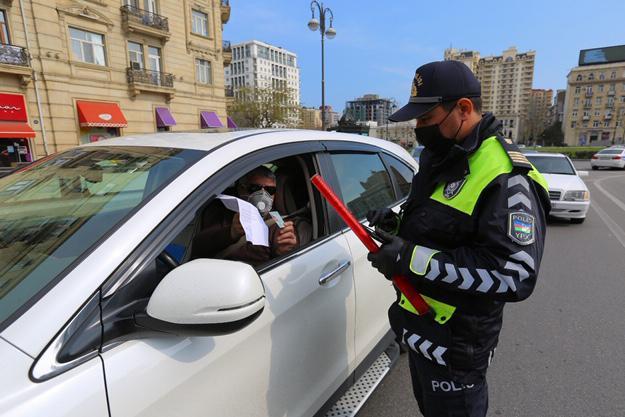
Azerbaijani authorities are abusing restrictions imposed to slow the spread of COVID-19 to arrest opposition activists and silence government critics, Human Rights Watch said today. In recent weeks, the authorities have sentenced at least six activists and a pro-opposition journalist to detention for between 10 and 30 days on spurious charges including breaking lockdown rules or disobeying police orders.
Almost all of those arrested had criticized conditions in government-run quarantine centers or the government’s failure to provide adequate compensation to people struggling financially from the consequences of the pandemic. Among them was a man who left his house to take his child, who has a chronic health condition, to a hospital for daily treatment.
“These arrests fall squarely within a longstanding pattern of political retaliation in Azerbaijan,” said Giorgi Gogia, associate Europe and Central Asia director at Human Rights Watch. “The authorities should stop using a public health emergency as a pretext to punish legitimate speech.”
Human Rights Watch reviewed court documents and spoke to the family members and lawyers of seven government critics arrested since March 22 on spurious administrative charges of violating the lockdown or disobeying police orders. All but one remains in detention.
The arrests followed President Ilham Aliyev’s earlier comments indicating he would use measures supposedly designed to tackle the coronavirus pandemic to crack down on the opposition. It is another disturbing example of the government’s contempt for free speech and political critics.
Arresting people for violating COVID-19 emergency measures may actually increase disease transmission if the authorities place people in crowded detention facilities where the virus could spread easily, Human Rights Watch said. Both regional monitoring bodies and national groups have criticized conditions in Azerbaijan’s detention facilities for administrative detainees as poor and inappropriate for the length of sentences imposed.
Azerbaijan confirmed its first COVID-19 case on February 28, 2020, and had 1253 confirmed cases as of April 15. The government has put in place a series of social distancing measures, including a ban on gatherings of more than 10 people, and on nonessential travel to the capital, Baku, and surrounding districts.
On April 5, the authorities also introduced an electronic permit system, which requires people to call or text a government hotline for an electronic pass before leaving home. The pass is available only once a day and is valid for two hours to seek medical treatment, buy medicine or groceries, go to the bank or post office, or attend the funeral of a close relative.
On March 16, parliament passed amendments to the code of administrative offenses, providing for fines of 100 to 200 manat (approximately US$ 60-to-120) or detention for up to 30 days for violating a lockdown regime. A court determines and hands down the sanctions. But trials for administrative or misdemeanor offenses are perfunctory, rarely lasting longer than a few minutes, and police testimony is often the sole evidence. The trials in these cases were no different, Human Rights Watch said.
According to the Interior Ministry, in March, 154 people were jailed, and thousands were fined for violating the lockdown regime.
On March 22, the police summoned Anar Melikov, a member of the opposition Azerbaijan Popular Front Party (APFP) from Jalilabad, a city in southern Azerbaijan. Melikov told Human Rights Watch that he had published posts on social media criticizing the poor and unsanitary conditions in the city’s quarantine centers, where Azerbaijanis returning from abroad are kept in isolation. At the station, police questioned Melikov mostly about his Facebook posts, and charged him with disseminating false information regarding the virus. A court sentenced him to 10 days in jail.
On April 6, the police arrested Shakir Mammadov, a member of the opposition Azerbaijan Democracy and Welfare Movement, near his house and demanded that he delete his critical Facebook post calling on the government to assist vulnerable families during the lockdown. Mammadov’s lawyer told Human Rights Watch that his client was on his way to a drugstore, after receiving official permission via text message, when policemen in civilian clothes picked him up. Two policemen claimed that Mammadli used inappropriate language and was aggressive toward law enforcement officials, and a court sentenced him to 15 days.
Police detained APFP member Faig Amirli on April 8, around 7 p.m., when he took out the garbage in his slippers to a bin 100 meters from his house. Amirli’s wife told Human Rights Watch that their neighbor saw a man in civilian clothes grab Amirli and push him into one of three cars that had stopped near him, which then drove away. The family repeatedly called the Interior Ministry hotline and various police stations, but could not locate Amirli until late the next afternoon. Police confiscated Amirli’s phone, did not allow him to call his wife or a lawyer, and took him to court, where he was sentenced to 30 days for violating the lockdown regime.


 Latest news
Latest news
Latest newsGeorgia’s Constitutional Court Continues Case on Banning Opposition Parties: Political Pluralism at Stake
12.Oct.2026
Azerbaijan and Iran Step Up Security Contacts Amid Hijab Protests
12.Oct.2026
Personnel Shortages Complicate Ukrainian Forces’ Rotation: Ukraine Faces Long-Term Challenges on the Front Line
11.Oct.2026
Trump Eases Sanctions on Russian Fuel After Talks with Putin: Kyiv Fears Boost to Moscow’s War Revenues
10.Oct.2026
Putin Seeks to Strengthen Russia’s Influence in the Post-Soviet Space Through the CIS
10.Oct.2026
Russia and the South Caucasus: External Pressure, Political Competition and a Crisis of Trust
10.Oct.2026
Peaceful Settlement Between Armenia and Azerbaijan: Moving from Declarations to Implementation
10.Oct.2026
Moldova Ready to Accept as Many Ukrainians as Necessary if Situation Worsens This Winter
09.Oct.2026
Turkmenistan Turns Avaza into a Regional Diplomatic Hub as Caspian, Central Asian and CIS Agendas Converge
08.Oct.2026
Romania Scrambles Spanish F-18s After Aerial Targets Detected Near Ukrainian Border
07.Oct.2026
Berlin Deepens Defence Partnership with Kyiv: Germany to Provide Ukraine with €1 Billion in Military Aid
07.Oct.2026
European Parliament Against Georgian Dream: EU Prepares New Response to Tbilisi
06.Oct.2026
Bulgarian Foreign Minister to Discuss European Security and International Law in the Netherlands
05.Oct.2026
Rheinmetall in Bulgaria: Sofia Emerges as a New NATO Defence-Industrial Hub in the Balkans
05.Oct.2026
The Cost of a Long War: Moscow Expands Spending Plans Through 2029
05.Oct.2026