
 13 Oct 2026









Why Berdimuhamedov goes to China we may not find out
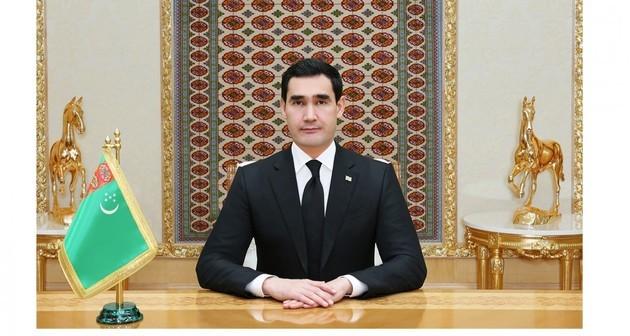
Today, Turkmen President Serdar Berdimuhamedov will travel to China at the invitation of Chinese President Xi Jinping. The visit, scheduled for January 5-6 according to the official Chinese Foreign Ministry announcement, will be Berdimuhamedov’s first trip of 2023, but he’ll be Xi’s second guest of the year after Philippine President Ferdinand Marcos Jr. visits Beijing earlier in the week, The Diplomat writes.
Given the habitual opacity of both regimes, we have few details about the trip. That said, we can expect energy to be at the top of the agenda. This will be Berdimuhamedov’s first visit, as president, to China since taking over the role from his father, Gurbanguly Berdimuhamedov, in a March 2022 election entirely lacking competition. The dynastic succession in Turkmenistan, while presenting the opportunity for change, has yielded very little, and none at all in Turkmenistan’s foreign relations.
Berdimuhamedov last met with Xi in September 2022 in Uzbekistan during the Shanghai Cooperation Organization (SCO) Summit. At the time, Xi was just then venturing abroad for the first time since the onset of the COVID-19 pandemic in early 2020. The choice of Central Asia as his destination was strategic. After a first stop in Kazakhstan, Xi traveled to Uzbekistan for the SCO summit in Samarkand. Although much attention focused on Xi’s meeting with Russian President Vladimir Putin on the sidelines of the summit, Berdimuhamedov had his own one-on-one with Xi.
In their September meeting, Berdimuhamedov reportedly invited Xi to visit Turkmenistan. Xi has visited Turkmenistan just once since becoming China’s top leader in November 2012 — a September 2013 state visit to Ashgabat made en route to the G-20 summit in St. Petersburg, Russia (after which he made state visits to Kazakhstan, Uzbekistan, and Kyrgyzstan — where he attended the SCO summit in Bishkek that year). According to a Chinese Foreign Ministry readout of the visit, Xi “said that China and Turkmenistan are good-neighborly friends and important strategic partner[s] in energy.”
Although much has changed geopolitically and otherwise since 2013, the China-Turkmenistan relationship has not. As noted above, energy is expected to be a top agenda item during Berdimuhamedov’s upcoming visit. Turkmenistan is the largest supplier of natural gas via pipeline (as opposed to LNG) to China, in 2021 exporting between 31 and 34 billion cubic meters through the Central Asia-China gas pipeline. The pipeline currently consists of three active parallel lines (Line A, Line B, and Line C — which became operational in 2009, 2010, and 2014, respectively) that run from Turkmenistan through Uzbekistan and Kazakhstan, and into China. Uzbekistan and Kazakhstan export gas though the pipeline as well, but Turkmenistan soars above in terms of volume, providing a reported 80 percent of the gas exported through the network. The pipeline network’s total maximum capacity is estimated to be around 55 bcm annually.
A fourth line, Line D, is under construction and will run from the Galkynysh gas field in Turkmenistan along a different route, through Uzbekistan, Tajikistan, and Kyrgyzstan, and then into China. While the first three lines were financed with loans from China Development Bank and Bank of China, Line D is reportedly being financed by China National Petroleum Corporation (CNPC).
The new line has been dogged by delays for almost a decade now. The section through Tajikistan reportedly will require 42 tunnels, the first of which was completed in January 2020. No completion date has been suggested publicly. When finished, Line D is planned to have a capacity of 30 bcm annually — which would bring the Central Asia-China gas pipeline network up to a potential export capacity of 85 bcm annually. Turkmenistan is expected to continue to be the main supplier of gas through the pipeline.
In anticipation of importing more gas from Turkmenistan, China has continued to invest in developing Turkmenistan’s vast gas fields. In August 2021, the two sides struck a deal under which CNPC would develop three new wells in the Galkynysh gas field. As the Associated Press reported at the time, Ashgabat would pay for CNPC’s services in gas: 17 bcm per year for three years. In June 2022, Berdimuhamedov attended the launch of operations at what Chinese media reported as a “new field” developed by CNPC. At that time, the two sides heralded Ashgabat’s ambition to double exports of gas to China to 65 billion cubic meters per year once Line D is completed.
Turkmenistan’s gas exports to China have not yet reached the maximum the existing pipeline can carry. For example, in 2013 — the year before Line C became operational — Turkmenistan exported 24.4 bcm to China via pipeline, according to the BP Statistical Review of World Energy (2014). By 2018, that figure had risen to 33.3 bcm. But in 2019 it declined to 31.6 and in 2020 sank further to 27.2 bcm. The latest review cites Turkmen gas exports by pipeline to China as recovered to 31.5 bcm, but that’s still short of the pipeline network’s capacity.
Both supply and demand are critical factors inducing this ebb and flow, with key questions being how much gas can Turkmenistan actually supply and how much gas does China want to buy from Turkmenistan? Turkmenistan is just one of many suppliers — via pipeline and LNG — to China. In recent years, LNG imports have risen to nearly double that of pipeline imports, with Australia exporting more LNG per day to China than Turkmenistan did via pipeline in 2021. Meanwhile, China dominates as Turkmenistan’s largest customer — the only others of note being Russia and Iran, at far lower volumes than China. This generates a certain imbalance in the relationship, with Ashgabat economically dependent on China’s patronage.
Returning to Berdimuhamedov’s upcoming visit to China: We can expect none of these nuances to be spoken aloud in public. Instead, we can expect the ritual heralding of the good relationship between China and Turkmenistan and the riches Line D will bring to both sides, whenever it is finished. All the same, the reality is much more complex than the rosy diplomatic statements will reflect.
05.01.2023 08:52


 Latest news
Latest news
Latest newsGeorgia’s Constitutional Court Continues Case on Banning Opposition Parties: Political Pluralism at Stake
12.Oct.2026
Azerbaijan and Iran Step Up Security Contacts Amid Hijab Protests
12.Oct.2026
Personnel Shortages Complicate Ukrainian Forces’ Rotation: Ukraine Faces Long-Term Challenges on the Front Line
11.Oct.2026
Trump Eases Sanctions on Russian Fuel After Talks with Putin: Kyiv Fears Boost to Moscow’s War Revenues
10.Oct.2026
Putin Seeks to Strengthen Russia’s Influence in the Post-Soviet Space Through the CIS
10.Oct.2026
Russia and the South Caucasus: External Pressure, Political Competition and a Crisis of Trust
10.Oct.2026
Peaceful Settlement Between Armenia and Azerbaijan: Moving from Declarations to Implementation
10.Oct.2026
Moldova Ready to Accept as Many Ukrainians as Necessary if Situation Worsens This Winter
09.Oct.2026
Turkmenistan Turns Avaza into a Regional Diplomatic Hub as Caspian, Central Asian and CIS Agendas Converge
08.Oct.2026
Romania Scrambles Spanish F-18s After Aerial Targets Detected Near Ukrainian Border
07.Oct.2026
Berlin Deepens Defence Partnership with Kyiv: Germany to Provide Ukraine with €1 Billion in Military Aid
07.Oct.2026
European Parliament Against Georgian Dream: EU Prepares New Response to Tbilisi
06.Oct.2026
Bulgarian Foreign Minister to Discuss European Security and International Law in the Netherlands
05.Oct.2026
Rheinmetall in Bulgaria: Sofia Emerges as a New NATO Defence-Industrial Hub in the Balkans
05.Oct.2026
The Cost of a Long War: Moscow Expands Spending Plans Through 2029
05.Oct.2026