
 13 Oct 2026









Pashinyan: No solution to Karabakh conflict if it is unacceptable for people of Armenia, Artsakh
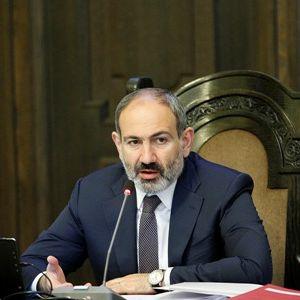
No solution to the Karabakh [(Artsakh)] issue can practically become a solution if it is not acceptable for the people of Armenia and Artsakh. Prime Minister Nikol Pashinyan stated this in the National Assembly on Wednesday, according to News.am, responding to opposition Prosperous Armenia faction member Naira Zohrabyan’s question as to why the PM’s has not voiced his position on the recent statements of Russian FM Sergey Lavrov and Azerbaijani Defense Minister Zakir Hasanov.
Pashinyan said that no leader of Armenia has expressed such a detailed position as he has on the Karabakh issue. " No solution to the Karabakh issue can practically become a solution if it is not acceptable for the people of Armenia, Artsakh, including for the National Assembly," he added. "Even if there have been authorities in the past who thought they would sign and take away a solution, they have overestimated their strength."
The PM noted that the solution shall be put to discussion with the National Assemblies of Armenia and Artsakh, the security councils of the two countries, and then a decision shall be made. "The solution, which can be theoretically realized, is the solution that is acceptable for the peoples of Artsakh, Armenia, and Azerbaijan," Pashinyan said. "We will come to this solution only when the Foreign Minister and I see that there is some option that can be discussable in principle."
The Prime Minister said that Armenia's foreign policy is not changing, but is being created. "We expect that there be the same attitude towards our positions, and I assure that it is so," Nikol Pashinyan added, in particular. "Not to be conflict-mongering, to be constructive, respectful in relations."


 Latest news
Latest news
Latest newsGeorgia’s Constitutional Court Continues Case on Banning Opposition Parties: Political Pluralism at Stake
12.Oct.2026
Azerbaijan and Iran Step Up Security Contacts Amid Hijab Protests
12.Oct.2026
Personnel Shortages Complicate Ukrainian Forces’ Rotation: Ukraine Faces Long-Term Challenges on the Front Line
11.Oct.2026
Trump Eases Sanctions on Russian Fuel After Talks with Putin: Kyiv Fears Boost to Moscow’s War Revenues
10.Oct.2026
Putin Seeks to Strengthen Russia’s Influence in the Post-Soviet Space Through the CIS
10.Oct.2026
Russia and the South Caucasus: External Pressure, Political Competition and a Crisis of Trust
10.Oct.2026
Peaceful Settlement Between Armenia and Azerbaijan: Moving from Declarations to Implementation
10.Oct.2026
Moldova Ready to Accept as Many Ukrainians as Necessary if Situation Worsens This Winter
09.Oct.2026
Turkmenistan Turns Avaza into a Regional Diplomatic Hub as Caspian, Central Asian and CIS Agendas Converge
08.Oct.2026
Romania Scrambles Spanish F-18s After Aerial Targets Detected Near Ukrainian Border
07.Oct.2026
Berlin Deepens Defence Partnership with Kyiv: Germany to Provide Ukraine with €1 Billion in Military Aid
07.Oct.2026
European Parliament Against Georgian Dream: EU Prepares New Response to Tbilisi
06.Oct.2026
Bulgarian Foreign Minister to Discuss European Security and International Law in the Netherlands
05.Oct.2026
Rheinmetall in Bulgaria: Sofia Emerges as a New NATO Defence-Industrial Hub in the Balkans
05.Oct.2026
The Cost of a Long War: Moscow Expands Spending Plans Through 2029
05.Oct.2026