
 13 Oct 2026









Araik declares war on Azerbaijan?
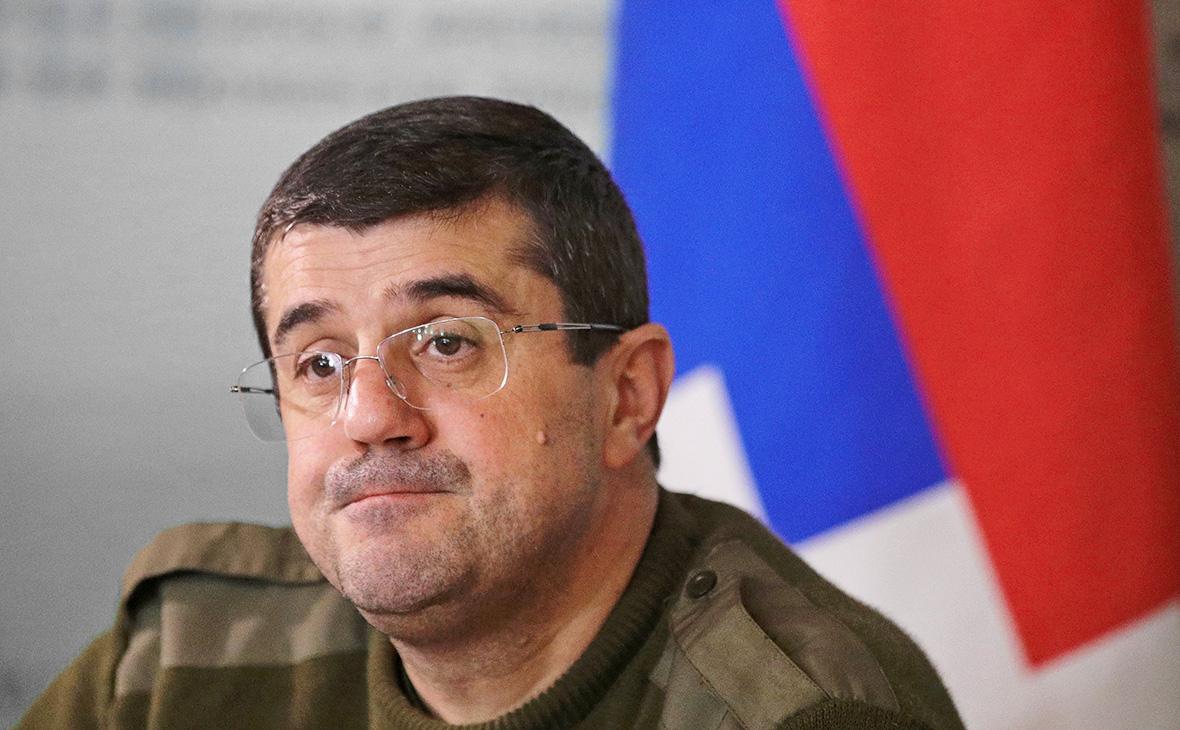
The leader of the Karabakh separatists on Thursday made a series of defiant statements against Azerbaijan, as well as an admission that could be considered sensational.
In particular he believes that it is not Armenians that should be reintegrated into Azerbaijan, but the political leadership of Azerbaijan into "the civilized world, political culture, human rights and system of democratic values".
He goes on to say that the international community does not consider Karabakh a part of Azerbaijan, as "the status of Nagorno-Karabakh remains unresolved at the international level".
Arutunyan further stated that the Council for Security and Cooperation in Europe (CSCE) has recognised the sovereignty of Azerbaijan and Armenia on condition that the future status of Nagorno-Karabakh be resolved at a peace conference.
He argues that "Armenia and Azerbaijan have agreed to this formulation of the issue, thereby accepting Nagorno-Karabakh's international status as disputed territory".
"There is also no agreement on status in the trilateral declaration of 9 November 2020, which means that Nagorno-Karabakh still has the international status of disputed territory, but not a part of Azerbaijan," Arutunyan says.
The separatist leader went on to accuse Baku of violating almost all the clauses of the November 10, 2020 trilateral agreement.
Arutunyan does not consider the lack of mentioning of the status of Karabakh in this document as a reason to speak about its absence. "There was no agreement to close the subject of Artsakh's international status with this document.
The separatist leader went on to make the most important statement, admitting that the Karabakh Armenians had no intention of disarming, as this would "break the fragile security system of the people of Artsakh" and allow Baku to carry out ethnic cleansing of the region.
"Point 4 of the trilateral statement is an agreement to withdraw our armed forces not from the whole of Nagorno-Karabakh, but from the locations of the Russian peacekeeping forces. Since the peacekeepers are not deployed along the entire line of contact, nor do they have an international mandate or the authority or capacity to use force to carry out their functions, the units of the Artsakh Defense Army have the right and obligation to be on combat duty on the line of contact," Arutunyan claims. He also said that there is no word in the statement about the demilitarization of Karabakh and the withdrawal of its armed forces from the region.
"No matter how strong and dangerous the pressure exerted by Azerbaijan, Artsakh has the right to defend itself, and the international community has the obligation to protect it."
There are no restrictions on the use of the Lachin corridor in the trilateral statement, nor on the transportation of any goods and vehicles through it. According to Arutunyan, the regime of the 5-kilometer Lachin corridor "excludes any Azerbaijani presence and interference there," and attempts to turn the Lachin corridor into a road controlled by Azerbaijan to carry humanitarian goods "must be rejected.
In conclusion, the separatist leader called on the leadership of Armenia and all Armenians to wage a determined and sustained struggle for "the indisputable right of the people of Artsakh to self-determination.
Such a defiant statement immediately after the meeting in Washington between the Foreign Ministers of Azerbaijan and Armenia actually means that the Armenians of Karabakh refuse to recognize any peace agreements between Baku and Yerevan.
These statements cannot be perceived in Baku other than as a readiness of the separatists to continue their armed struggle against Azerbaijan. Such a position will have only one answer, and it is not peaceful.


 Latest news
Latest news
Latest newsGeorgia’s Constitutional Court Continues Case on Banning Opposition Parties: Political Pluralism at Stake
12.Oct.2026
Azerbaijan and Iran Step Up Security Contacts Amid Hijab Protests
12.Oct.2026
Personnel Shortages Complicate Ukrainian Forces’ Rotation: Ukraine Faces Long-Term Challenges on the Front Line
11.Oct.2026
Trump Eases Sanctions on Russian Fuel After Talks with Putin: Kyiv Fears Boost to Moscow’s War Revenues
10.Oct.2026
Putin Seeks to Strengthen Russia’s Influence in the Post-Soviet Space Through the CIS
10.Oct.2026
Russia and the South Caucasus: External Pressure, Political Competition and a Crisis of Trust
10.Oct.2026
Peaceful Settlement Between Armenia and Azerbaijan: Moving from Declarations to Implementation
10.Oct.2026
Moldova Ready to Accept as Many Ukrainians as Necessary if Situation Worsens This Winter
09.Oct.2026
Turkmenistan Turns Avaza into a Regional Diplomatic Hub as Caspian, Central Asian and CIS Agendas Converge
08.Oct.2026
Romania Scrambles Spanish F-18s After Aerial Targets Detected Near Ukrainian Border
07.Oct.2026
Berlin Deepens Defence Partnership with Kyiv: Germany to Provide Ukraine with €1 Billion in Military Aid
07.Oct.2026
European Parliament Against Georgian Dream: EU Prepares New Response to Tbilisi
06.Oct.2026
Bulgarian Foreign Minister to Discuss European Security and International Law in the Netherlands
05.Oct.2026
Rheinmetall in Bulgaria: Sofia Emerges as a New NATO Defence-Industrial Hub in the Balkans
05.Oct.2026
The Cost of a Long War: Moscow Expands Spending Plans Through 2029
05.Oct.2026