
 13 Oct 2026









Kazem Jalali: presence of extra-regional forces is harmful
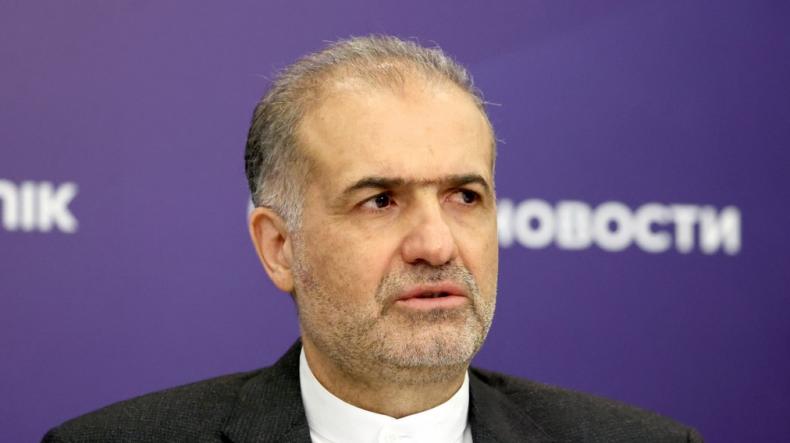
© Photo: Maria Novoselova/Vestnik Kavkaza
Iranian Ambassador to the Russian Federation Kazem Jalali told Vestnik Kavkaza about Tehran's opinion on introducing EU structures into the South Caucasus region. He called on regional states to solve all existing problems independently, without the participation of external forces.
Tehran insists that the presence of extra-regional states in the South Caucasus is inadmissible, emphasizing that it will not benefit the region. The Ambassador of the Islamic Republic of Iran to the Russian Federation, Kazem Jalali, spoke about this when answering a question from Vestnik Kavkaza about expanding the “observation mission” of the European Union in Armenia.
“The Islamic Republic of Iran has very good ties with neighboring countries. As far as the Caucasus region is concerned, we have positive relations with both Azerbaijan and Armenia. We have always told all our neighbors that the presence of extra-regional powers cannot be in the interests of our region. We believe that regional problems should be solved by regional states,” he said.
The Iranian Ambassador to Russia recalled the most effective format of intraregional cooperation –“3+3 platform. “Both Armenia and Azerbaijan agree to work in this format; together with Türkiye, Russia and Iran, they took an active part in the launch of this mechanism. We hope that Georgia will also join the 3+3 platform at the next meetings,” Kazem Jalali said .
“Iran has not only good ties with Azerbaijan and Armenia, but also a great desire to develop bilateral relations with all countries of our region. At the same time, we continue to insist that extra-regional forces are not beneficial to our countries,” the diplomatic representative of the Islamic Republic of Iran concluded.


 Latest news
Latest news
Latest newsGeorgia’s Constitutional Court Continues Case on Banning Opposition Parties: Political Pluralism at Stake
12.Oct.2026
Azerbaijan and Iran Step Up Security Contacts Amid Hijab Protests
12.Oct.2026
Personnel Shortages Complicate Ukrainian Forces’ Rotation: Ukraine Faces Long-Term Challenges on the Front Line
11.Oct.2026
Trump Eases Sanctions on Russian Fuel After Talks with Putin: Kyiv Fears Boost to Moscow’s War Revenues
10.Oct.2026
Putin Seeks to Strengthen Russia’s Influence in the Post-Soviet Space Through the CIS
10.Oct.2026
Russia and the South Caucasus: External Pressure, Political Competition and a Crisis of Trust
10.Oct.2026
Peaceful Settlement Between Armenia and Azerbaijan: Moving from Declarations to Implementation
10.Oct.2026
Moldova Ready to Accept as Many Ukrainians as Necessary if Situation Worsens This Winter
09.Oct.2026
Turkmenistan Turns Avaza into a Regional Diplomatic Hub as Caspian, Central Asian and CIS Agendas Converge
08.Oct.2026
Romania Scrambles Spanish F-18s After Aerial Targets Detected Near Ukrainian Border
07.Oct.2026
Berlin Deepens Defence Partnership with Kyiv: Germany to Provide Ukraine with €1 Billion in Military Aid
07.Oct.2026
European Parliament Against Georgian Dream: EU Prepares New Response to Tbilisi
06.Oct.2026
Bulgarian Foreign Minister to Discuss European Security and International Law in the Netherlands
05.Oct.2026
Rheinmetall in Bulgaria: Sofia Emerges as a New NATO Defence-Industrial Hub in the Balkans
05.Oct.2026
The Cost of a Long War: Moscow Expands Spending Plans Through 2029
05.Oct.2026