
 13 Oct 2026









Armenia premier: Our society asks why we continue to be member state of CSTO?
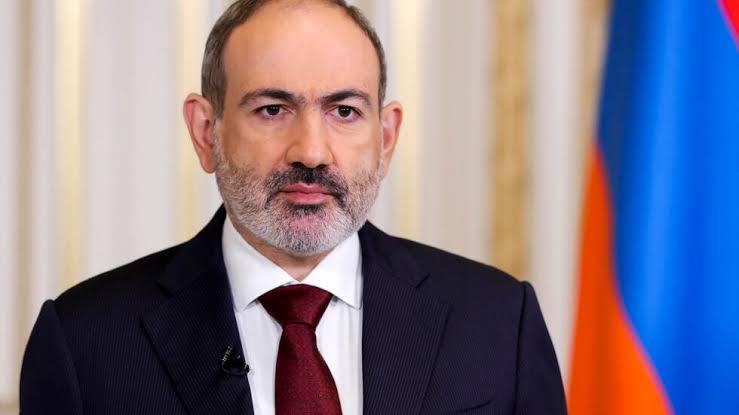
As to regional security, we think that we can address this problem as part of the peace process. Armenian Prime Minister Nikol Pashinyan stated this in an interview with several members of the UK media.
"And it's important that the peace process is not only the work on the peace treaty, which is underway. But it's important to note that we have embarked on the practical stage of border delimitation process, which is of extreme importance in terms of, among other things, reducing security risks, and we need to move in this direction," he said.
Referring to Armenia’s relations with the Collective Security Treaty Organization (CSTO), Pashinyan said: "A fundamental problem emerged there, because even with Azerbaijan we managed to agree in principle on recognizing each other's territorial integrity based on the 1991 Alma-Ata declaration, and the 1991 Alma-Ata declaration is accepted as the political bases for the border delimitation process. I would like to clarify what this means in practice.
From the point of view of our discussions, the 1991 Alma-Ata declaration contains two important elements. First is that the Soviet Union shall cease to exist, and this was the agreement reached between the 12 former Soviet Union republics, all the republics with the exception of the Baltic states, which at that time had already declared independence, and the administrative borders that existed between the Soviet republics shall turn into state borders. So now we clearly know where the border lies between the Republic of Armenia and the Republic of Azerbaijan. And importantly, the fact that we accept the Alma-Ata declaration as the political bases for the delimitation process has an important meaning that we shall not draw a new border between Armenia and Azerbaijan. We simply need to reproduce on the ground the borders that existed at the time that the Soviet Union collapsed. Those were the de-jure borders within the Soviet Union.
Now, how is all this related to the CSTO? It is very directly related to the CSTO. The administrative borders that, according to the Alma-Ata declaration, became borders, these borders define the zone of responsibility of the CSTO. What that means is that if that border is breached, the security mechanism of the Collective Security Treaty Organization should engage.”
According to Pashinyan, when that border was breached in May 2021, in November 2021, in September 2022, Armenia according to the established procedure initiated the mechanism for the crisis response, but that mechanism did not get engaged with the explanation that the borders have not been delimited.
"And recently such a statement was made by the Russian Federation that the CSTO did not engage at that time because there was no delimited border or any border at that time, but our colleagues failed to acknowledge that if there is no delimited border there, does that mean that there is no zone of responsibility for the CSTO as well, because the border is there, and everyone knows where the border lies.
So they are saying that the zone of responsibility of the CSTO cannot be identified by them, but this in fact means that they are saying that the CSTO does not exist, because the border between Japan and Russia is also not delimited. I know that this is not the intention of our colleagues, but if such were the situation, Russia has borders with certain countries which have not been delimited, and if they were in a similar situation in which the armed forces of any country were to enter the territory of the Russian Federation through a border that was not delimited, would then the CSTO not respond in any way? And that would mean that the CSTO does not exist as a mechanism upon which the member states, Russia, Armenia, and the other member states, could rely.
And that’s our question. If we were relying on an organization on which one should not rely on, because in principle, one cannot rely on that organization, not only we, but also others cannot rely on that organization, and it’s justified by the organization’s reaction and statements of some of the member states, and our society asks why we continue to be a member state of the CSTO? Frankly, I do not have an answer to that question," the Armenian PM said.


 Latest news
Latest news
Latest newsGeorgia’s Constitutional Court Continues Case on Banning Opposition Parties: Political Pluralism at Stake
12.Oct.2026
Azerbaijan and Iran Step Up Security Contacts Amid Hijab Protests
12.Oct.2026
Personnel Shortages Complicate Ukrainian Forces’ Rotation: Ukraine Faces Long-Term Challenges on the Front Line
11.Oct.2026
Trump Eases Sanctions on Russian Fuel After Talks with Putin: Kyiv Fears Boost to Moscow’s War Revenues
10.Oct.2026
Putin Seeks to Strengthen Russia’s Influence in the Post-Soviet Space Through the CIS
10.Oct.2026
Russia and the South Caucasus: External Pressure, Political Competition and a Crisis of Trust
10.Oct.2026
Peaceful Settlement Between Armenia and Azerbaijan: Moving from Declarations to Implementation
10.Oct.2026
Moldova Ready to Accept as Many Ukrainians as Necessary if Situation Worsens This Winter
09.Oct.2026
Turkmenistan Turns Avaza into a Regional Diplomatic Hub as Caspian, Central Asian and CIS Agendas Converge
08.Oct.2026
Romania Scrambles Spanish F-18s After Aerial Targets Detected Near Ukrainian Border
07.Oct.2026
Berlin Deepens Defence Partnership with Kyiv: Germany to Provide Ukraine with €1 Billion in Military Aid
07.Oct.2026
European Parliament Against Georgian Dream: EU Prepares New Response to Tbilisi
06.Oct.2026
Bulgarian Foreign Minister to Discuss European Security and International Law in the Netherlands
05.Oct.2026
Rheinmetall in Bulgaria: Sofia Emerges as a New NATO Defence-Industrial Hub in the Balkans
05.Oct.2026
The Cost of a Long War: Moscow Expands Spending Plans Through 2029
05.Oct.2026