
 13 Oct 2026









In pursuit of peace: About the upcoming Global Summit for Peace in Ukraine
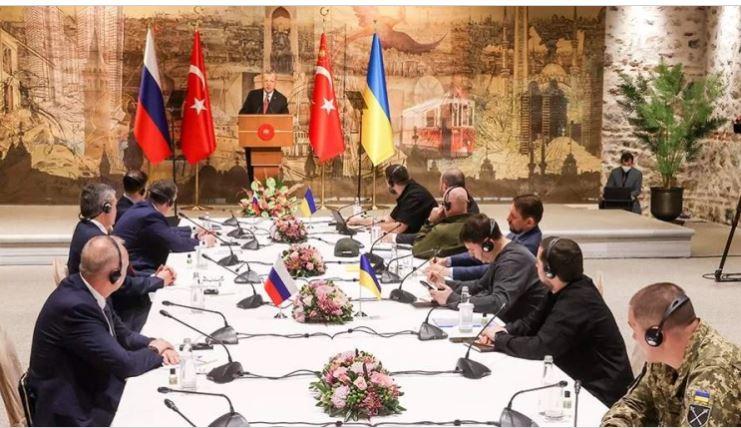
Over the past year, Kyiv's diplomatic front has been bustling with activity centered on President Volodymyr Zelensky's "Formula for peace." This ten-point plan, according to the Ukrainian leadership, is the blueprint for a fair resolution to the ongoing conflict, with Zelensky consistently emphasizing that any peace must adhere strictly to these terms, excluding alternative proposals.
The linchpin of these efforts is the upcoming "Global Peace Summit," slated for June 15-16 in Switzerland. This landmark gathering aims to bring together leaders from around the world to discuss and potentially endorse the Zelensky formula as a foundation for peace. The summit is expected to culminate in a detailed plan of action, which would then be presented to Moscow.
Zelensky first presented his formula for peace at the G20 summit in Indonesia in November 2022. Drawing parallels to the successful grain export initiative, he suggested a similar multilateral approach could be applied to each point of his plan. "We already have a positive experience... How does it work? There are the UN and two sides to the agreements... Similarly, the implementation of each of the points I have voiced may work, where the parties may be different states ready to take the lead in one or another issue," Zelensky explained.
The Zelensky "Formula for Peace" includes calls for radiation and nuclear safety, food and energy security, the release of all prisoners and deportees, adherence to the UN Charter, restoration of territorial integrity, withdrawal of Russian troops, and the cessation of hostilities. It also emphasizes the return of justice, counteraction to ecocide, prevention of escalation, and marking a definitive end to the war.
While many Western analysts view the plan as essentially dictating the terms of Russia's surrender, from Kyiv's perspective, it reflects a steadfast commitment to Ukraine's sovereignty and the broader principles of international law and justice. According to Ukrainian officials, the 10-proposal plan allows partner states to choose which elements they want to engage with more directly, though some points, notably the withdrawal of Russian troops and judicial measures against aggressors, are contentious, particularly among nations in the Global South.
The summit's preparation has not been without its challenges, facing organizational hurdles and geopolitical pressures, notably from Russia. Moscow has sought to dissuade participation, particularly from the Global South, with countries expressing support for Ukraine but also cautioning against antagonizing Russia.
Despite these complexities, the preparatory work for the summit continues intensely. According to Daria Zarivnaya, an advisor to Andriy Yermak, the head of Zelensky’s office and the architect behind the peace formula's strategic implementation, the summit represents a significant step towards formalizing a global stance on the conflict. "At the summit...its participants should 'take as a basis' a concrete peace plan developed on the basis of the 'Zelensky formula'," Zarivnaya told the BBC.
The breadth of participation remains broad, with invitations reportedly sent to over 160 countries, though the exact list of attendees remains confidential. The outcome of the summit, while uncertain, is anticipated to at least provide a framework—if not a fully ratified document—for future peace negotiations.
Difficult choice: The role of Azerbaijan and others in the summit on the Ukrainian crisis
The possible participation of Azerbaijan and other countries of the Commonwealth of Independent States (CIS) is problematic in terms of the complexity of the geopolitical dynamics of the Ukrainian crisis. These countries, influenced heavily by Russia, find themselves in a delicate position, balancing their official stances on Ukraine's territorial integrity and the imperative to maintain favorable relations with Moscow.
The positions of CIS countries like Azerbaijan are nuanced and multifaceted. On one hand, they have expressed support for Ukraine’s sovereignty and the peaceful resolution of conflicts, aligning with international norms and the views of many global entities. On the other hand, these nations must navigate their economic, political, and security ties with Russia, which often exert significant influence over their foreign policies.
This duality is particularly evident in Azerbaijan's approach. Despite its close ties with Russia, Azerbaijan has consistently supported Ukraine's territorial integrity and has provided systematic humanitarian aid to the country. Remarkably, Moscow has not publicly opposed these actions, suggesting a tacit acceptance of Azerbaijan's dual stance. This reflects a broader, albeit unspoken, understanding between Kyiv and Moscow that the mediation efforts by countries like Azerbaijan could be beneficial.
Azerbaijan’s unique position could, therefore, make its participation in the summit not only possible but also pivotal. Its role could serve as a bridge between conflicting interests, potentially facilitating dialogue and understanding. Moreover, Azerbaijan’s relationship with Turkey under the "One Nation, Two States" policy further enhances its potential to contribute effectively at the summit. Turkey, which takes a more independent and assertive position in international affairs, and in particular on the Ukrainian crisis, could act in tandem with Azerbaijan, which advocates dialogue and compromise.
Furthermore, the broader Organization of Turkic States, which includes Central Asian countries along with Azerbaijan and Turkey, might collectively offer a regional perspective that balances the interests of both Ukraine and Russia. This grouping, owing to its historical and friendly ties with both nations, could act as an influential force in negotiating compromises.
The strategic participation of these countries in the summit could represent a significant opportunity for both Moscow and Kyiv. By involving nations that share ties with both sides of the conflict, the summit could leverage these relationships to foster a more comprehensive and inclusive dialogue. This approach might not only help in addressing immediate concerns but could also lay the groundwork for a lasting peace framework in the broader Eurasian region.
The above leads to the idea that the role of Azerbaijan and similar states may have added constructivism in shaping discussions and, perhaps, towards a more balanced and pragmatic settlement.


 Latest news
Latest news
Latest newsGeorgia’s Constitutional Court Continues Case on Banning Opposition Parties: Political Pluralism at Stake
12.Oct.2026
Azerbaijan and Iran Step Up Security Contacts Amid Hijab Protests
12.Oct.2026
Personnel Shortages Complicate Ukrainian Forces’ Rotation: Ukraine Faces Long-Term Challenges on the Front Line
11.Oct.2026
Trump Eases Sanctions on Russian Fuel After Talks with Putin: Kyiv Fears Boost to Moscow’s War Revenues
10.Oct.2026
Putin Seeks to Strengthen Russia’s Influence in the Post-Soviet Space Through the CIS
10.Oct.2026
Russia and the South Caucasus: External Pressure, Political Competition and a Crisis of Trust
10.Oct.2026
Peaceful Settlement Between Armenia and Azerbaijan: Moving from Declarations to Implementation
10.Oct.2026
Moldova Ready to Accept as Many Ukrainians as Necessary if Situation Worsens This Winter
09.Oct.2026
Turkmenistan Turns Avaza into a Regional Diplomatic Hub as Caspian, Central Asian and CIS Agendas Converge
08.Oct.2026
Romania Scrambles Spanish F-18s After Aerial Targets Detected Near Ukrainian Border
07.Oct.2026
Berlin Deepens Defence Partnership with Kyiv: Germany to Provide Ukraine with €1 Billion in Military Aid
07.Oct.2026
European Parliament Against Georgian Dream: EU Prepares New Response to Tbilisi
06.Oct.2026
Bulgarian Foreign Minister to Discuss European Security and International Law in the Netherlands
05.Oct.2026
Rheinmetall in Bulgaria: Sofia Emerges as a New NATO Defence-Industrial Hub in the Balkans
05.Oct.2026
The Cost of a Long War: Moscow Expands Spending Plans Through 2029
05.Oct.2026