
 13 Oct 2026









Balkan Stream may become victim of geopolitics
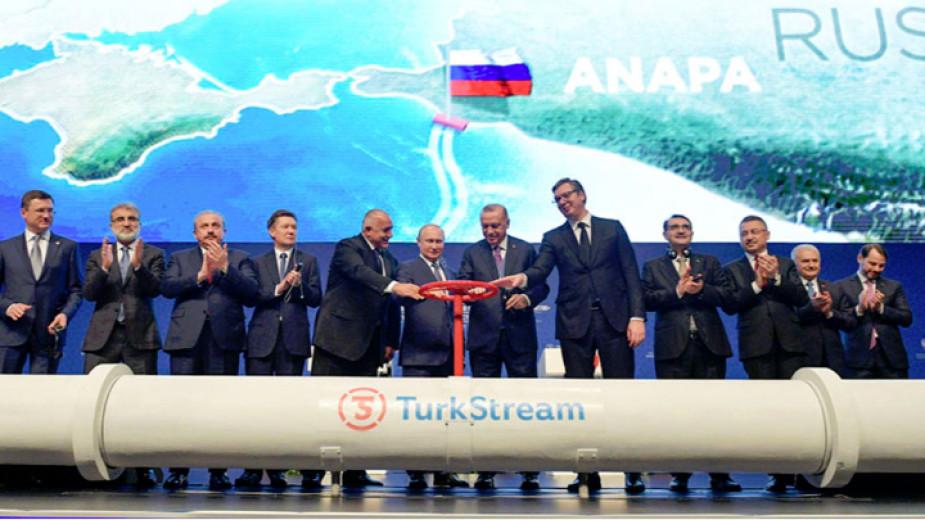
Bulgaria’s ambitions in the gas sector are as big as the problems towards its fulfillment. It became clear from events that accompany the implementation of the Turk Stream gas pipeline project and its extension via Bulgaria towards Central Europe, which was named Balkan Stream by Premier Boyko Borissov, BNR writes in an editorial analytical article published today.
An interview with the United States Under Secretary of State for Political Affairs David Hale broadcast on the airwaves of the Bulgarian National Radio on Saturday caused a real media storm. Only three days after the official opening of the Turk Stream project by the leaders of the four countries participating in the project-Turkey, Russia, Bulgaria and Serbia, the US diplomat said that Washington was against the second pipe of Turk Stream via Bulgaria, because this country views it as Russia’s geostrategic project. “Moscow uses its energy sources as political tool to exert influence and divide Europe. Nord Stream 2 and the Second Pipe of Turk Stream are a problem, because they do not ensure energy diversification for Europe”. However, David Hale welcomed the decision of the Bulgarian cabinet to acquire 20% of the assets of Gastrade S.A company which builds the LNG terminal near the Greek city of Alexandroupolis. Bulgaria intends to receive gas from Qatar and the USA through that terminal. The United States Under Secretary of State for Political Affairs David Hale said this would improve gas diversification in the whole Balkan region.
Bulgaria has the ambition to become European gas hub and supply all interested European countries with gas from different sources. So far, only Russian gas flows through this country and Balkan Stream does not change the situation. Recently the US Ambassador to Sofia Herro Mustafa said that in the Turk Stream project Bulgaria plays the role of a transiting country only and does not benefit substantially from it, because it pays for the construction of the second pipe on its territory and the amount exceeds EUR 1.1 billion. In the best-case scenario, this investment will pay off in 5 to 6 years. That is why many economic experts do not believe in the profitability of this facility. Analysts of Emerging Europe consulting company contend that Turk Stream will have positive and negative effect on Europe, but it would surely be an impediment towards the energy independence of the EU.
The construction of the second pipe of Turk Stream on Bulgarian territory has been going according to schedule and is expected to complete in May this year. Will Sofia decide to oppose Washington as Germany does with the Nord Stream 2, or the construction of the Balkan Stream will stop under foreign pressure? Is it not a bit too late to bury a facility that has been half-built and a lot of money was already spent? We are yet to learn the answers to these questions. However, the United States Under Secretary of State for Political Affairs David Hale reaffirmed the commitment of the USA to continue supporting the modernization of the Bulgarian armed forces and help this country strengthen rule of law and build a 5G communication network protected from manipulations.
Will Sofia manage to balance between the two great powers, which are currently in sharp confrontation under a series of global and regional issues? Bulgaria needs to find the magic formula that will help it maintain normal relations with all countries. However, this will not be an easy job.


 Latest news
Latest news
Latest newsGeorgia’s Constitutional Court Continues Case on Banning Opposition Parties: Political Pluralism at Stake
12.Oct.2026
Azerbaijan and Iran Step Up Security Contacts Amid Hijab Protests
12.Oct.2026
Personnel Shortages Complicate Ukrainian Forces’ Rotation: Ukraine Faces Long-Term Challenges on the Front Line
11.Oct.2026
Trump Eases Sanctions on Russian Fuel After Talks with Putin: Kyiv Fears Boost to Moscow’s War Revenues
10.Oct.2026
Putin Seeks to Strengthen Russia’s Influence in the Post-Soviet Space Through the CIS
10.Oct.2026
Russia and the South Caucasus: External Pressure, Political Competition and a Crisis of Trust
10.Oct.2026
Peaceful Settlement Between Armenia and Azerbaijan: Moving from Declarations to Implementation
10.Oct.2026
Moldova Ready to Accept as Many Ukrainians as Necessary if Situation Worsens This Winter
09.Oct.2026
Turkmenistan Turns Avaza into a Regional Diplomatic Hub as Caspian, Central Asian and CIS Agendas Converge
08.Oct.2026
Romania Scrambles Spanish F-18s After Aerial Targets Detected Near Ukrainian Border
07.Oct.2026
Berlin Deepens Defence Partnership with Kyiv: Germany to Provide Ukraine with €1 Billion in Military Aid
07.Oct.2026
European Parliament Against Georgian Dream: EU Prepares New Response to Tbilisi
06.Oct.2026
Bulgarian Foreign Minister to Discuss European Security and International Law in the Netherlands
05.Oct.2026
Rheinmetall in Bulgaria: Sofia Emerges as a New NATO Defence-Industrial Hub in the Balkans
05.Oct.2026
The Cost of a Long War: Moscow Expands Spending Plans Through 2029
05.Oct.2026