
 13 Oct 2026









Iranian fuel starts arriving in Venezuelan waters despite U.S. warning
The first of five Iranian tankers carrying fuel for gasoline-starved Venezuela entered the South American country’s exclusive economic zone on Saturday, despite a U.S. official’s warning that Washington was considering a response to the shipment, according to Reuters.
The tanker, named Fortune, reached the country’s waters at around 7:40 p.m. local time (1140 GMT) after passing north of the neighboring dual-island Caribbean nation of Trinidad and Tobago, according to vessel tracking data from Refinitiv Eikon.
“The ships from the fraternal Islamic Republic of Iran are now in our exclusive economic zone,” tweeted Tareck El Aissami, Venezuela’s economy vice president and recently named oil minister.
Venezuelan state television showed images of a navy ship and aircraft preparing to meet it. The defense minister had pledged that the military would escort the tankers once they reached Venezuela’s Exclusive Economic Zone (EEZ) due to what authorities described as threats from the United States.
The tanker flotilla is carrying a total of 1.53 million barrels of gasoline and alkylate to Venezuela, according to both governments, sources and calculations by TankerTrackers.com.
The desperately needed shipments have caused a diplomatic standoff between the United States and Iran and Venezuela, which are under U.S. sanctions. Gasoline is scarce in Venezuela due to a near-complete breakdown of the OPEC nation’s 1.3 million barrel-per-day refining network.
Washington is considering measures in response, a senior U.S. official said without elaborating.
The United States recently beefed up its naval presence in the Caribbean for what it called an expanded antidrug operation. A Pentagon spokesman said on Thursday he was unaware of any operations related to the Iranian cargoes.
The shipment has drawn condemnation from Venezuela’s opposition, which is concerned about growing ties between Iran and socialist President Nicolas Maduro, who has overseen a six-year economic crisis. The shipments are bringing enough fuel for just a month of consumption at current rates in the nation, once a prominent fuel exporter.
“(The ruling party) is trying to turn an embarrassment into an epic victory,” said Oscar Ronderos, a lawmaker on the opposition-controlled National Assembly’s energy commission.
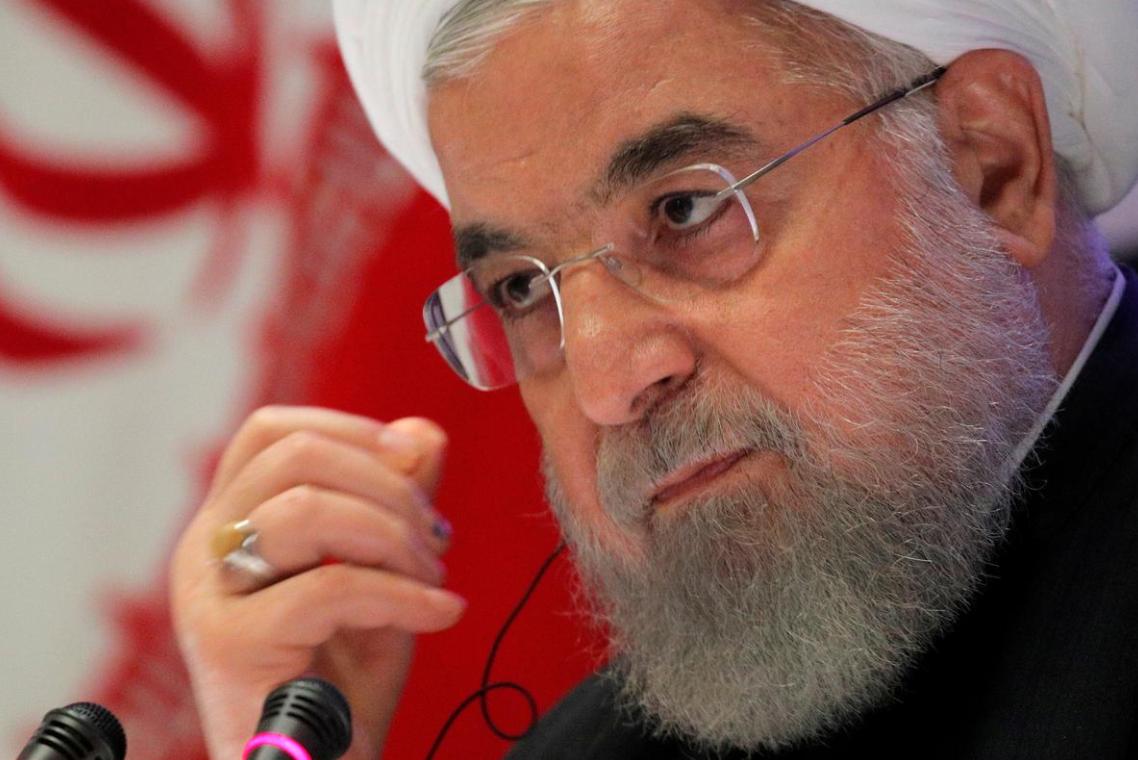
Earlier on Saturday, Iranian President Hassan Rouhani warned of retaliation if Washington caused problems for tankers carrying Iranian fuel to Venezuela, the semi-official news agency Mehr reported.
“If our tankers in the Caribbean or anywhere in the world face trouble caused by the Americans, they (the U.S.) will also be in trouble,” Rouhani said in a telephone conversation with Qatar’s Emir, Mehr reported.
The two nations have previously helped each other in the face of U.S. sanctions. In 2010-2011, state-run oil company PDVSA [PDVSA.UL] sent fuel to Iran, which was under sanctions aimed at stifling its nuclear weapons program.


 Latest news
Latest news
Latest newsGeorgia’s Constitutional Court Continues Case on Banning Opposition Parties: Political Pluralism at Stake
12.Oct.2026
Azerbaijan and Iran Step Up Security Contacts Amid Hijab Protests
12.Oct.2026
Personnel Shortages Complicate Ukrainian Forces’ Rotation: Ukraine Faces Long-Term Challenges on the Front Line
11.Oct.2026
Trump Eases Sanctions on Russian Fuel After Talks with Putin: Kyiv Fears Boost to Moscow’s War Revenues
10.Oct.2026
Putin Seeks to Strengthen Russia’s Influence in the Post-Soviet Space Through the CIS
10.Oct.2026
Russia and the South Caucasus: External Pressure, Political Competition and a Crisis of Trust
10.Oct.2026
Peaceful Settlement Between Armenia and Azerbaijan: Moving from Declarations to Implementation
10.Oct.2026
Moldova Ready to Accept as Many Ukrainians as Necessary if Situation Worsens This Winter
09.Oct.2026
Turkmenistan Turns Avaza into a Regional Diplomatic Hub as Caspian, Central Asian and CIS Agendas Converge
08.Oct.2026
Romania Scrambles Spanish F-18s After Aerial Targets Detected Near Ukrainian Border
07.Oct.2026
Berlin Deepens Defence Partnership with Kyiv: Germany to Provide Ukraine with €1 Billion in Military Aid
07.Oct.2026
European Parliament Against Georgian Dream: EU Prepares New Response to Tbilisi
06.Oct.2026
Bulgarian Foreign Minister to Discuss European Security and International Law in the Netherlands
05.Oct.2026
Rheinmetall in Bulgaria: Sofia Emerges as a New NATO Defence-Industrial Hub in the Balkans
05.Oct.2026
The Cost of a Long War: Moscow Expands Spending Plans Through 2029
05.Oct.2026