
 13 Oct 2026









Ukraine and the Council of Europe Sign Agreement on Special Tribunal for Russian Aggression
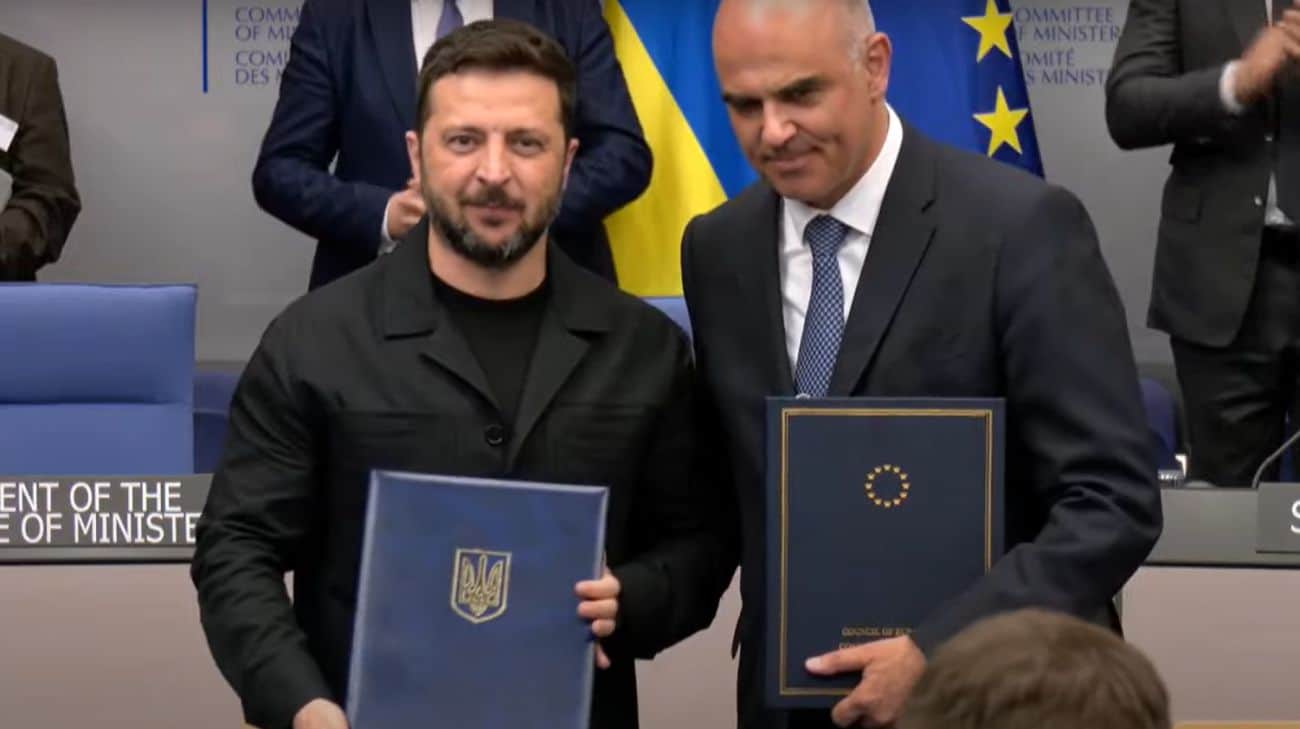
Ukraine and the Council of Europe have officially signed an agreement to establish a Special International Tribunal that will address the crime of aggression committed by Russia against Ukraine. The signing ceremony took place in Strasbourg with the participation of representatives of the Ukrainian government and the leadership of the Council of Europe.
According to Ukraine’s Minister of Justice, Denys Maliuska, the establishment of the tribunal is “a crucial step toward holding the Russian leadership legally accountable for waging war against Ukraine”. He emphasized that “the issue of justice is not political, but legal”, and expressed hope that the international community would continue to support the process.
Secretary General of the Council of Europe, Marija Pejčinović Burić, noted that the agreement would serve as a foundation for holding the highest political and military leadership of the Russian Federation accountable. She added that the Council of Europe would actively assist in forming legal mechanisms and international coordination.
According to the agreement, the tribunal will operate on the basis of international law, with judges from Council of Europe member states and technical support from the European Union. Its goal is to provide a legal assessment of actions committed since the beginning of Russia’s full-scale aggression in February 2022.
The creation of the tribunal has been supported by more than 40 countries, including the United States, Canada, the United Kingdom, France, Germany, and most Eastern European countries.
The idea of a special tribunal on Russian aggression has been discussed since 2023. It aims to fill a gap in international law: unlike the International Criminal Court (ICC), the tribunal will be able to directly consider the crime of aggression, not just war crimes or genocide.
Source: Reuters


 Latest news
Latest news
Latest newsGeorgia’s Constitutional Court Continues Case on Banning Opposition Parties: Political Pluralism at Stake
12.Oct.2026
Azerbaijan and Iran Step Up Security Contacts Amid Hijab Protests
12.Oct.2026
Personnel Shortages Complicate Ukrainian Forces’ Rotation: Ukraine Faces Long-Term Challenges on the Front Line
11.Oct.2026
Trump Eases Sanctions on Russian Fuel After Talks with Putin: Kyiv Fears Boost to Moscow’s War Revenues
10.Oct.2026
Putin Seeks to Strengthen Russia’s Influence in the Post-Soviet Space Through the CIS
10.Oct.2026
Russia and the South Caucasus: External Pressure, Political Competition and a Crisis of Trust
10.Oct.2026
Peaceful Settlement Between Armenia and Azerbaijan: Moving from Declarations to Implementation
10.Oct.2026
Moldova Ready to Accept as Many Ukrainians as Necessary if Situation Worsens This Winter
09.Oct.2026
Turkmenistan Turns Avaza into a Regional Diplomatic Hub as Caspian, Central Asian and CIS Agendas Converge
08.Oct.2026
Romania Scrambles Spanish F-18s After Aerial Targets Detected Near Ukrainian Border
07.Oct.2026
Berlin Deepens Defence Partnership with Kyiv: Germany to Provide Ukraine with €1 Billion in Military Aid
07.Oct.2026
European Parliament Against Georgian Dream: EU Prepares New Response to Tbilisi
06.Oct.2026
Bulgarian Foreign Minister to Discuss European Security and International Law in the Netherlands
05.Oct.2026
Rheinmetall in Bulgaria: Sofia Emerges as a New NATO Defence-Industrial Hub in the Balkans
05.Oct.2026
The Cost of a Long War: Moscow Expands Spending Plans Through 2029
05.Oct.2026