
 13 Oct 2026









Scorched Earth Tactics: Why Is Russia Attacking Huliaipole?
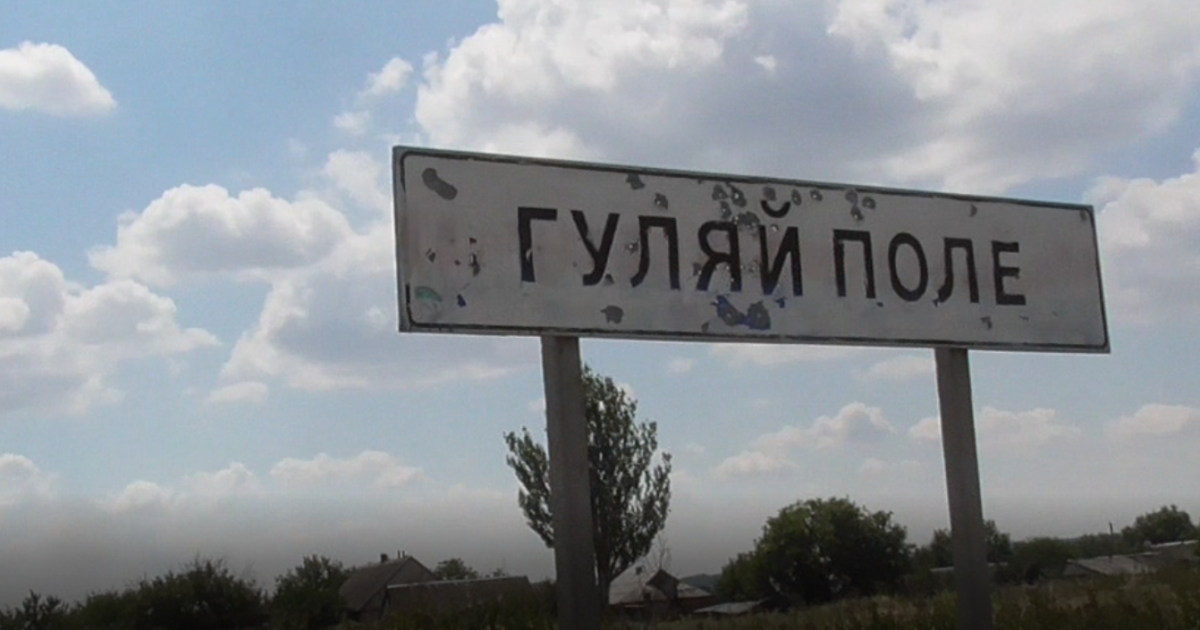
Russian forces have launched another strike on Huliaipole —
a strategically significant town in Ukraine’s Zaporizhzhia region, situated on
the southern front line. Since the start of the full-scale invasion, Huliaipole
has been under near-daily shelling due to its critical geographic position.
The town lies close to key directions of Russian advances.
In the early weeks of the war, intense battles were fought here, with the front
line shifting back and forth through the area. Russian attacks have targeted
both military and civilian infrastructure — homes, cultural institutions, and
farmland — triggering accusations of war crimes by the Kremlin.
As early as March–April 2022, Russian aviation and artillery
inflicted significant damage on Huliaipole’s residential areas and
infrastructure. This was followed by waves of more destructive attacks: in
January–February 2023, the use of cluster munitions and white phosphorus bombs
was documented, further compounding the destruction.
As the shelling continued, the town gradually emptied. By
mid-2023, the remaining population had dwindled to just a few hundred, mostly
elderly people living in basements without access to water, electricity, or
heat.
The latest missile strike once again highlighted the
systematic nature of Russia’s strategy — aiming to demoralize and suppress
Ukrainian resistance along the front lines. Exact casualty numbers and damage
assessments have not been fully released by the media, but the intensity of
subsequent fighting and worsening humanitarian conditions suggest a significant
escalation. For the remaining residents, each new attack brings renewed risk of
death, destruction of homes, and the loss of any remnants of normal life.
Ukrainian authorities are actively documenting the strikes
and gathering evidence for international courts. Humanitarian organizations
continue to deliver aid under extremely challenging conditions — with no
communications, heating, or essential services available.
Military analysts are closely tracking this Russian tactic:
strikes on areas away from active combat zones may signal a psychological
pressure campaign intended to wear down Ukrainian defenses.
This latest missile strike on Huliaipole is part of a
broader Russian strategy — aiming to destabilize Ukraine’s southern defenses,
target critical infrastructure, and undermine any chance of recovery. The
consequences go beyond physical destruction — they represent a continuing
tragedy for the civilians who have endured nearly two years of relentless
bombardment.
Source: 24tv.ua


 Latest news
Latest news
Latest newsGeorgia’s Constitutional Court Continues Case on Banning Opposition Parties: Political Pluralism at Stake
12.Oct.2026
Azerbaijan and Iran Step Up Security Contacts Amid Hijab Protests
12.Oct.2026
Personnel Shortages Complicate Ukrainian Forces’ Rotation: Ukraine Faces Long-Term Challenges on the Front Line
11.Oct.2026
Trump Eases Sanctions on Russian Fuel After Talks with Putin: Kyiv Fears Boost to Moscow’s War Revenues
10.Oct.2026
Putin Seeks to Strengthen Russia’s Influence in the Post-Soviet Space Through the CIS
10.Oct.2026
Russia and the South Caucasus: External Pressure, Political Competition and a Crisis of Trust
10.Oct.2026
Peaceful Settlement Between Armenia and Azerbaijan: Moving from Declarations to Implementation
10.Oct.2026
Moldova Ready to Accept as Many Ukrainians as Necessary if Situation Worsens This Winter
09.Oct.2026
Turkmenistan Turns Avaza into a Regional Diplomatic Hub as Caspian, Central Asian and CIS Agendas Converge
08.Oct.2026
Romania Scrambles Spanish F-18s After Aerial Targets Detected Near Ukrainian Border
07.Oct.2026
Berlin Deepens Defence Partnership with Kyiv: Germany to Provide Ukraine with €1 Billion in Military Aid
07.Oct.2026
European Parliament Against Georgian Dream: EU Prepares New Response to Tbilisi
06.Oct.2026
Bulgarian Foreign Minister to Discuss European Security and International Law in the Netherlands
05.Oct.2026
Rheinmetall in Bulgaria: Sofia Emerges as a New NATO Defence-Industrial Hub in the Balkans
05.Oct.2026
The Cost of a Long War: Moscow Expands Spending Plans Through 2029
05.Oct.2026