
 13 Oct 2026









European Parliament Accuses Georgian Authorities of Authoritarianism
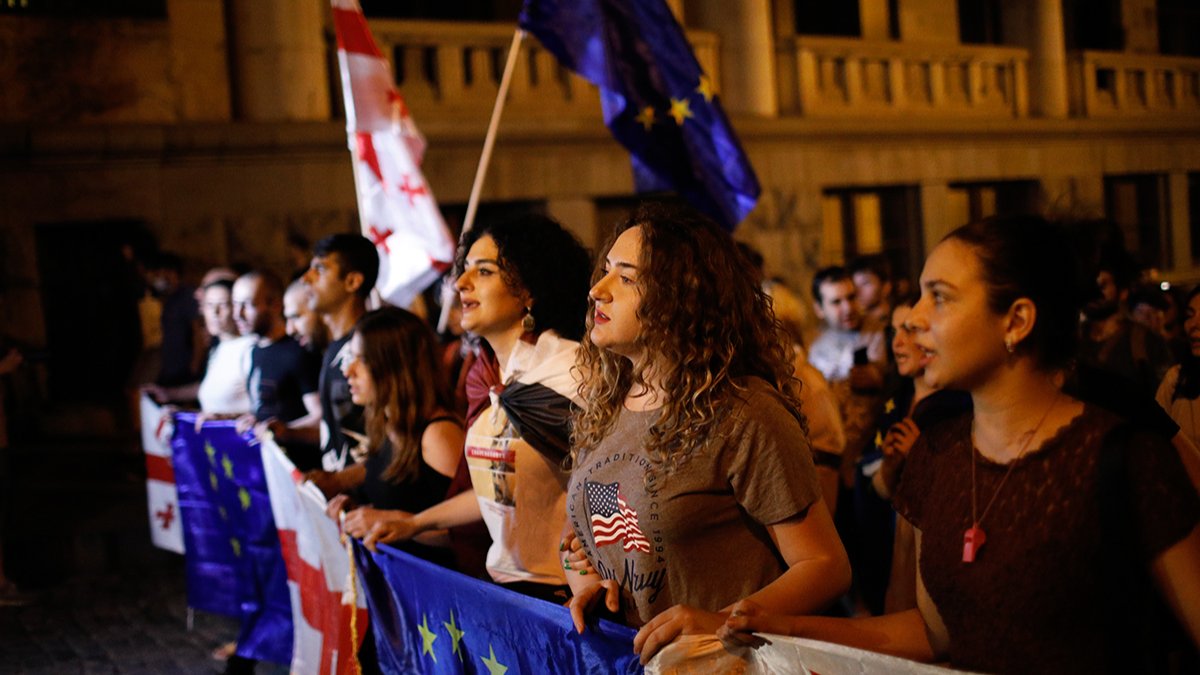
The European Parliament has made a bold statement that could significantly impact Georgia’s foreign policy trajectory. Brussels has called on the Georgian government to immediately abandon its "authoritarian course" and ensure free and fair elections, warning that the country’s EU integration process will be suspended indefinitely otherwise.
“Until democracy is restored in Georgia, the path to the European Union remains closed”, the resolution, adopted by a majority vote, states.
MEPs expressed deep concern over the suppression of political opposition, restrictions targeting civil society, and the increasing control over the media and the judiciary. The resolution explicitly states that the current Georgian government cannot be considered a legitimate partner unless key democratic standards are upheld.
In essence, this amounts to a freezing of Georgia’s EU accession process: the country will not be able to count on EU membership unless it returns to the principles of the rule of law and political pluralism. The announcement has already sparked heated reactions in Georgian political circles and among the general public, where support for EU integration remains high.
It is worth noting that since early 2024, pressure on independent media and activists in Georgia has intensified, and new legislation has been passed that the international community has labeled “anti-democratic”. The most controversial among them is the so-called “foreign agents law”, modeled after Russian legislation, which triggered mass protests across the country.
As such, the European Union is urging the Georgian government to reconsider its course ahead of the upcoming elections. If no change occurs, the country may face diplomatic isolation, along with a review of economic cooperation and financial aid from the EU.


 Latest news
Latest news
Latest newsGeorgia’s Constitutional Court Continues Case on Banning Opposition Parties: Political Pluralism at Stake
12.Oct.2026
Azerbaijan and Iran Step Up Security Contacts Amid Hijab Protests
12.Oct.2026
Personnel Shortages Complicate Ukrainian Forces’ Rotation: Ukraine Faces Long-Term Challenges on the Front Line
11.Oct.2026
Trump Eases Sanctions on Russian Fuel After Talks with Putin: Kyiv Fears Boost to Moscow’s War Revenues
10.Oct.2026
Putin Seeks to Strengthen Russia’s Influence in the Post-Soviet Space Through the CIS
10.Oct.2026
Russia and the South Caucasus: External Pressure, Political Competition and a Crisis of Trust
10.Oct.2026
Peaceful Settlement Between Armenia and Azerbaijan: Moving from Declarations to Implementation
10.Oct.2026
Moldova Ready to Accept as Many Ukrainians as Necessary if Situation Worsens This Winter
09.Oct.2026
Turkmenistan Turns Avaza into a Regional Diplomatic Hub as Caspian, Central Asian and CIS Agendas Converge
08.Oct.2026
Romania Scrambles Spanish F-18s After Aerial Targets Detected Near Ukrainian Border
07.Oct.2026
Berlin Deepens Defence Partnership with Kyiv: Germany to Provide Ukraine with €1 Billion in Military Aid
07.Oct.2026
European Parliament Against Georgian Dream: EU Prepares New Response to Tbilisi
06.Oct.2026
Bulgarian Foreign Minister to Discuss European Security and International Law in the Netherlands
05.Oct.2026
Rheinmetall in Bulgaria: Sofia Emerges as a New NATO Defence-Industrial Hub in the Balkans
05.Oct.2026
The Cost of a Long War: Moscow Expands Spending Plans Through 2029
05.Oct.2026